
By Jehangir Khan Tareen MULTAN, Feb 26 (APP): The mango fruit industry, one of the country’s most prized agricultural export sectors, is facing mounting climate stress as rising temperatures and shifting seasonal patterns threaten orchard productivity across key growing regions. From February to June, mango belts in Mirpurkhas and Tando Allahyar in Sindh, as well as Multan and Rahim Yar Khan in southern Punjab, experience temperatures soaring between 35°C and …
Climate stress threatens mango industry as experts call for integrated management system
By Jehangir Khan Tareen
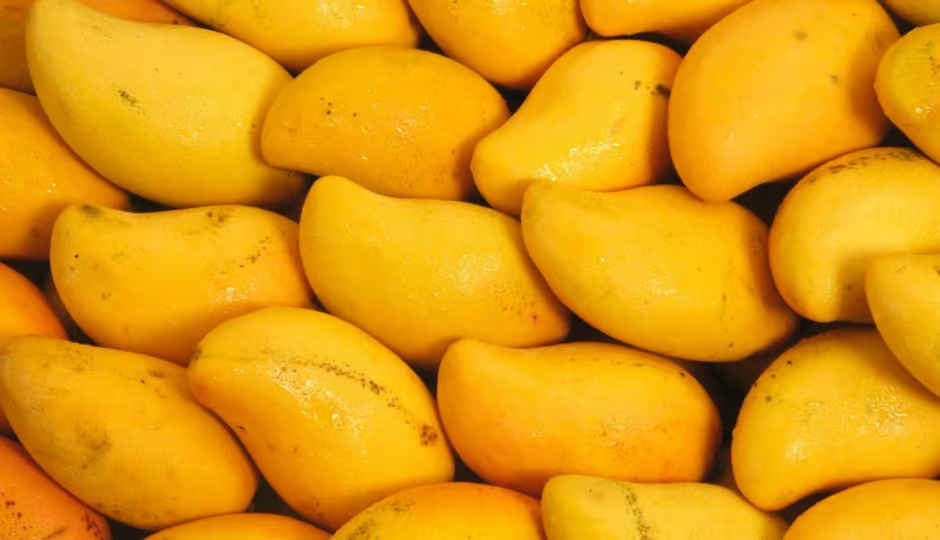
MULTAN, Feb 26 (APP): The mango fruit industry, one of the country’s most prized agricultural export sectors, is facing mounting climate stress as rising temperatures and shifting seasonal patterns threaten orchard productivity across key growing regions.
From February to June, mango belts in Mirpurkhas and Tando Allahyar in Sindh, as well as Multan and Rahim Yar Khan in southern Punjab, experience temperatures soaring between 35°C and 45°C — far above the optimal 24-29°C range required for healthy mango growth.
Agricultural scientists warn that heat alone is not the sole culprit. The real concern lies in the combined effect of high temperatures and low humidity, which increases Vapor Pressure Deficit (VPD) — a measure of the atmosphere’s drying power. Elevated VPD forces trees to lose water rapidly through transpiration, prompting leaf pores (stomata) to close. This reduces photosynthesis, disrupts calcium transport to developing fruit, and weakens overall plant physiology.
From March to May, VPD levels frequently cross critical thresholds in Pakistan’s mango-growing zones. The consequences are increasingly visible: fruit drop, sunburn, poor firmness, smaller and misshapen mangoes, and declining overall yields.
Zafar Hussain Mahay, a progressive farmer and Mango grower said climate stress is intensifying each year. “Temperatures here are expected to reach 35-36°C within days, even though February was traditionally part of winter,” he noted. “Now we begin feeling summer heat much earlier.” He added that excessive heat during May and June often burns mango inflorescence, damages pollination, and results in undersized or crooked fruit. “Moderate temperatures are crucial for germination and cross-pollination,” he emphasized.
Experts argue that climate resilience in mango orchards depends on a structured, Integrated Management System (IMS) built around prevention, response, and recovery. Maintaining soil moisture at 60–70 percent of field capacity is essential, with drip irrigation recommended during extreme heat. Light but frequent watering, combined with organic or plastic mulching, helps conserve moisture.
Nutritional balance — particularly calcium management — is equally critical. Under high VPD, calcium shifts toward leaves instead of fruit, leading to deficiencies. Agronomists recommend foliar sprays of calcium nitrate or calcium chloride, balanced boron and potassium application, and avoiding excessive nitrogen use.
Biostimulants such as amino acids, seaweed extracts, and potassium phosphite can help protect photosynthesis and strengthen antioxidant defenses. Canopy management, whitewashing trunks, anti-transpirant sprays, and shade nets for young orchards further reduce heat injury.
“Climate change is no longer a projection — it is Pakistan’s present reality,” agricultural experts say. With mango exports underpinning thousands of rural livelihoods, the future of the industry may hinge on data-driven, science-based orchard management to withstand escalating climate extremes.

