Pakistan turns from default risk to global case study, targets $1tr economy by 2035: Ahsan
Pakistan turns from default risk to global case study, targets $1tr economy by 2035: Ahsan
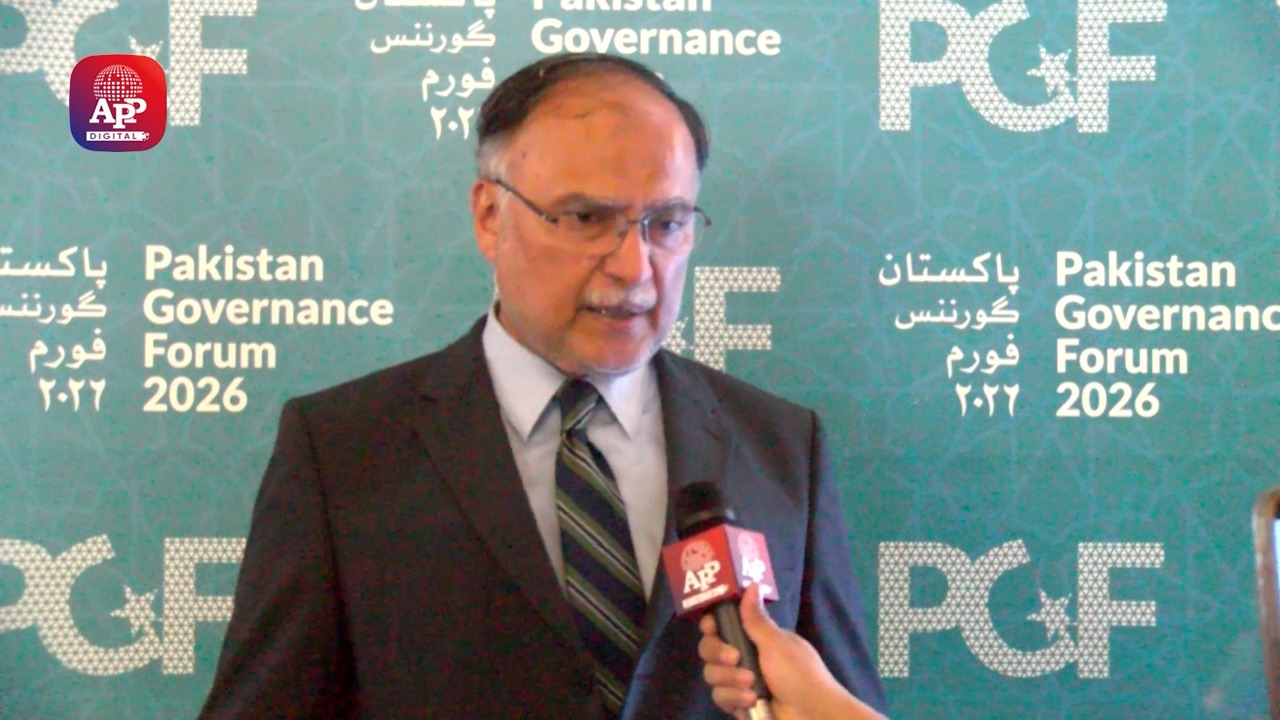
ISLAMABAD, Feb 25 (APP): Federal Minister for Planning, Development and Special Initiatives Professor Ahsan Iqbal on Wednesday said Pakistan’s economic turnaround over the past two years has drawn global attention, with major international financial institutions presenting the country’s recovery as a model case study.
“In the last two years, the incumbent government has steered Pakistan, which was on the brink of bankruptcy, to a position where, through governance and reforms, every major international financial institution is now presenting Pakistan’s economic transformation as a case study,” the minister told APP on the sidelines of the Pakistan Governance Forum-2026, themed “Reimagining Governance for URAAN Pakistan.”
He said the forum was convened to align all stakeholders, federal and provincial governments, ministries, departments and the private sector, around actionable reforms under the Uraan Pakistan agenda to achieve a $1 trillion economy by 2035.
“Well, the purpose of the Pakistan Governance Forum is to create alignment so we can collectively work towards our economic goals, implement the 5Es framework, Equity, Exports, Energy, Environment, E-Pakistan, achieve exports over $100 billion, transform Pakistan into a technology-led economy, embrace AI, and address climate, energy and social challenges,” he said.
Ahsan Iqbal stressed that infrastructure alone could not drive growth. “The best hardware is useless without software.
Buildings and roads have little value if we do not invest in the skills, health and capacity of our people,” he said, underlining the centrality of human capital.
The planning minister warned that Pakistan faced two paths: “If we continue with business as usual, Pakistan may at best become a $600 billion economy by 2035. But with transformational reforms and positive national synergy, we can achieve the $1 trillion target. The difference between these outcomes is the coefficient of governance.”
Highlighting key challenges, he cited the 2.55 percent population growth, 40 percent child stunting, nearly 25 million out-of-school children and a tax-to-GDP ratio of just 10 percent.
“Until we address education, health, population planning and stunting, we cannot compete with the rest of the world. Exports are the lifeline of our future, and without achieving the targeted scale, we cannot ensure economic sovereignty,” he said.
The planning minister said the forum also gave the private sector a platform to raise issues directly with policymakers, enabling evidence-based solutions to accelerate reforms.
“It is heartening to see all provinces participating. Despite political differences, we must work together as Team Pakistan for an economic long march, focusing on development rather than political conflicts, to achieve our $1 trillion economy goal by 2035 and a $3 trillion economy by 2047,” he added.
Ahsan Iqbal said Pakistan’s stabilization and governance reforms have positioned the country as a global example of recovery. “Our focus now is on leveraging this momentum, strengthening human capital, boosting exports, and ensuring inclusive and sustainable development to realize Pakistan’s full economic potential,” he remarked.
APP/395