ISLAMABAD, Feb 25 (APP): Pakistan’s most updated Household Integrated Economic Survey (HIES), gathered after six years, has shown strikingly upward trend in poverty rise in the country that can be controlled by prioritizing inclusive growth, job creation, price stability, and equitable resource distribution rather than focusing solely on GDP growth. These views were expressed by Dr Abid Qaiyum Suleri, the Executive Director of Sustainable Development Policy Institute (SDPI), here during …
Poverty can be controlled by focusing on inclusive growth, job creation, price stability: Dr Suleri
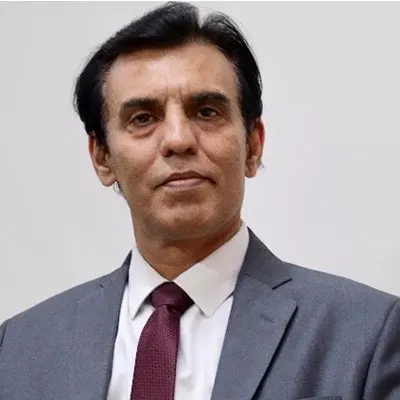
ISLAMABAD, Feb 25 (APP): Pakistan’s most updated Household Integrated Economic Survey (HIES), gathered after six years, has shown strikingly upward trend in poverty rise in the country that can be controlled by prioritizing inclusive growth, job creation, price stability, and equitable resource distribution rather than focusing solely on GDP growth.
These views were expressed by Dr Abid Qaiyum Suleri, the Executive Director of Sustainable Development Policy Institute (SDPI), here during an internal forum held at SDPI on the poverty estimates issued recently by the Pakistan Bureau of Statistics (PBS).
After nearly six years without updated data, Dr Suleri said, Pakistan’s latest HIES reveals a troubling rise in poverty. The national poverty rate now stands at 28.9 per cent (2024–25), that means nearly one in three Pakistanis lives below the poverty line with Rs 8,484 per person per month.
He highlighted that poverty is significantly higher in rural areas (36.2 per cent) than in urban centres (17.4 per cent), with Balochistan facing the highest levels. Inequality remains substantial, with Sindh showing the greatest income disparity. Even Punjab, previously better positioned, has seen poverty rise sharply, he added.
“In past six years, the income has doubled in rupees but food and housing now consume over 60 per cent of household budgets, leaving minimal spending of 6 per cent for education and health deepening long-term inequality. This fact is a guiding light for future economic policies to identify pertinent sectors of focus,” Dr Abid Suleri said.
The SDPI Executive Director highlighted that multiple shocks have reversed earlier gains as there has been improvement in poverty reduction till 2018 that had eroded due to COVID-19 pandemic, which hit informal workers hard churning up their savings followed by the 2022 and 2025 floods, which destroyed livelihoods, land, infrastructure, livestock and third, the IMF-backed economic adjustments, currency depreciation, subsidy reductions, and rising energy prices.
These external factors, he said, scaled up inflation that has outpaced incomes, eroding purchasing power, especially for wage earners and small farmers. Moreover, structural weaknesses, limited job creation, weak exports, energy inefficiencies, and uneven provincial spending, have amplified these pressures, he said, adding that although social protection programmes like BISP provided relief, they were insufficient to offset cumulative economic shocks.
To address the external factors driving poverty rise, he said, the country needs to increase its resilience against climate shocks by adopting climate smart agriculture, parametric insurance and smart infrastructure that can sustain these recurring shocks.
Dr Suleri also underscored that all these interventions fall under the provincial domain, therefore, the provinces shall establish their provincial finance commissions on the pattern of the National Finance Commission (NFC) to transfer resources from the provincial government to the local governments for developing district-level poverty reduction plan and inclusive development.
He commented that the Benazir Income Support Programme (BISP) National Socio-economic Registry is a rich data repository that outlines clear outlook for health, education, household leadership, asset management and other indicators. “It guides to develop targeted interventions to alleviate poverty, as handout cash along cannot be the solution to end income inequalities,” he added.
Whimsical spending, he said, needs to be curbed to end the elite capture of resources as taxpayers money shall be spent on the masses paying taxes indirectly to the national exchequer.