ISLAMABAD, Feb 22 (APP):More than 80% of Pakistan’s agriculture depends on the irrigation system fed by the Indus Basin. The Indus Water treaty is not only of fundamental importance in geographical and political terms, but it also serves as a vital lifeline for Pakistan’s agricultural sector. Over four-fifths of Pakistan’s cultivation depends on water drawn from the Indus river system, with staple crops such as wheat, rice, cotton, and sugarcane …
IWT lifeline of Pakistan’s agriculture
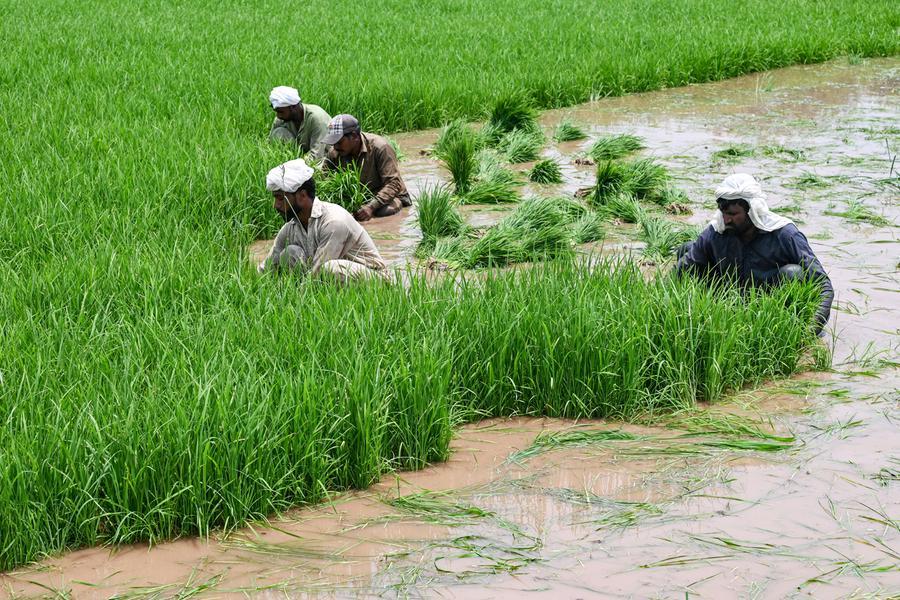
ISLAMABAD, Feb 22 (APP):More than 80% of Pakistan’s agriculture depends on the irrigation system fed by the Indus Basin. The Indus Water treaty is not only of fundamental importance in geographical and political terms, but it also serves as a vital lifeline for Pakistan’s agricultural sector.
Over four-fifths of Pakistan’s cultivation depends on water drawn from the Indus river system, with staple crops such as wheat, rice, cotton, and sugarcane relying on its continuous and uninterrupted supply of water.
The Indus Waters Treaty (IWT) was signed in 1960 between Pakistan and India with the mediation of the World Bank. It is considered one of the most significant and enduring water-sharing agreements in the world. Beyond its geopolitical importance, it forms the backbone of Pakistan’s agricultural economy.
The treaty covers the River Indus and its five major tributaries: Ravi, Beas, Sutlej, Jhelum, and Chenab—forming one of the largest irrigation networks in the world. Pakistan’s agricultural economy, particularly in Sindh and Punjab, as well as other provinces, is fundamentally dependent on these waters.
Under the treaty, the three western rivers—Indus, Jhelum, and Chenab—were allocated to Pakistan, while the three eastern rivers—Ravi, Beas, and Sutlej—were allocated to India. India was granted limited usage rights over the western rivers. This water-sharing agreement between the two states shaped irrigation infrastructure and decades-long agricultural planning. Pakistan’s agricultural sector plays a central role in the national economy, and the treaty guarantees Pakistan’s access to river waters necessary to sustain its extensive canal irrigation network. It is widely regarded as one of the most important international water agreements.
Without assured access to the western rivers under the treaty, Pakistan could face severe food security challenges and disruptions to its rural economy. India, under the agreement, expanded irrigation and hydropower projects in states such as Punjab, Haryana, and Rajasthan and gained full control over the eastern rivers. While India is permitted limited agricultural use of the western rivers, it has allegedly created obstacles affecting the downstream flow of water toward Pakistan.
During the Green Revolution era, the reliability provided by the treaty enabled the adoption of high-yield seed varieties, increased fertilizer use, and greater mechanization in Pakistan, resulting in more stable food production.
Concerns have been raised that unjustified, illegal, and rigid actions related to the treaty could exacerbate agricultural challenges in Pakistan, especially in the context of climate change. Accelerated glacial melting and erratic monsoon patterns may threaten long-term water availability. Reduced water flows could also lower groundwater levels. Additionally, sediment accumulation in Pakistani dams reduces water storage capacity, affecting irrigation schedules and flood control.
Historically, the Indus Waters Treaty remained operational even during wars and diplomatic crises between the two countries. However, recent controversial measures by the current Indian government raise concerns about rising tensions between the two nuclear-armed states and growing uncertainty in Pakistan’s agricultural sector.
Under the treaty’s provisions, neither party can unilaterally amend or terminate it. In case of disputes, neutral experts and arbitration panels are designated to resolve issues related to water supply interruptions.
The Indus Waters Treaty is not merely a diplomatic document; it is a framework essential for agricultural sustainability and rural livelihoods. The use of water as a weapon poses serious risks to global food security goals. For more than six decades, the treaty has served as a cornerstone of agricultural stability in South Asia, underpinning food security, rural employment, and livelihoods for millions of people.