ISLAMABAD, Feb 22 (APP):Federal Minister for Parliamentary Affairs Dr Tariq Fazal Chaudhary, on Sunday, said that the Ministry of Parliamentary Affairs, despite being the smallest in terms of manpower and attached departments, plays the most pivotal role in parliamentary business. Talking in an exclusive interview with APP, he said, “The ministry has the lowest number of officers and associated departments compared to other federal ministries. However, its institutional importance surpasses …
Ministry of parliamentary affairs plays central role in parliamentary business: Dr Tariq Fazal
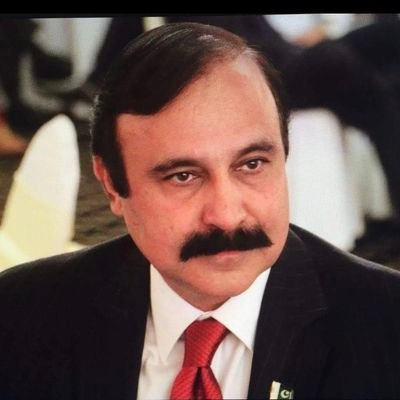
ISLAMABAD, Feb 22 (APP):Federal Minister for Parliamentary Affairs Dr Tariq Fazal Chaudhary, on Sunday, said that the Ministry of Parliamentary Affairs, despite being the smallest in terms of manpower and attached departments, plays the most pivotal role in parliamentary business.
Talking in an exclusive interview with APP, he said, “The ministry has the lowest number of officers and associated departments compared to other federal ministries. However, its institutional importance surpasses others because all parliamentary business—whether of the National Assembly or the Senate—passes through the Ministry of Parliamentary Affairs.”
He said the ministry serves as the central coordinating body for legislative and parliamentary proceedings. Whenever a ministry’s business is scheduled in Parliament, it is processed and routed through the Ministry of Parliamentary Affairs. The ministry also works closely with the Ministry of Law and Justice in steering legislation.
All government bills, he said, are introduced through the ministry, and the Order of the Day for both Houses is routed through the same channel. The ministry also facilitates responses to parliamentary questions, calling attention notices, and other oversight tools exercised by lawmakers.
He said that the ministry facilitated 49 meetings of six standing committees and monitored the implementation of 37 official assurances given on the floor of Parliament. A ministerial committee headed by the Defence Minister helped advance government legislation and supported the passage of 39 government bills in both Houses.
The minister said he played an active role in parliamentary proceedings, responding to 207 questions raised by members. The ministry also presented 20 calling attention notices and six constitutional and legal reports in the Houses.
In addition, responses were provided on five resolutions, debates were concluded on nine motions, and proceedings related to 26 legislative bills were handled during the year.
He said, the Grievance Wing of the Ministry of Parliamentary Affairs is functioning efficiently to address public complaints. The wing received between 20,000 and 30,000 written complaints during 2025, in addition to thousands of complaints through telephone calls, and maintained a disposal rate of 93 per cent.
He said the Prime Minister’s Public Affairs and Grievances Wing, operating under the ministry, receives complaints from across the country and regularly follows up on them. Citizens can lodge complaints on the universal helpline number 111-555-554 for redressal.
The Ministry of Parliamentary Affairs reported that 93 per cent of public complaints received across Pakistan in 2025 were resolved, with action taken on 21,281 applications during the year.
According to the minister, most complaints received by the Prime Minister’s Public Affairs and Grievances Wing related to land occupation, delays in the registration of FIRs, police conduct, irregularities in utility bills, and issues linked to financial assistance. Applications from overseas Pakistanis were also included in the total number of cases processed.
He said, that the ministry remains committed to resolving public complaints within prescribed timeframes to strengthen transparency, ensure accountability, and build public trust in government institutions. To improve access to government offices, the complaints wing introduced a universal access number, 554-555-111, allowing citizens to register grievances more easily.
As part of a nationwide awareness drive, the minister said the ministry sent around 123 million SMS messages to inform citizens about available complaint services and procedures. These steps led to increased public engagement, with the number of complaints rising from 12,597 in 2024 to 21,281 in 2025.
He said he regularly holds meetings to hear public complaints and review progress on their resolution. In addition, the ministry introduced a track-and-trace mechanism to improve coordination between Parliament and the government. This system enables real-time monitoring of government responses to bills, questions, resolutions, and calling attention notices.
Responding to a question, he said parliamentary standing committees continue to function despite the resignation of chairpersons from the opposition.
He said the committees include representation from multiple parties and10 committees, including the Public Accounts Committee (PAC), were chaired by opposition members.
Following the resignation of opposition members from the chairmanships, the proceedings of the 10 committees temporarily slowed.
To ensure continuity, he said a proposal was presented to the Speaker of the National Assembly to allow committee meetings to be convened through requisition in accordance with parliamentary procedure. After endorsement and formal directions from the Speaker, a new mechanism was adopted. Under this arrangement, non-PTI members submit a requisition request to convene meetings. During such sessions, members present elect one among themselves by consensus to preside over the proceedings.
He said Parliament’s work has not been halted and legislative business is continuing.
Responding to another question, he said the government led by Prime Minister Shehbaz Sharif took charge at a time when Pakistan was facing severe economic strain and fears of default.
He alleged that certain political opponents, particularly leaders of the Pakistan Tehreek-e-Insaf (PTI), had anticipated and even desired an economic collapse.
Recalling the earlier tenure of the Pakistan Democratic Movement (PDM) government, he said the country was on the brink of bankruptcy when the coalition stepped in. Stabilising the economy and restoring confidence required difficult but necessary decisions, he added.
He said key economic indicators are now showing improvement. Foreign investment is increasing, remittances have reached record levels, and macroeconomic stability is gradually returning. Efforts are also underway to accelerate infrastructure development and address climate-related challenges.
While acknowledging that terrorism remains a serious challenge, he said comprehensive measures are being taken to maintain peace and security. He also referred to Pakistan’s recent diplomatic and strategic engagements in the region, expressing confidence that the country is moving toward greater stability and progress.