LAHORE, Feb 21 (APP): Federal Minister for Planning, Development and Special Initiatives Professor Ahsan Iqbal has said that Islam is a religion of peace and the Seerah of the Holy Prophet (PBUH) serves as a beacon in every aspect of life. He expressed these views while addressing a national seminar as chief guest on the role of HEC Seerah Chairs in intellectual and moral nation-building and the establishment of sustainable …
Islam is a religion of peace, Seerah a guiding light in every sphere of life: Ahsan Iqbal
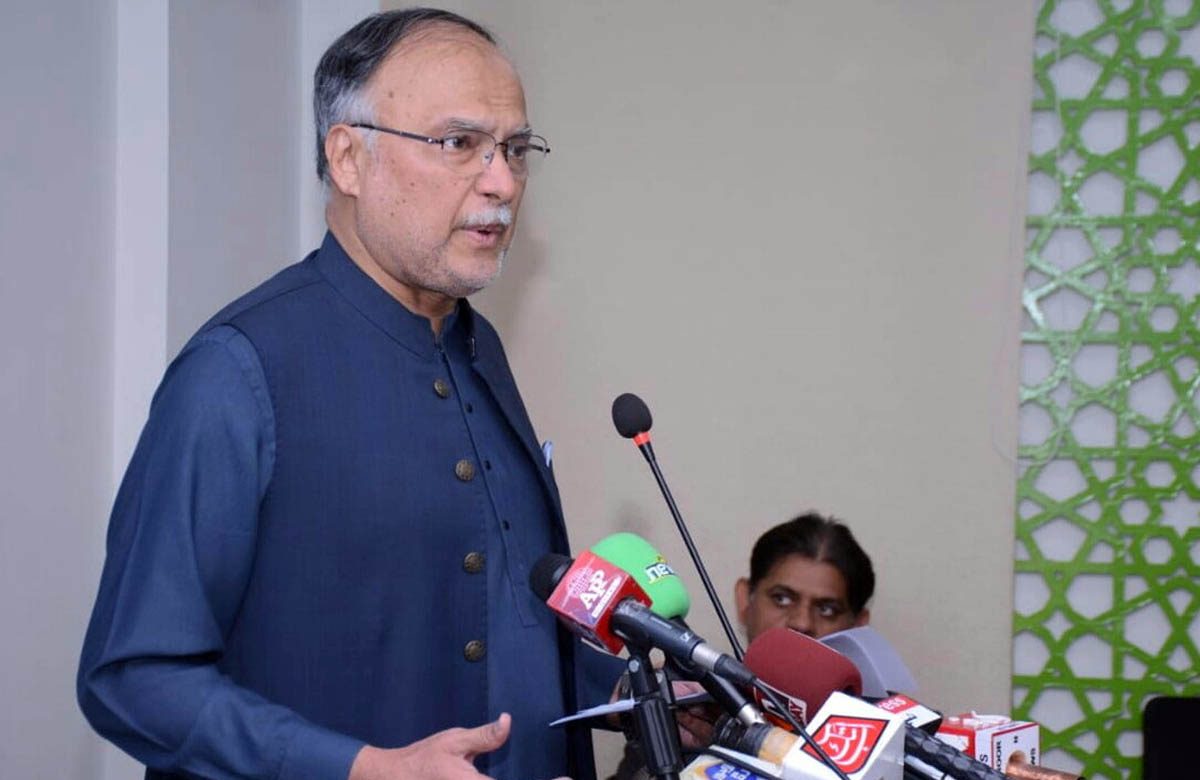
LAHORE, Feb 21 (APP): Federal Minister for Planning, Development and Special Initiatives Professor Ahsan Iqbal has said that Islam is a religion of peace and the Seerah of the Holy Prophet (PBUH) serves as a beacon in every aspect of life.
He expressed these views while addressing a national seminar as chief guest on the role of HEC Seerah Chairs in intellectual and moral nation-building and the establishment of sustainable peace in society, held at Seerah Centers on Saturday.
The minister said that the ideological foundation of Pakistan rests on the teachings of the Prophet’s Seerah. There is no shortage of resources; however, the country must draw guidance from the Seerah in the journey of national reconstruction. He described the Holy Qur’an as a powerhouse and stressed the urgent need to reconnect with it. The establishment of Seerah Chairs, he said, is not merely an academic step but a serious effort to shape a national narrative. In a civilized society, there is no room for violence and hatred, and it is essential to train youth in moral leadership and responsible citizenship in the light of the Prophet’s teachings. He assured that the government would continue full support for such initiatives in higher education so that the Seerah becomes part of practical national life.
Highlighting the importance of HEC Seerah Chairs, Ahsan Iqbal said the seminar was not a routine academic gathering and congratulated the organizers for arranging it. He noted that Pakistan’s ideological basis lies in the Seerah, which provides the path to sustainable peace and development. He emphasized the need to renew the national pledge to use the Seerah as a guiding framework to regain the Muslim world’s lost stature.
He said Pakistan stands at a decisive crossroads and must choose between becoming a civilized, modern society or one driven by hatred and violence. Despite being blessed with abundant resources and a large youth population, society is facing challenges of prejudice, intolerance, and moral decline.
Recounting a personal incident, the minister said he had himself been a target of violence in the recent past when a young man influenced by hateful content on social media opened fire on him. He survived by the grace of Allah, but the attacker’s future was destroyed, which he said still saddens him.
He said the Seerah emphasizes tolerance, justice, coexistence, and respect for humanity—principles that provide an effective response to extremism and conflict. Seerah Chairs in universities, he added, help young people learn to resolve differences through dialogue and wisdom rather than hostility.
He further said that when education, research, and national policy align with the principles of the Seerah, new avenues for peace, tolerance, and collective progress emerge. Referring to historical precedents, he noted that the Charter of Madinah established coexistence and civil rights among diverse communities, while the Treaty of Hudaybiyyah and the Conquest of Makkah demonstrated the power of forgiveness and reconciliation over revenge. Seerah Chairs, he said, connect these principles with modern governance to strengthen peace, justice, and social harmony.
Reaffirming government support, he said the establishment of Seerah Chairs is a serious effort to shape the national narrative and to build a peaceful, developed, and knowledge-based society. Through research, curriculum development, and intellectual dialogue, these institutions are playing a vital role in promoting moral leadership among youth.
Ahsan Iqbal said Islam is a comprehensive religion offering solutions not only for Muslims but for humanity at large. He noted that the Prophet Muhammad (PBUH) transformed a declining society through character and action, and Muslims once led the world in science, technology, and knowledge when they adhered to the Seerah. He lamented that abandoning these teachings had contributed to present-day decline.
The minister also said there was no shortage of talent in the country but a need to translate knowledge into practice. He directed that Islamic education should focus not merely on degrees but on applying learning in everyday life and promoting genuine research.
He added that the government was utilizing all resources to bring 25 million out-of-school children into classrooms and that knowledge had been placed at the center of the “Uraan Pakistan” initiative. A modern curriculum inspired by the Seerah was being developed to address contemporary challenges and promote global awareness of the Holy Prophet’s (PBUH) teachings.
Vice Chancellor of the University of Narowal Prof Dr Muhammad Zia-ul-Haq said government efforts to equip students with modern education and skills were commendable.
Other speakers also addressed the seminar. Earlier, the federal minister visited various departments of the institution. Researchers presented papers on Seerah Studies and emphasized the need to establish Seerah Centers in educational institutions. At the conclusion of the event, the minister distributed shields among participants.
Among those present were Vice Chancellor of the University of Veterinary and Animal Sciences Lahore Prof. Dr. Muhammad Younus, Dr. Muhammad Sarwar Siddiq, deans, directors, researchers, teachers from national and international institutions, students, and a large number of attendees.