PESHAWAR, Feb 19 (APP):Water and agriculture experts here on Thursday termed India’s illegal decision to hold the Indus Waters Treaty (IWT) in abeyance as a serious threat to Pakistan’s water and energy security, warning that any disruption in flows of western rivers could aggravate desertification, land degradation, and food insecurity across the country. The treaty, signed in 1960 between President Ayub Khan and Indian Prime Minister Jawaharlal Nehru, and guaranteed …
India’s illegal move to hold Indus Waters Treaty in abeyance termed grave threat to Pakistan’s water security
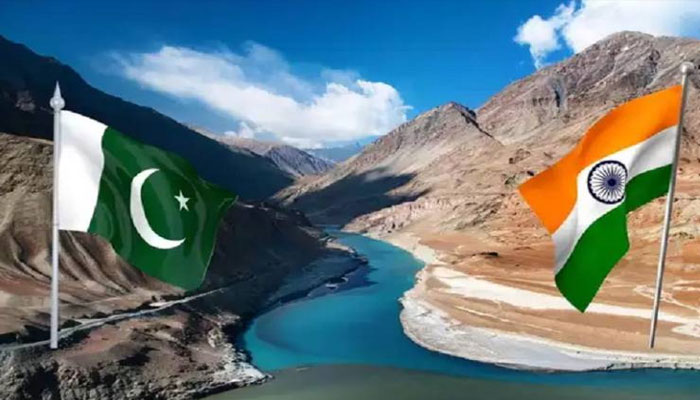
PESHAWAR, Feb 19 (APP):Water and agriculture experts here on Thursday termed India’s illegal decision to hold the Indus Waters Treaty (IWT) in abeyance as a serious threat to Pakistan’s water and energy security, warning that any disruption in flows of western rivers could aggravate desertification, land degradation, and food insecurity across the country.
The treaty, signed in 1960 between President Ayub Khan and Indian Prime Minister Jawaharlal Nehru, and guaranteed by the World Bank, governs the distribution of waters of the Indus river system between the two countries and its violations will put millions of people to hunger and starvation in Pakistan.
Experts reiterated that Pakistan’s agriculture and water storage systems heavily depend on the flow of western rivers allocated under the historic treaty and the international community, including India, had accepted Pakistan’s right on water of western rivers.
They cautioned that any unilateral suspension or restriction could adversely impact major reservoirs, including Tarbela Dam and Mangla Dam, besides affecting irrigation supplies in Punjab and Azad Jammu and Kashmir.
Prof Dr Naeemur Rehman Khattak, former Chairman of the Economics Department at the University of Peshawar, described the IWT as a matter of national survival for millions of Pakistanis.
He urged international institutions, including the United Nations and the World Bank, to take notice of India’s repeated violations of the international commitments.
He referred to a reported extraordinary reduction in water flow in the Chenab River at Marala Headworks in December 2025, stating that flows dropped to 870 cusecs, significantly below the historical minimum range of 4,000–4,400 cusecs.
He claimed that satellite imagery indicated the holding of water at the Baglihar Dam in India during the same period.
Dr Khattak warned that reduced flows of water in western rivers could affect up to 40 percent of agricultural output, including wheat and rice crops, thereby threatening livelihoods and food security in Pakistan.
He said that globally, around two billion people in 110 countries face land degradation, drought, and desertification and it will increase further in case of IWT violations.
He said Pakistan is among countries highly vulnerable to water scarcity and climate change impacts.
Citing national data, he said that per capita surface water availability in Pakistan has declined from 5,260 cubic meters per year in 1951 to about 1,000 cubic meters in 2016, and could further drop to 860 cubic meters if water shortages intensify in western rivers.
Dr Ikram-ur-Rehman, former Provincial Coordinator of the Sustainable Land Management Program (SLMP-II), also expressed deep concern over the treaty violations by India and termed the blocking of water a serious offence under international law.
He said that out of Pakistan’s 79.6 million hectares of land, around 70 percent is arid to semi-arid. Approximately 50.88 million hectares are rangelands, while only 22 million hectares are under cultivation.
He added that between 1.5 to 2.5 million hectares of irrigated land and 3.5 to 4 million hectares of rain-fed agricultural land face degradation risks annually due to drought and declining water availability.
According to official estimates, nearly one million tube wells in Punjab and Sindh pump about 55 million acre-feet (MAF) of groundwater annually, which is approximately 20 percent more than canal supplies, placing additional stress on aquifers.
Experts warned that groundwater levels, particularly in KP, Punjab and Sindh, are declining and may worsen without improved water management and enhanced storage capacity of dams.
Water experts emphasized the need to accelerate the construction of ongoing and planned reservoirs to strengthen national water resilience.
Work on under construction Diamer-Bhasha Dam (4,500 MW capacity) and Mohmand Dam (800 MW capacity) should be expedited to counter India’s nefarious designs.
They stressed that timely completion of such mega projects is vital for water storage, hydropower generation, flood mitigation, and agricultural sustainability.
Officials from the Irrigation Department said Pakistan is endowed with more than 24 rivers across Punjab, Sindh, Khyber Pakhtunkhwa, and Balochistan, offering multiple potential sites for small, medium, and large dams.
Proposed and ongoing dam sites include areas at Diamer Bhasha, Dasu Kohistan, Kalabagh on the Indus River, Mohmand and Kalam on the Swat River, Shalman in Khyber on the Kabul River, Tangi on the Kurram River, and Kaghan-Naran on the Kunhar River.
Authorities highlighted that small dams can typically be constructed within two to three years, while major dams require 10 to 15 years. Pakistan is projected to require an additional 76 MAF of water by 2050 to meet growing agricultural and domestic demand.
In Khyber Pakhtunkhwa alone, over 37 small and medium dams have been constructed, with additional projects under the Public Sector Development Program (PSDP). Several medium dams are currently in the design phase and expected to enter construction soon.
Experts concluded that enhanced water storage capacity, improved groundwater management, and diplomatic engagement under international legal frameworks remain essential to ensuring Pakistan’s long-term water and food security.
They urged international community to look beyond trade interests by putting pressure on fascist Modi Govt to desist from unilateral decisions on the imperative of IWT for food and water security of millions of people in Pakistan