Pakistan urges ‘Libyan-led’ solution to break political impasse and promote unity & stability
Pakistan urges ‘Libyan-led’ solution to break political impasse and promote unity & stability
UNITED NATIONS, Feb 19 (APP): With Libya’s political process still at a deadlock and pressures mounting nationwide, Pakistan has renewed calls for efforts to advance unity, stability and elections.
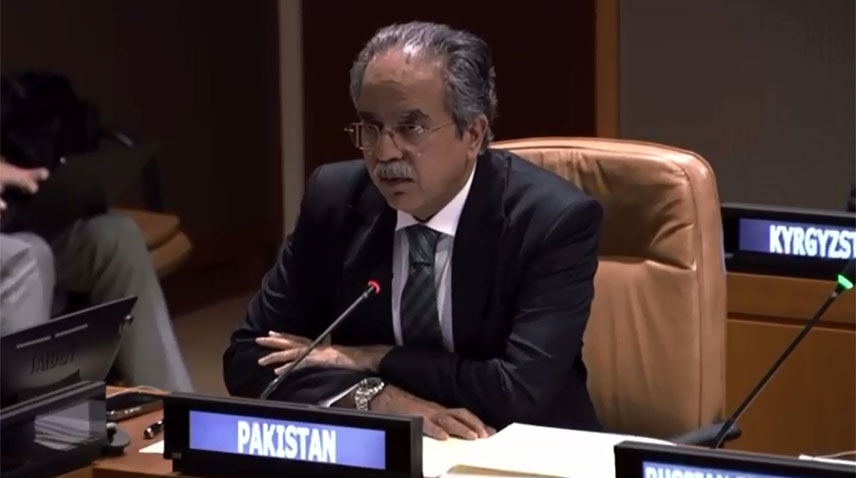
“We underscore the importance of sustained engagement with all Libyan stakeholders to move the political process forward and deliver tangible peace dividends for all citizens.” Ambassador Asim Iftikhar Ahmad, permanent representative of Pakistan to the United Nations,” told the UN Security Council meeting to discuss UN Support Mission in Libya (UNSMIL) on Wednesday
Since the 2011 uprising that ended the longtime rule of Muammar Qadaffi, subsequent efforts to establish unified governance in Libya have been undermined by institutional fragmentation and competing authorities.
Despite a 2020 ceasefire that reduced large-scale hostilities, divisions between rival administrations persist, while UN-led mediation through UNSMIL continues to seek agreement on a constitutional basis and electoral framework via last year’s political roadmap. It has three main goals: agree on election rules so Libya can hold presidential and parliamentary elections, form one unified Government, and hold an inclusive national dialogue to tackle key issues, such as governance, the economy, security, and reconciliation.
In his remarks, Ambassador Asim Ahmad reaffirmed Pakistan’s firm support for a Libyan-led and Libyan-owned political process, as he said it remains the only viable pathway to achieving lasting peace and prosperity in the country.
Noting the lack of progress in advancing the prioritized initial actions for the implementation of the political roadmap, namely the reconstitution of the Board of the High National Elections Commission (HNEC), as well as the amendments to the constitutional and legal framework for elections, the Pakistani envoy said the work undertaken to foster consensus on creating an environment conducive to long-term stability in Libya.
“We welcome all good faith efforts by regional and international partners in support of the UN that promote consolidation and unification,” Ambassador Asim Ahmad added.
On the security track, he said, continued engagement among Libyan stakeholders, supported by UNSMIL and international partners, has helped achieve relative calm.
“Efforts must continue to foster dialogue among all concerned parties to ensure the full implementation of agreed security arrangements and sustained progress in security sector reform”.
The Pakistani envoy welcomed the mediation efforts by Libyan stakeholders to address issues related to the constitutional judiciary, including the formation of a mediation committee composed of eminent Libyan legal experts
He said the economic track remains central to achieving sustainable peace and long-term stability in Libya. “Growing international interest in the energy sector, as well as in other key industries, reflects renewed confidence in the country’s significant economic potential,” he said, adding, “We therefore reiterate the importance of sustained institutional cooperation, particularly toward the adoption of a unified national budget and the strengthening of economic governance.”
At the same time, Pakistan reiterated the importance of safeguarding Libya’s frozen assets and ensuring their reinvestment for the benefit of the Libyan people, in line with Security Council resolution 2769.
“Continued engagement between Libyan institutions and international financial institutions remains essential to support the transparent and effective management of these assets.”
At the outset, Hanna Serwaa Tetteh, Special Representative of the Secretary-General for Libya and Head of UNSMIL, told the 15-member Council that there has been “no meaningful progress” between the House of Representatives and the High Council of State in completing the first two steps of the roadmap, despite UNSMIL’s efforts.
Ms. Tetteh warned this deadlock has further eroded the credibility of both institutions and reinforced public perceptions that they are “unable or unwilling” to complete key milestones needed for elections, prompting her to consult a small group to resolve the critical milestones. “Should this group fail to agree, a broader convening will be necessary to take forward the implementation of the Roadmap,” she said.
Ms. Tetteh warned that Libya’s situation is deteriorating. She described competing constitutional authorities operating in parallel in Tripoli and Benghazi, producing contradictory rulings and disputes over judicial administration that risk the effectiveness of the legal system. “Ultimately it would also obstruct the UN facilitated political process,” she said.
Moreover, economic hardship is deepening amid devaluation, price increases, fuel shortages and growing discontent, with uncoordinated spending and declining oil revenues driving foreign-currency imbalances and pressure on reserves. The Central Bank’s 18 January devaluation of the dinar by about 14.7 per cent is reducing the purchasing power of vulnerable households, she added.
APP/ift