ISLAMABAD, Feb 16 (APP):The successful roll-out and adoption of 5G technology in Pakistan hinges on radical tax cuts and business-to-business strategy, otherwise the country’s transition to 5G will remain in low pace due to crippling taxation, high handset costs, and the lack of industrial use cases. This was crux of a debate on Monday seminar, titled: “5G Imperative in Pakistan: The Need for Comprehensive Infrastructure, Economic Readiness, and Digital Sovereignty,” …
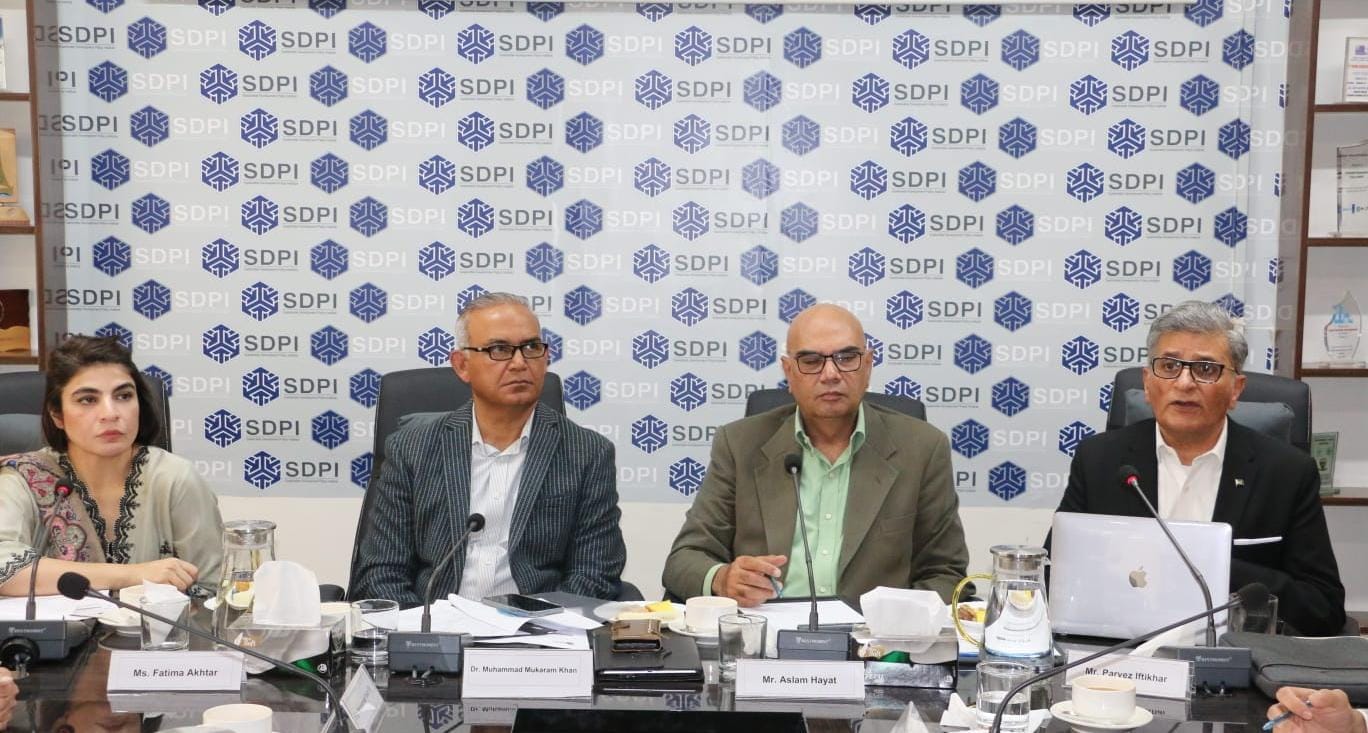
ISLAMABAD, Feb 16 (APP):The successful roll-out and adoption of 5G technology in Pakistan hinges on radical tax cuts and business-to-business strategy, otherwise the country’s transition to 5G will remain in low pace due to crippling taxation, high handset costs, and the lack of industrial use cases.
This was crux of a debate on Monday seminar, titled: “5G Imperative in Pakistan: The Need for Comprehensive Infrastructure, Economic Readiness, and Digital Sovereignty,” organized by Sustainable Development Policy Institute under its Study Group on IT and Telecommunication, said a press release.
In his welcome remarks, Brig. (R) Mohammad Yasin, the Distinguished Advisor Emeritus of SDPI, termed the forthcoming auction of nearly 600 MHz of spectrum as potentially the largest in Pakistan’s history, calling it a structural shift rather than merely a technological upgrade.

He noted that over 130 million broadband subscribers currently compete for only 274 MHz of spectrum, which is far below regional benchmarks. He underlined that the auction will include the 2,300 MHz, 2,600 MHz and 3,500 MHz bands while 2,300 MHz and 2,600 MHz will enhance existing 4G capacity and user experience, the 3,500 MHz band is globally recognized as the primary spectrum for 5G rollout.
Dr. Muhammad Mukarram Khan, the Director-General Cyber Vigilance at Pakistan Telecommunication Authority (PTA), said the PTA must balance the interests of government, cellular mobile operators (CMOs) and citizens. He said that PTA is engaging with the Federal Board of Revenue to reduce handset taxes and related tariffs, acknowledging that high fiscal burdens hinder consumer adoption.
He said Pakistan ranks among the top countries in ICT freelancer revenue and foreign exchange earnings, but freelancers often rely on slow mobile broadband. PTA, he added, is working to improve internet resilience, diversify submarine cable connectivity beyond Karachi and facilitate satellite internet services through multiple providers.
Parvez Iftikhar, the renowned ICT Consultant, said the 5G spectrum auction could remove major barriers hindering sector modernization, however, he cautioned that 5G would not become instantly ubiquitous. He noted that retail broadband would not be the primary driver of 5G; instead, business-to-business (B2B) applications would shape its growth. He emphasized enterprise use cases, including on-campus networks in Special Economic Zones (SEZs) and Special Technology Zones (STZs), citing international examples such as mining in South Africa and commercial complexes in the Philippines. He called for improved fiberisation, tower outsourcing and more realistic base pricing in spectrum auctions.
Dr. Zainab Naeem, Associate Research Fellow and Head of Center for Ecological Sustainability and Circular Economy at SDPI stressed the need for regulatory clarity, investment confidence, skilled human capital and demand from real sectors of the economy. She said 5G could align with Pakistan’s economic and digitalization vision, climate commitments and export competitiveness goals, but only if supported by evidence-based policy and cross-sector coordination.
Aslam Hayat, Senior Policy Fellow at LIRNEasia, said that since 2003 Pakistan’s telecom policy has been focusing heavily on infrastructure supply while neglecting demand stimulation. Highlighting the absence of national use-case priorities, he said that 5G could transform manufacturing, industrial automation, ports, logistics, health and energy sectors. He proposed government-led pilot projects, smart city initiatives, public safety networks and incentives for industry adoption, including tax relief on 5G equipment and IoT devices.
He also recommended neutral host regulations, local content development, startup incubators, skills training for 5G engineering and clear KPIs beyond coverage, such as enterprise contracts and device penetration.
Fatima Akhtar, Head of ESG at Jazz Pakistan, said spectrum is a sovereign asset and its debate had matured. Device affordability, she said, remains a “chicken-and-egg” challenge. She stressed that linking 5G rollout with job creation, youth opportunities and enterprise use cases in robotics, agriculture and manufacturing.
Hannan Tariq, Director Strategy, Universal Service Fund (USF), highlighted three key 5G application areas: enhanced mobile broadband, low-latency applications such as robotics, and massive machine-type communications for agriculture and industry.
He said Pakistan would adopt a stepwise rollout, initially leveraging existing 4G infrastructure. He cited USF-supported initiatives connecting thousands of families to e-services in underserved regions and stressed that digital programmes must move beyond basic connectivity to Artificial Intelligence (AI), cloud computing and machine learning applications.
In his concluding remarks, Dr Sajid Amin Javed, Deputy Executive Director, SDPI, thanked the panelists and participants for their substantive contributions. He observed that while government has limitations in financing large-scale infrastructure, private sector leadership in investment particularly in health and education aligned with 5G would be crucial for realising digital transformation goals.