Advocate Shehzad Bhatti calls on Int’l community, WB to play role in safeguarding IWT
Advocate Shehzad Bhatti calls on Int’l community, WB to play role in safeguarding IWT
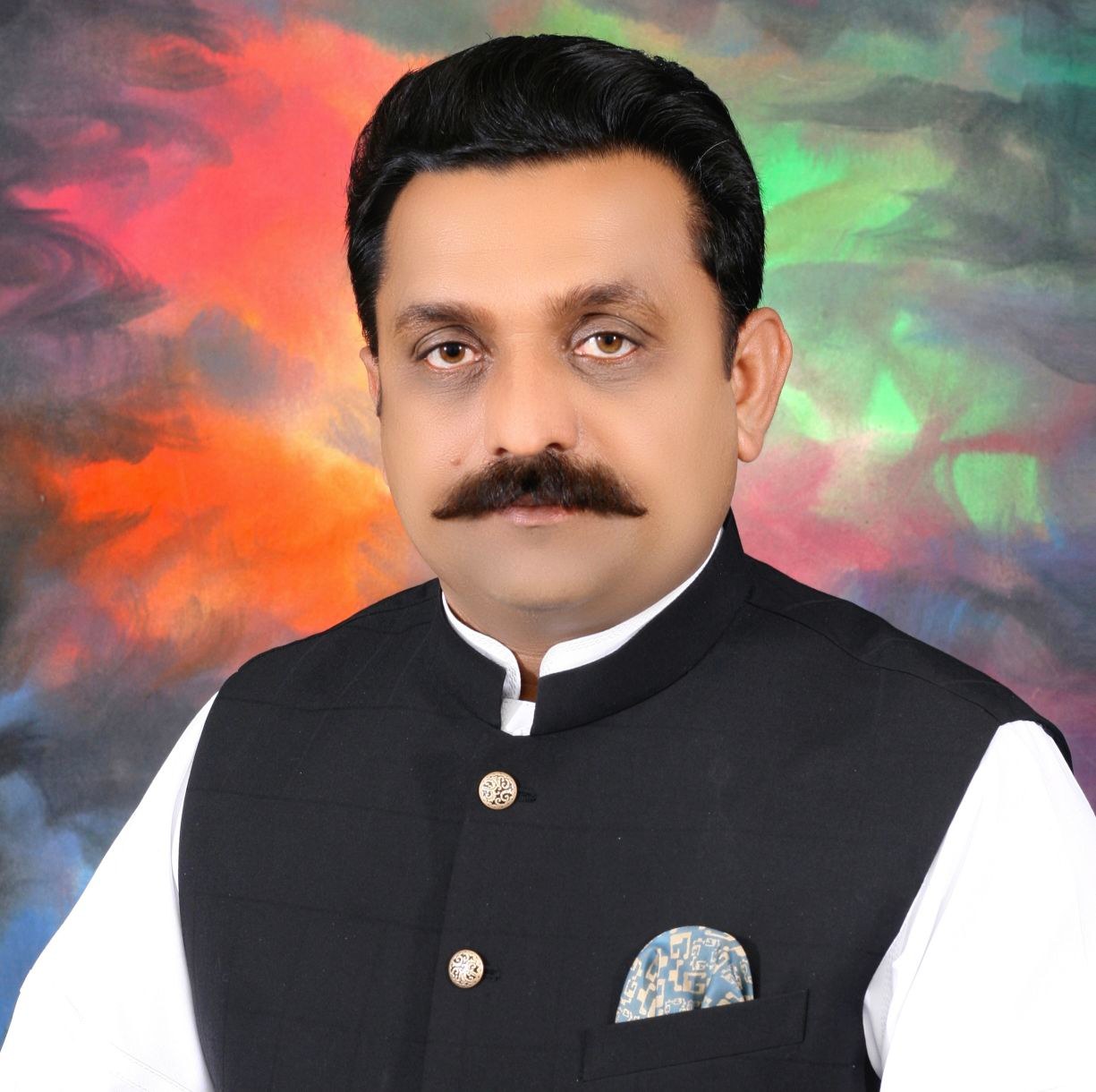
ISLAMABAD, Feb 15 (APP): The international law expert and community development specialist Advocate Shehzad Bhatti has called upon the international community, particularly the World Bank (WB), as guarantor, to play its role in safeguarding the Indus Waters Treaty (IWT) so that unilateral actions do not destabilize South Asia.
Strongly condemning what he described as India’s water aggression and its unilateral attempt to suspend the Indus Waters Treaty, he stated that India’s actions are entirely unacceptable to Pakistan. He urged the World Bank, as the treaty’s guarantor, to play its role in restraining Indian Prime Minister Narendra Modi from what he termed an illegal, fascist-based action.
He expressed these views during a conversation with the APP on Sunday, Advocate Bhatti stated that any unilateral suspension or postponement of the treaty amounts to a blatant violation of international law. He noted that various rulings by international arbitration bodies regarding international agreements already exist.
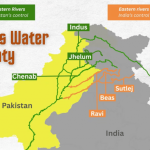
He explained that under the treaty, signed in 1960, Pakistan’s rights over the waters of the three western rivers—Indus, Jhelum, and Chenab—were recognized, and the WB was included as a guarantor. He emphasized that no party can unilaterally suspend, terminate, or hold the treaty in abeyance.
He further warned that obstruction of Pakistan’s waters could severely affect the agricultural sector and hydropower generation, putting the livelihoods of millions at risk. He added that millions of people depend on agriculture for employment and food security, and that any disruption in hydropower production could lead to security and economic challenges.
Shehzad Bhatti highlighted that the treaty remained intact even during the Indo-Pak conflicts of 1948, 1965, 1971, and 1999, reflecting its significance. He explained that under the 1960 agreement between Pakistan and India, the eastern rivers—Sutlej, Beas, and Ravi—were allocated to India, while the western rivers—Indus, Jhelum, and Chenab—were reserved for Pakistan.
He stated that India’s desire to unilaterally suspend the treaty has no legal justification, nor would the international community support such an act. He also referred to a recent decision by the Permanent Court of Arbitration in The Hague, which reaffirmed that the treaty is binding on both countries and does not permit unilateral suspension.
Advocate Bhatti stressed that amendments or changes to the treaty can only be made through mutual consent, and that no party has the authority to unilaterally suspend or terminate it. He underscored that the treaty contains no clause permitting unilateral suspension, postponement, or withdrawal, and that it is of indefinite duration, unaffected by changes in government.
He further stated that in August 2025, the Permanent Court of Arbitration ruled that Pakistan has rights over the waters of the western rivers and that India must strictly adhere to the treaty in relation to its hydropower projects.
He warned that India’s unilateral actions could set a dangerous precedent in international water law. Such measures, he cautioned, could seriously undermine peace, stability, and development in the region. He noted that a water dispute between two nuclear-armed states poses a grave threat to peace in South Asia.
Advocate Shehzad Bhatti concluded by emphasizing that adherence to international agreements, including the IWT, is essential to ensuring regional peace, food security, and economic stability.
/395