PESHAWAR, Feb 13 (APP): Deploring India’s announcement to hold the Indus Water Treaty (IWT) in abeyance, water and international relations experts termed the move a grave threat to water security, food production, and energy stability for millions of people in Pakistan, urging the World Bank being a guarantor, to prevent the fascist Modi Govt from taking such illegal action. Dr Muhammad Naeem, Associate Professor of Economics and Water Management at …
Illegal move on IWT by India threatens millions people to face hunger, blackouts as experts urge World Bank to step in
PESHAWAR, Feb 13 (APP): Deploring India’s announcement to hold the Indus Water Treaty (IWT) in abeyance, water and international relations experts termed the move a grave threat to water security, food production, and energy stability for millions of people in Pakistan, urging the World Bank being a guarantor, to prevent the fascist Modi Govt from taking such illegal action.
Dr Muhammad Naeem, Associate Professor of Economics and Water Management at the University of Swabi, told APP on Friday that any unilateral move to suspend or hold IWT in abeyance strongly contradicts international legal frameworks, conventions, agreements and treaties, including guarantees extended by the World Bank and rulings of the Permanent Court of Arbitration (PCA).
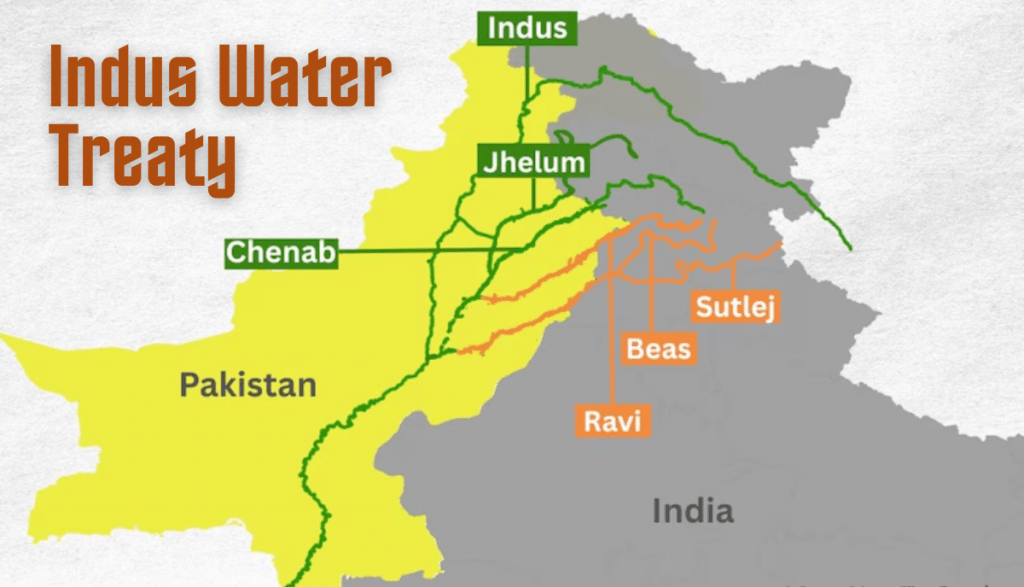
“The water rights over the three western rivers, namely Indus, Jhelum, and Chenab, were mutually recognized under the landmark IWT signed in 1960 with guarantee by the World Bank. There is no provision allowing either party to unilaterally suspend, terminate, or hold this treaty protected by the World Bank,” he said.
Dr Naeem emphasized that the Indus Basin supports nearly 300 million people across the region, and any disruption in water flows to Pakistan could jeopardize agriculture, hydropower generation, and livelihoods that may put over 245 million people at risk of hunger and starvation, besides an energy blackout, which may create serious security issues.
He said that Pakistan’s major water infrastructure along the Indus River system, including Tarbela Dam, the under-construction Diamer-Bhasha Dam, and Dasu Hydropower Project, depends heavily on uninterrupted river flows. Alike, key installations such as Tarbela, Ghazi-Barotha, and major barrages including Jinnah, Chashma, Taunsa, Guddu, and Sukkur could face operational challenges if water supplies are curtailed and likely to create an energy crisis for millions of people in the region.
Constructed on the Indus River, Tarbela is one of the world’s largest earth-filled dams and a critical source of irrigation water and electricity for Pakistan.
Dr Naeem added that the Indus Basin Project, initiated after the 1960 treaty, led to the construction of Mangla Dam on the Jhelum River to manage water supplies for agriculture and domestic consumption and IWT is very important in this context.
Mangla Dam (1,070 MW), completed in 1967, remains a key hydropower and water storage facility constructed on River Jehlum. Other major water and dams projects on the Jhelum River include the 969 MW Neelum-Jhelum Hydropower Plant, which was completed in 2018 and the 720 MW Karot Hydropower Project, both vital for electricity production and irrigation water management.
Water infrastructure along the Chenab River, such as Marala, Khanki, and Qadirabad headworks, also plays a central role in regulating canal flows for agricultural use in Punjab and that is why Pakistan had signed IWT to ensure dispute-free water sharing with India after a conflict over water developed soon after independence.
Manzoorul Haq, a former ambassador, said this landmark treaty has historically survived periods of conflict, including the wars of 1948, 1965, 1971 and the Kargil conflict in 1999, underscoring its significance and importance for both states. He said that the agreement, signed in September 1960 by President Ayub Khan of Pakistan and Prime Minister Jawaharlal Nehru of India, allocated the eastern rivers Sutlej, Beas, and Ravi to India, while reserving the western rivers of Indus, Jhelum, and Chenab for Pakistan.
Barrister Astagfarullah, former General Secretary of the Peshawar High Court Bar Association, said that unilateral suspension of the treaty lacks legal basis and diplomatic support for India.
He referred to the recent historic ruling of the Permanent Court of Arbitration at The Hague, which reaffirmed that the treaty remains binding on both countries and does not permit any unilateral abeyance or suspension.
According to legal experts, Article XII(4) of the treaty provides for termination only through mutual written agreement between the two states and not unilaterally by any state. “The treaty contains no clause allowing unilateral suspension, abeyance, or withdrawal. It is of indefinite duration and remains binding regardless of changes in government,” they emphasized.
On August 8, 2025, the Permanent Court of Arbitration ruled that India must adhere strictly to the treaty’s design parameters for hydroelectric projects, particularly on the western rivers flowing to Pakistan, and cannot introduce features enabling excessive water storage and dams on western rivers, which was widely hailed.
Prof Dr Minhas Majeed Khan, Chairman of the International Relations Department at the University of Peshawar, warned that unilateral actions by an upper riparian state like India could set a dangerous precedent in international water law.
She cautioned that normalization of such measures could have broader implications for regional stability and future transboundary water agreements worldwide.
They said Pakistan and India have fought four wars and another battle between two nuclear-armed countries over water may engulf the entire region.
The experts collectively stressed that international agreements like the Indus Waters Treaty must be upheld in good faith to ensure regional peace, food security, and economic stability.
They urged the international community, particularly the World Bank as guarantor of the treaty, to play an active role in preserving the integrity of the agreement and put pressure on Modi Govt to reverse its decision imperatively for lasting peace and stability in South Asia.