
China’s traditional lantern show shines with innovation, global exchange
China’s traditional lantern show shines with innovation, global exchange
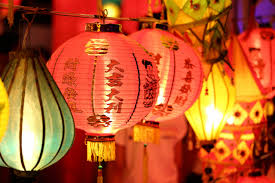
CHENGDU, , Feb 11 (XINHUA/APP): The ongoing 32nd Zigong International Dinosaur Lantern Festival has turned this city in southwest China’s Sichuan Province into a luminous sea of over 200 lantern sets, drawing inspiration from fairy tales, children’s drawings and, most fittingly, the prehistoric dinosaurs whose fossils were unearthed here.
Blending local paleontological heritage with Chinese mythology, the festival showcases amazing creations such as majestic beasts from the ancient Chinese literature Classic of Mountains and Seas. Among them stands a commanding, nearly four-meter-tall winged creature, lion-like in shape, with a mane woven from real straw that glows softly as embedded LED lights cast a warm golden radiance through the natural fibers.
Not far away, two more extraordinary works catch the eye: a fiery phoenix pieced together from 15,000 red chili peppers, and a qilin — a benevolent Chinese mythical creature — crafted from 46,000 recycled medicine bottles.
This luminous artistry is deeply rooted in a centuries-old tradition. During the Tang and Song dynasties (618-1279), Zigong, then a prosperous salt-producing hub, cultivated the custom of making festive lanterns to celebrate the Spring Festival, symbolizing hopes for abundance and happiness.
Over time, the tradition evolved from simple lanterns into a sophisticated art form that blends paper-cutting, painting, embroidery and sculpture. Today, the Zigong Lantern Show is recognized as a National Intangible Cultural Heritage of China.
In modern times, this lantern tradition has been revived through innovation and environmental awareness.
“All kinds of materials, such as porcelain, recycled bottles, chili peppers, straw and foam boards, can be turned into part of a lantern set,” explained Liu Juncai, a 60-year-old cultural heritage inheritor of Zigong’s traditional lantern artistry, as he pointed to the golden beast inspired by the Classic of Mountains and Seas.
The magic of the festival also resonates with international visitors. “These are the most beautiful lanterns I’ve ever seen! The Zigong lantern festival feels like magic, it’s incredible,” said a student from Zimbabwe.
One particularly eye-catching piece is the “Music Robot,” based on a drawing by Jayden, an eight-year-old boy from the United Kingdom. It is part of a special exhibition where Zigong artisans brought to life more than 6,000 children’s drawings from over 40 countries, ranging from a mechanical horse leaping through colorful clouds to a panda venturing into outer space.
Today, Zigong lanterns have evolved into a dynamic example of cross-cultural exchange. At an international lantern exhibition held in a Dutch zoo, motifs from Chinese folklore and intangible cultural heritage stood alongside iconic Dutch windmills and tulips, attracting over 1.5 million visitors.
The lantern industry itself continues to thrive. With an annual output value exceeding 6 billion yuan (about 864.08 million U.S. dollars), Zigong now boasts more than 2,000 specialized companies, forming a complete industrial chain.
As a cultural heritage inheritor, Liu has personally witnessed this remarkable expansion over the past four decades, as the craft continues to shine on the global stage.
“The government has streamlined procedures for Zigong lanterns to enter the global market. It takes about a fortnight to obtain an export license, and shipping via the China-Europe Railway Express reduces costs by roughly a third,” Liu said.
“There’s a growing appetite overseas for traditional Chinese elements,” Liu added. “Whether it is classic Chinese pavilions or mythical themes, they are warmly received abroad. Lanterns have become an important medium for sharing Chinese culture.” His team is currently preparing a customized Classic of Mountains and Seas-themed lantern set for the United Arab Emirates, scheduled to debut in May.
From the Magical Winter Lights in Houston, United States, to lantern carnival in Kuwait, Zigong’s luminous artistry has now illuminated over 500 cities across more than 80 countries and regions.
This thriving industry has fueled local prosperity. In Zigong, a city with over 2.4 million residents, an estimated 100,000 people are employed in the lantern sector, supported by tax incentives, financing support and talent development initiatives.
Zigong’s lanterns go beyond festive decoration, serving as a modern expression of an ancient tradition that brings Chinese stories to the world. Each dazzling display celebrates a shared appreciation of beauty and creates a luminous cultural dialogue spanning the globe.