LAHORE, Feb 07 (APP): Minister of State for Law and Justice Barrister Aqeel Malik has underscored Pakistan’s long-standing role in hosting refugees and asylum seekers, noting the country’s efforts to uphold humanitarian responsibilities while addressing national security and administrative challenges. He was speaking at a dialogue titled ‘Erosion of Fundamental Rights and Resistance Across Borders’ during the 6th edition of the International Asma Jahangir Conference (AJCONF) at Faletti’s Hotel, here …
Minister highlights Pakistan’s support for refugees
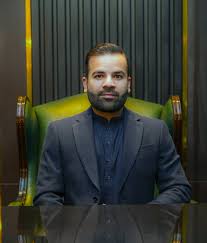
LAHORE, Feb 07 (APP): Minister of State for Law and Justice Barrister Aqeel Malik has underscored Pakistan’s long-standing role in hosting refugees and asylum seekers, noting the country’s efforts to uphold humanitarian responsibilities while addressing national security and administrative challenges.
He was speaking at a dialogue titled ‘Erosion of Fundamental Rights and Resistance Across Borders’ during the 6th edition of the International Asma Jahangir Conference (AJCONF) at Faletti’s Hotel, here on Saturday. The event was organized by the Asma Jahangir Legal Aid Cell (AGHS) in collaboration with the Supreme Court Bar Association and the Pakistan Bar Council.
Barrister Aqeel Malik said Pakistan had consistently hosted millions of refugees over decades, primarily from Afghanistan, despite not being a signatory to the 1951 Refugee Convention. He said these efforts were supported by court judgments, legislative amendments under the Pakistan Citizenship Act, and institutional mechanisms including the Afghan Citizen Card (ACC) and Proof of Registration (PoR) card to ensure lawful and dignified residence for refugees.
The minister pointed to global inconsistencies in addressing refugee crises, contrasting Pakistan’s treatment of refugees with incidents in Europe, including the Mediterranean Sea and the Greek island of Lesbos, where asylum seekers and economic migrants often faced violence and neglect. He said criticism directed at Pakistan was often swift and intense, whereas similar situations elsewhere received muted responses. He stressed that Pakistan’s policies were rooted in the principle of dignified return, not forced displacement, and that isolated cases of PoR holders being mistakenly deported were unintentional and not reflective of state policy.
Barrister Aqeel Malik also highlighted Pakistan’s concern for the rights of women and girls in Afghanistan and reiterated condemnation of human rights violations at international forums. He said meaningful engagement with UN agencies, the international community, and Afghanistan required a collective approach, noting that since the Taliban’s return to power in 2021, no country had formally engaged with the regime.
The minister addressed cross-border security concerns, citing verified incidents in which Afghan soil had been used to plan attacks against Pakistan by banned outfits and prescribed organizations. He said that Pakistan’s border has been effectively secured, yet continued illegal crossings remain a challenge that the government was actively managing to ensure administrative efficiency and national security.
Looking ahead, he said a new visa policy was in the final stages to facilitate legal, orderly movement of refugees and economic actors, emphasizing that Afghan nationals conducting legitimate business in Pakistan would be welcomed under proper channels.
He affirmed Pakistan’s steadfast commitment to humanitarian principles, responsible governance, and full cooperation with UN agencies, while calling on the international community to recognize and understand the country’s perspective on refugee management and regional security.