LAHORE, Feb 07 (APP): Agriculture and water experts on Saturday warned that any curtailment of Pakistan’s water share by India would amount to an act of war, asserting that Pakistan retains the full right to respond to Indian violations of the Indus Waters Treaty (IWT). They described India’s actions as the “weaponization of water,” posing serious threats to regional stability. In a telephonic conversation with APP, President of Agri Forum …
Weaponization of water posing serious threats to regional stability: experts
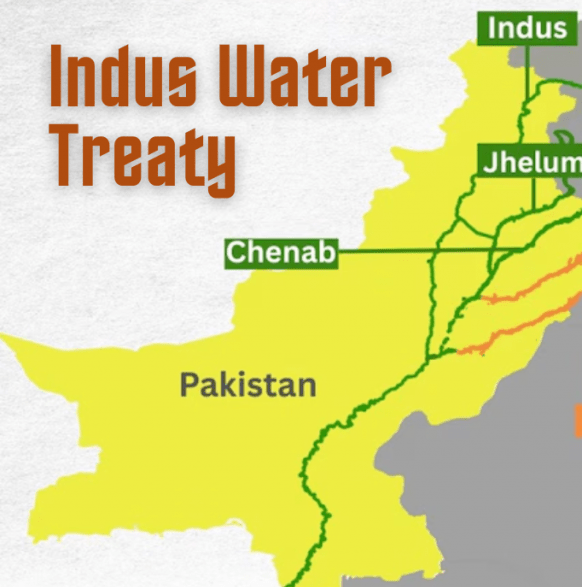
LAHORE, Feb 07 (APP): Agriculture and water experts on Saturday warned that any curtailment of Pakistan’s water share by India would amount to an act of war, asserting that Pakistan retains the full right to respond to Indian violations of the Indus Waters Treaty (IWT). They described India’s actions as the “weaponization of water,” posing serious threats to regional stability.
In a telephonic conversation with APP, President of Agri Forum Pakistan Dr Ibrahim Mughal categorically rejected India’s claim of placing the 1960 Indus Waters Treaty in “abeyance,” stressing that the agreement remains fully enforceable under international law and cannot be unilaterally suspended, breached, or modified by either party.
Dr Mughal dismissed the term “abeyance” as having no legal standing in international treaty law, calling it a fabricated expression aimed at creating ambiguity. He noted that India itself acknowledges it lacks unilateral authority to suspend the treaty, a position upheld by the Permanent Court of Arbitration (PCA) in its June 2025 ruling, which confirmed that India cannot hold the IWT in abeyance without Pakistan’s consent.
He said Pakistan is compelled to pursue a measured and formal response through legal and diplomatic channels strictly in accordance with the treaty’s dispute-resolution mechanisms. Dr Mughal specifically accused India of deliberately manipulating water flows in the Chenab River, terming it a clear case of “weaponization of water” with grave consequences for Pakistan’s agriculture, food security, and overall regional peace.
He explained that the treaty does not allocate a fixed volume of water to Pakistan but guarantees it the natural flow of the western rivers—Indus, Jhelum, and Chenab. While these rivers have historically followed their natural courses, he said recent artificial interventions have severely disrupted irrigation schedules and agricultural cycles.
Dr Mughal further stated that there is no legal, technical, or moral basis for Indian Prime Minister Narendra Modi’s statement regarding the abeyance of the treaty. Reflecting on the historical context, he recalled that Pakistan had already made major concessions under the IWT by granting India control over the three eastern rivers—Ravi, Beas, and Sutlej. As a result, the Sutlej now remains largely dry except during flood seasons, while the Ravi has effectively dried up, giving India a significant upstream advantage.
Meanwhile, Chairman Pakistan Economic and Political Forum (PEPF) Noor Muhammad Kasuri said the World Bank, as the guarantor of the Indus Waters Treaty, should be asked to intervene in the matter.
Kasuri said Prime Minister Muhammad Shehbaz Sharif had achieved significant diplomatic success following Pakistan’s victory over Indian aggression in
May 2025, and now Pakistan’s friendly countries should be engaged to
help resolve the issue.
He emphasized that under the agreement, no party has the right to suspend the treaty unilaterally, declaring India’s actions an act of war against Pakistan.