MIRPUR (AJK) , Feb 6 (APP):Ambassador, Masood Khan, former President of Azad Jammu and Kashmir has stated that the people of Jammu and Kashmir (AJK) were not alone, emphasizing that Pakistan, the people of Azad Jammu and Kashmir, Gilgit-Baltistan, and the global Kashmiri diaspora stood firmly with them in their just struggle for self-determination. Speaking at events marking Kashmir Solidarity Day and addressing students, policymakers, and international participants in the …
Kashmiris not alone in just struggle for self-determination : Ambassador Masood Khan
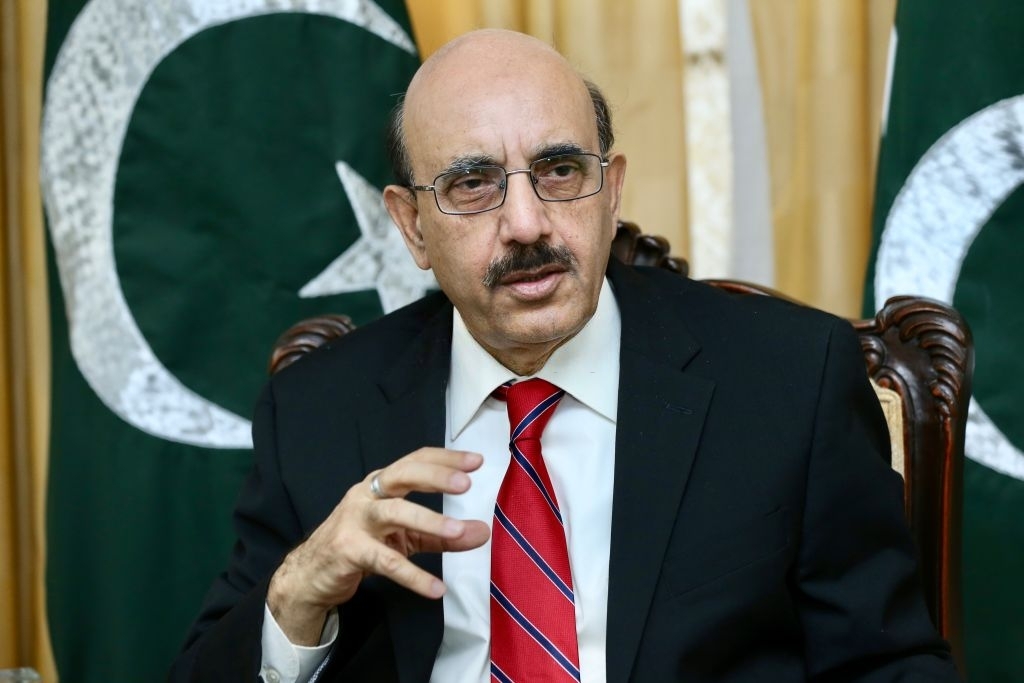
MIRPUR (AJK) , Feb 6 (APP):Ambassador, Masood Khan, former President of Azad Jammu and Kashmir has stated that the people of Jammu and Kashmir (AJK) were not alone, emphasizing that Pakistan, the people of Azad Jammu and Kashmir, Gilgit-Baltistan, and the global Kashmiri diaspora stood firmly with them in their just struggle for self-determination.
Speaking at events marking Kashmir Solidarity Day and addressing students, policymakers, and international participants in the federal metropolis, Ambassador Khan said that credible reports documenting human rights violations by India continued to surface, yet they remained largely ignored at the global level.
He noted with concern that the ground realities in Indian Illegally Occupied Jammu and Kashmir (IIOJK) were still inadequately reported internationally, allowing systemic repression to continue without meaningful accountability.
Ambassador Khan stressed that Kashmir Solidarity Day was not merely a series of symbolic events but a strong and unequivocal reaffirmation of Pakistan’s unwavering political, diplomatic, and moral support for the Kashmiri people.
He highlighted that advocacy for Kashmir was actively carried out in international parliaments, think tanks, universities, and public forums, while diaspora communities continued to organize demonstrations worldwide against Indian oppression.
He emphasized that it was the collective responsibility of Pakistan’s government institutions, political leadership, civil society, and information platforms to consistently expose the realities of Kashmir, including extrajudicial killings, destruction of property, demographic manipulation, and other violations of international law.
He urged that Pakistan’s engagement on Kashmir must remain a year-round effort rather than being limited to symbolic commemorative days.
Referring to evolving global dynamics, Ambassador Khan observed that Kashmir had regained international attention amid broader geopolitical crises, including conflicts in Ukraine and Palestine.
He warned that Kashmir remained a nuclear flashpoint between two nuclear-armed states, making its peaceful resolution an urgent global priority.
He advocated for structured and sustained dialogue between Pakistan and India, facilitated by credible diplomatic channels, to address the dispute in accordance with the aspirations of the Kashmiri people.
Ambassador Khan reaffirmed that the right to self-determination of the people of Jammu and Kashmir was firmly established under the Indian Independence Act of 1947 and multiple United Nations Security Council resolutions.
While acknowledging limitations in the UN’s enforcement mechanisms, he pointed to comprehensive human rights reports issued by the UN Office of the High Commissioner for Human Rights in 2018 and 2019, as well as subsequent findings by UN special procedure experts, which documented grave abuses following India’s unilateral actions of August 5, 2019.
He described the situation in IIOJK as one where the Kashmiri population had effectively been turned into a besieged society, subjected to arbitrary arrests, extrajudicial killings, property destruction, and widespread intimidation.
He underscored that India’s actions amount to serious violations of international humanitarian and human rights law.
Responding to questions regarding emerging international peace initiatives, including proposals such as the Board of Peace, Ambassador Khan stated that such mechanisms might contribute to conflict resolution, they must first demonstrate effectiveness in addressing ongoing crises such as Gaza.
He cautioned against allowing alternative diplomatic mechanisms to replace the United Nations framework, stressing that UN resolutions on Kashmir remained legally binding and could not be sidelined.
Addressing youth and international participants, Ambassador Khan emphasized that Kashmir was not the responsibility of any single institution but a collective national and moral obligation.
He urged young Pakistanis to assume leadership roles in diplomacy, academia, governance, and public discourse to sustain international awareness of the Kashmir dispute.
Tracing the historical roots of the Kashmiri freedom struggle, Ambassador Khan noted that resistance against oppression predated 1947 and extended back nearly two centuries, beginning with Dogra rule following the controversial sale of Kashmir under the Treaty of Amritsar.
He recalled the immense sacrifices made by Kashmiris, including the Jammu massacre of 1947 and the displacement of hundreds of thousands of civilians, describing these events as among the gravest humanitarian tragedies in South Asian history.
Ambassador Khan asserted that despite possessing the legal right under international law to resist occupation, Kashmiris had overwhelmingly chosen peaceful political struggle.
He rejected Indian allegations of terrorism and instead accused India of sponsoring destabilizing activities in the region while continuing repression within IIOJK.
Outlining the way forward, Ambassador Khan stressed that strengthening Pakistan’s economic resilience and human capital was essential for sustaining long-term diplomatic and strategic efforts on Kashmir.
He encouraged youth to focus on wealth creation, skills development, and intellectual leadership, describing economic strength as a critical pillar of national security and foreign policy effectiveness.
He concluded by calling for intensified global advocacy for the release of Kashmiri political prisoners and for sustained international engagement to ensure that the Kashmiri people were allowed to determine their future freely and peacefully.