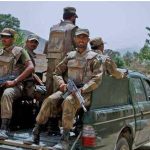
On Kashmir Solidarity Day, speakers highlighted people’s suffering under occupation that impacts every facet of life
On Kashmir Solidarity Day, speakers highlighted people’s suffering under occupation that impacts every facet of life

UNITED NATIONS, Feb 06 (APP):: With a focus on the plight of people living under brutal occupation in Kashmir and Palestine, distinguished speakers told a Pakistan-sponsored event Thursday that for millions of people from Africa to Asia and from the Middle East to Latin America, meaningful social development is impossible under occupation.
They said that the reality of living under the shadow of conflict, occupation, and instability was a reminder that a conflict not only results in humanitarian crisis; it also poses one of the most profound structural barriers to social development and social justice.
These views were expressed by a panel of diplomats, academics and civil society representatives at a side-event, convened jointly by the Permanent Mission of Pakistan to the UN and Consulate General of Pakistan in New York, to mark the Kashmir Solidarity Day, according to a press release of the Pakistani Mission.
It was titled “Leaving No One Behind: Social Development Challenges in Conflict-Affect and Occupied Territories”, held at the UN headquarters on the margins of the 64th Session of the Commission for Social Development.
Those who spoke on the occasion included, Ambassador Asim Iftikhar Ahmad, Permanent Representative of Pakistan to the UN, Ambassador Ahmet Yildiz, Permanent Representative of Turkiye and Chair of OIC-CFM (Council of Foreign Ministers) , Ambassador Hameed Ajibaiye Opeloyeru, Permanent Observer for the Organization of Islamic Cooperation to the UN, Abdulhamid Siyam, a Palestinian journalist and writer, Dr. Ghulam Nabi Fai, Chairman of the World Forum for Peace & Justice, and Ambassador Tofig Musayev, Permanent Representative of Azerbaijan to the UN.
Aamer Ahmad Atozai, Consul General of Pakistan in New York, delivered the concluding remarks on the occasion.
OPening the discussion, Ambassador Asim Iftikhar Ahmad, who also presided over the event, said that for the people of the Indian-occupied Kashmir, occupation is a permanent condition spanning over more than seven decades, which has affected every facet of their daily lives: from education to employment, to mobility, to freedom of expression, and even to hope itself.
Describing Kashmiris’ suffering under the shadow of 900,000 Indian occupation forces as one of interrupted childhoods, constrained aspirations, and a future held hostage by uncertainty, he said that when dignity is denied and voices silenced, development becomes an illusion rather than a promise.
Ambassador Asim Ahmad said that civilian life in Jammu and Kashmir has been subjected to extraordinary militarization.
“Enforced disappearances, extrajudicial killings, arbitrary detentions, and pervasive impunity have left families fractured and communities traumatized. These practices have inflicted deep psychological scars, eroded trust, and damaged the social fabric of the Kashmiri society,” he stated.
The Pakistani envoy referred to the people of Palestine and said that — like Kashmiris — they also continue to endure similar, grave social and humanitarian consequences arising from prolonged occupation, recurrent violence, displacement, and the destruction of civilian infrastructure. The denial of education, healthcare, housing, and livelihoods has entrenched cycles of vulnerability and despair, with women and children bearing the heaviest costs.
“Palestinians’ experience, like that of the Kashmiri people, underscores the devastating impact of occupation on human dignity and social progress,” he added.
Taking part in the panel discussion, Ambassador Yildiz, Permanent Representative of Turkiye, focused his statement on the plight of Kashmiris, Palestinians and Syrian refugees.
He cited Jammu and Kashmir as one of the examples of conflict-affected regions where almost eight decades of dispute has left a huge social development challenge for the Kashmiri people. He said that prolonged tensions, ongoing human rights violations, economic hardships and infrastructural deficiencies in the region are further deepening the humanitarian dimension of the problem.
“As we observe Kashmir Solidarity Day today, we would like to emphasize that the expectations of the Kashmiris must be fulfilled for a lasting peace. The resolution of the Kashmir issue is vital for ensuring social and economic development for Kashmiri people,” he added.
The Turkish envoy said, “we advocate a fair and lasting resolution for the Kashmir issue in line with the UN Charter and relevant UN Resolutions that would restore peace and stability in the region through dialogue between the parties.”
He said that achieving peace and development in Jammu and Kashmir will, at the same time, contribute to the overall prosperity and sustainable development in South Asia and beyond.
Talking about the devastating consequences of conflict and prolonged occupation on social development in Palestine, Ambassador Yildiz said that Palestinians are a nation stripped of their inalienable rights and forced to live under occupation. He said that their land is occupied, natural resources are exploited; and their access to essential services is systematically disrupted.
“Restrictions imposed by the occupying power on land, water, energy, and other natural resources deprive the Palestinian people of the ability to develop a sustainable economy and entrench dependency on external assistance. Restrictions on movement, recurrent violence, and the destruction of civilian infrastructure erode social development,” he said.
In his statement, Ambassador Hameed Ajibaiye Opeloyeru, Permanent Observer of the OIC to the UN, stressed that wars and conflicts erode trade, development, and social cohesion. He mentioned the OIC’s strong peace-building architecture and its close collaboration with the United Nations in conflict prevention and mediation.
Reaffirming the OIC’s principled stance, he underscored the urgency of resolving long-standing disputes, especially Jammu and Kashmir, in accordance with United Nations resolutions and international legitimacy. He reiterated the OIC’s unwavering focus on the inalienable rights of the Palestinian and Kashmiri people and highlighted OIC initiatives aimed at poverty alleviation, employment generation, women’s economic empowerment, youth inclusion, and combating Islamophobia and religious intolerance, all of which remain central to fostering a durable culture of peace through dialogue, diplomacy, and inclusive social development.
Ambassador Musayev, Azerbaijan’s envoy, highlighted the severe social and humanitarian consequences of conflict and occupation, including displacement, food insecurity, disrupted education, and lasting psychological harm, particularly to children.
Citing Azerbaijan’s experience, he outlined post-2020 reconstruction and rehabilitation efforts to enable the safe return of internally displaced persons through major investments in housing, infrastructure, livelihoods, and social support, while noting persistent challenges such as landmines and missing persons. He emphasized the need for sustained national action, international cooperation, and solidarity to address social development challenges in conflict-affected areas, reaffirming Azerbaijan’s commitment to the Doha Political Declaration of 2025 and the principle of leaving no one behind.
In emotional remarks, Dr. Abdulhamid Siyam, a Palestinian academic and writer drew a parallel between Palestine and Jammu and Kashmir, describing both as enduring symbols of life under occupation and denial of self-determination.
Speaking from living experience in West Bank, Prof. Siyam stressed that meaningful social development is impossible under occupation, displacement, and systematic societal dismantling.
Referring to Gaza and the West Bank, he highlighted mass displacement, denial of education, pervasive movement restrictions, daily humiliation, and entrenched impunity for violence. He warned that failing to explicitly acknowledge occupation as the root cause renders international commitments hollow, and emphasized that peoples under occupation, including Kashmiris, continue to endure and resist in defence of their dignity and identity.
Dr. Ghulam Nabi Fai, Chairman of the World Forum for Peace and Justice, stressed that sustainable social development in Jammu and Kashmir is impossible under conditions of prolonged occupation, militarization, and insecurity. He highlighted the severe social consequences of mass troop deployment and legal impunity, including disrupted daily life, prolonged school closures, psychological trauma among children, a rising number of orphans, and widespread violence against women.
Citing international reports, Dr. Fai underscored that these realities fundamentally undermine social and economic development and must be addressed in line with international commitments and the principles affirmed in the Doha Declaration.
In his concluding remarks, Consul-General Aamer Atozai paid rich tribute to Kashmiris for their sacrifices, and resilience in pursuit of their inalienable right to self-determination. Referring to the side-event, he said that the voices we heard today—from different regions and lived experiences—have underscored a common truth: communities living under occupation and prolonged conflict are pushed to the margins of development.
He said that women, children, youth, persons with disabilities, and the elderly bear a disproportionate burden, often with limited visibility and insufficient international response.
“Leaving such populations behind weakens the credibility of our collective global commitments,” he said.
Ms. Saima Saleem, Counsellor at the Pakistan Mission, moderated the event.