ISLAMABAD, Feb 03 (APP):Lawmakers on Tuesday stressed the need for national unity, firm action against militancy and a comprehensive strategy to address the underlying causes of unrest as the National Assembly debated the prevailing law and order situation in the country, with particular focus on Balochistan. The discussion took place following a motion moved by Minister of State for Interior and Narcotics Control Muhammad Tallal Badar, during which members from …
Lawmakers call for unity, firm action to address unrest, militancy
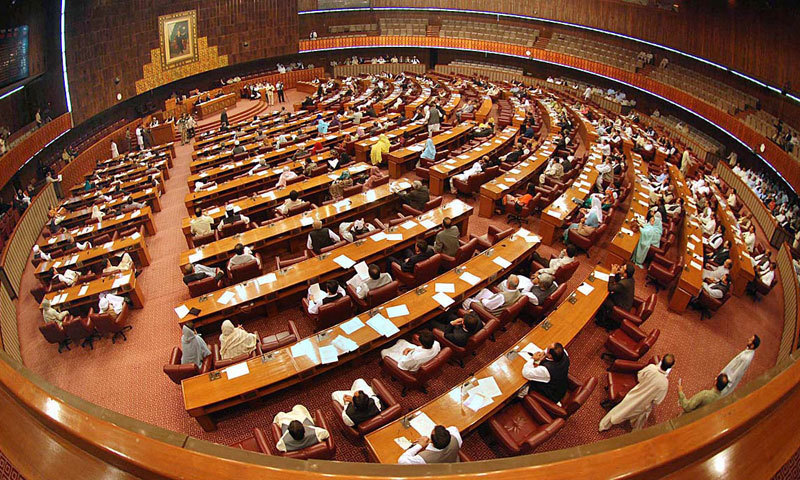
ISLAMABAD, Feb 03 (APP):Lawmakers on Tuesday stressed the need for national unity, firm action against militancy and a comprehensive strategy to address the underlying causes of unrest as the National Assembly debated the prevailing law and order situation in the country, with particular focus on Balochistan.
The discussion took place following a motion moved by Minister of State for Interior and Narcotics Control Muhammad Tallal Badar, during which members from across the political spectrum highlighted security, political and social aspects of the issue.
Participating in the debate, MNA Aliya Kamran called for national unity to counter what she described as external attempts to destabilise Pakistan, linking the country’s security and development to the protection of its sovereignty.
Referring to recent regional developments, she said that after a setback in the so-called “Operation Sandoor”, India was seeking to foment unrest inside Pakistan.
She stressed that such challenges could only be confronted through collective resolve and rejection of hostile narratives, adding that the security forces remained the frontline defence against foreign conspiracies.
MNA Aliya Hamza Malik condemned terrorism in all its forms and called for a deeper examination of the drivers of militancy.
She said radicalisation and the involvement of women in suicide attacks highlighted the need to understand how extremist networks recruit and operate.
Emphasising dialogue and social interventions, she warned that failure to address the situation in Balochistan could result in serious consequences.
Calling for decisive measures, MNA Sofia Saeed said militants and those facilitating them must be dealt with firmly to improve the security environment.
She emphasised strengthening preventive mechanisms and enhancing coordination among institutions to ensure public safety.
MNA Ijaz ul Haq said insurgency in Balochistan was not a new phenomenon and should not be treated as a minor issue.
Describing the recent incident as a coordinated security challenge, he stressed reconciliation and engagement with the people rather than negotiations with militants.
He said a clear and consistent policy was needed to address root causes while ensuring the writ of the state.
MNA Hina Rabbani Khar said sustainable peace in Balochistan required understanding the situation from the perspective of the people of the province.
She stressed the need to listen to local concerns and recognise the realities faced by communities on the ground.
MNA Mirza Ikhtiar Baig strongly condemned the terrorist attack in Balochistan and paid tribute to the Pakistan Army for neutralising the attackers.
He also called for full implementation of the National Action Plan across the country.
MNA Sabheen Ghoury said ending the sense of deprivation in Balochistan was essential for lasting peace, adding that dialogue remained key to resolving long-standing grievances.
MNA Noor Alam Khan said civilians and security personnel in Khyber Pakhtunkhwa were being martyred on a daily basis, while repeated attacks on educational institutions were disrupting schooling, particularly for children and women.
He rejected any distinction between so-called “good” and “bad” militants, saying anyone targeting Pakistan, its armed forces or educational institutions must be dealt with firmly.
The House underscored the need for unity, coordinated policy measures and sustained efforts to restore peace and stability, particularly in conflict-affected regions.