China to play constructive role ‘in our way’ on N. Korea: Top Envoy
China to play constructive role ‘in our way’ on N. Korea: Top Envoy
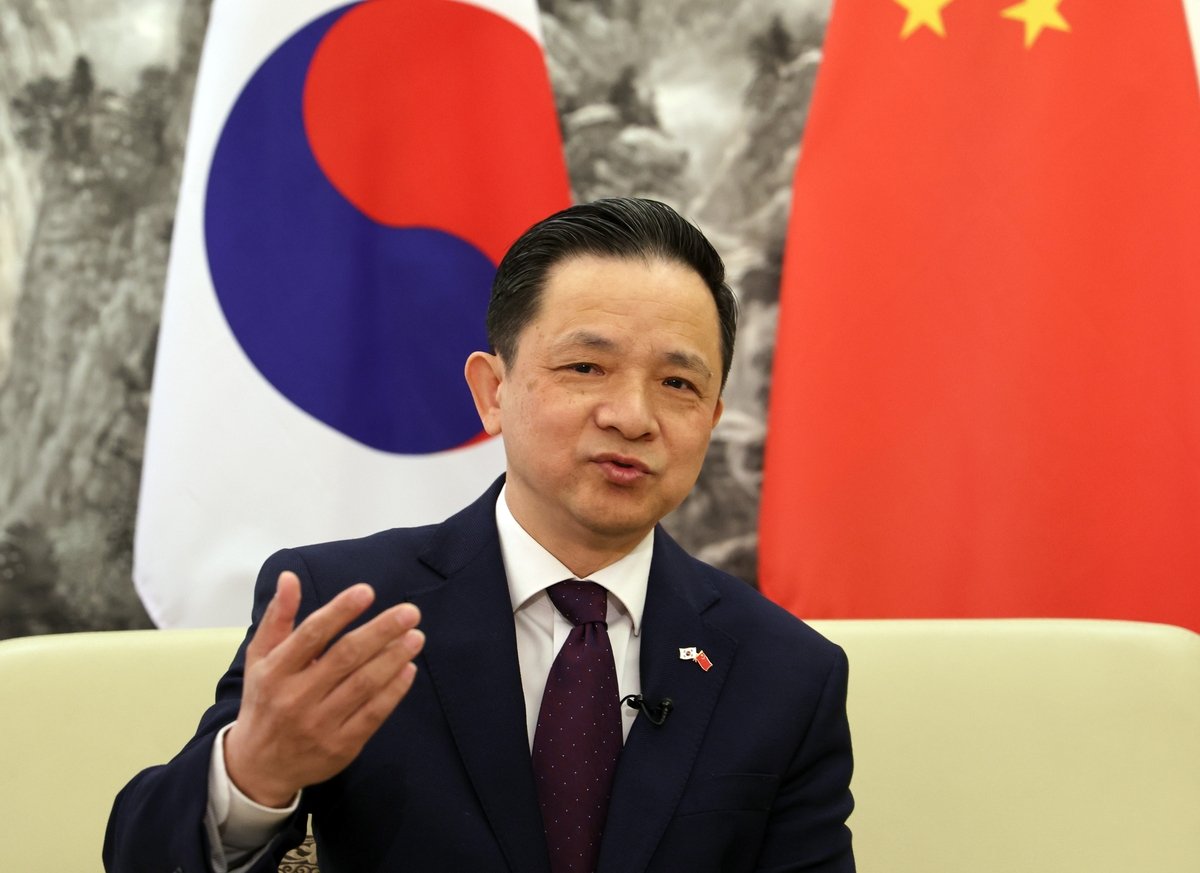
SEOUL, Feb 3 (YONHAP/APP): China will continue to play a constructive role “in our way” for peace and stability on the Korean Peninsula, Beijing’s top envoy has said, hoping that the parties involved will take “effective” steps to help resolve the security issues lying at the core of the stalemate.
Chinese Ambassador to South Korea Dai Bing made the remarks in an interview with Yonhap News Agency on Monday, as Seoul is pushing to restore inter-Korean ties and help revive the stalled talks between the North and the United States. Pyongyang has so far rejected the olive branch.
“Since the launch of the Lee Jae Myung government, South Korea has actively engaged in efforts to ease tensions on the Korean Peninsula and seek contact and dialogue. The Chinese government highly appreciates these efforts,” Dai said through an interpreter.
“China has maintained a stable and consistent policy and position on the Korean Peninsula issues. We will continue to play a constructive role in our way and maintain communication with South Korea,” he said.
Dai did not elaborate on what he meant by “our way,” but his remarks follow last month’s summit talks between President Lee Jae Myung and Chinese President Xi Jinping in Beijing.
Seoul has repeatedly called for Beijing — North Korea’s traditional ally and key economic benefactor — to play an active role in helping bring Pyongyang back to the negotiating table. The nuclear diplomacy between North Korea and the United States collapsed without a deal in Hanoi in 2019.
Following his talks with Xi, Lee said in a press availability in Shanghai that he had requested Xi to act as a mediator on North Korea issues and that Xi advised him to “have patience.”
Lee has also floated the idea of discussing arms control with Pyongyang, saying that prioritizing the denuclearization goal would not help make progress with the North given its growing nuclear and missile capabilities.
“The root of the Korean Peninsula issue lies in security,” Dai said. “We hope that the relevant parties will focus on the security side and take effective measures accordingly,” he said, apparently suggesting that certain security guarantees should be offered to draw the North into talks.
Regarding China’s steel structures in the overlapping waters of the Yellow Sea, Dai pointed out that “baseless rumors” about the issue have been spread to stir disagreements between Seoul and Beijing, dismissing suspicion that the structures are for military purposes.
“Some individuals have spread baseless rumors or exaggerated the facts, with the aim of amplifying differences between China and South Korea,” Dai said.
“We reaffirm that the so-called maritime structures are a Chinese deep-sea aquaculture facility for salmon farming, not a military installation,” he said.
Tensions flared up after China built two buoys and a fixed tower between 2018 and 2024 in the Yellow Sea area where their exclusive economic zones (EEZs) overlap. China claimed the two buoys were fish farms and the third fixed structure was a management facility.
However, skeptics in Seoul have raised concerns that the structures may be Beijing’s “gray zone” tactic to pave the way for military use and territorial expansion.
“We recognize that there are overlapping claims between China and South Korea regarding maritime rights and interests that have resulted in certain differences in the fisheries sector,” Dai said.
China announced last week the fixed platform would be removed from the overlapping waters, a move seen as a follow-up step from the leaders’ agreements at last month’s summit.
The fixed tower, which China claims to be a management platform for fish farms, has drawn particular concern from Seoul, as it is believed to be a decommissioned oil rig, equipped with a helipad.
“We hope both sides will advance maritime boundary demarcation talks and make positive progress based on mutual respect and each other’s legitimate concerns,” he said.