ISLAMABAD, Feb 03 (APP):Jam Kamal Khan, Federal Minister for Commerce, held a detailed meeting in Islamabad with Laziz Kudratov, Minister of Investment, Industry and Trade of the Republic of Uzbekistan, to review progress in bilateral economic cooperation and agree on practical steps to accelerate trade, investment, connectivity and sectoral partnerships. Welcoming the Uzbek delegation, the Federal Minister noted that Pakistan–Uzbekistan engagement has intensified significantly over the past two years through …
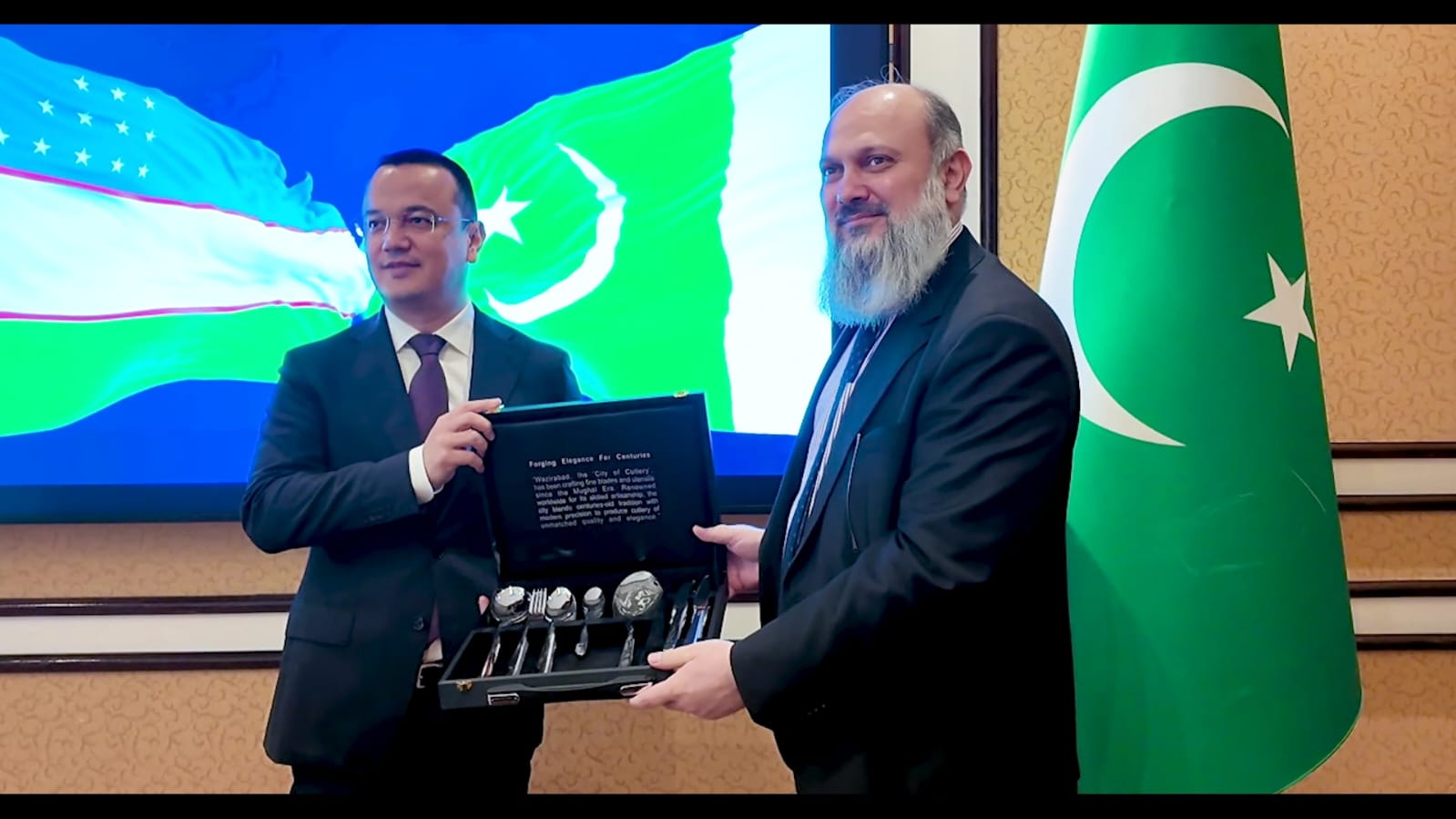
ISLAMABAD, Feb 03 (APP):Jam Kamal Khan, Federal Minister for Commerce, held a detailed meeting in Islamabad with Laziz Kudratov, Minister of Investment, Industry and Trade of the Republic of Uzbekistan, to review progress in bilateral economic cooperation and agree on practical steps to accelerate trade, investment, connectivity and sectoral partnerships.
Welcoming the Uzbek delegation, the Federal Minister noted that Pakistan–Uzbekistan engagement has intensified significantly over the past two years through frequent high-level contacts and institutional follow-up, and stressed that the priority now is to “materialize” opportunities by closing gaps in logistics, business linkages and implementation,said a release issued here on Tuesday.
He also pointed to the importance of keeping trade and investment coordination streamlined, while reaffirming Pakistan’s full support for Uzbekistan across trade development initiatives.

The Uzbek Minister, thanking Pakistan for the hospitality and arrangements for the delegation’s visit, said both sides were preparing for an important upcoming high-level visit from Uzbekistan which, he expressed confidence, would mark another milestone in bilateral partnership. He highlighted improving trade indicators, sharing that bilateral trade had increased by around 10 percent last year, with Uzbekistan’s imports from Pakistan rising by about 12 percent, while Uzbek exports to Pakistan grew by around 8 percent.
He underlined the need to balance and scale trade, setting an ambitious target of $2 billion in bilateral trade through deeper industrial cooperation and new sectoral collaboration.
A major focus of the meeting was progress on trade facilitation and market access. The Uzbek side appreciated the constructive negotiations on the preferential trade framework, including expansion of the product coverage list from 34 to 92 items, and indicated interest in broadening cooperation into services and investment-led arrangements over time.
The Federal Minister, in turn, welcomed the forward movement on trade arrangements and emphasized that sustained implementation—supported by business-to-business engagement—would be essential for turning frameworks into increased shipments, contracts and joint ventures.
Investment and industrial cooperation featured prominently, with Uzbekistan noting that 228 Pakistani companies are currently operating in Uzbekistan and that 80 new companies were registered there in the last year alone. Both sides discussed expanding partnerships in priority sectors including food security, mining, textiles, leather, and pharmaceuticals, alongside value-added manufacturing and specialized industrial cooperation.
The Uzbek Minister said Uzbek companies are keen to explore investment and projects in Pakistan as well, including in food security and meat production, rice cultivation opportunities, and mining.
The two sides also reviewed the positive momentum in people-to-people and business connectivity, welcoming the resumption and scaling up of direct air links.
Uzbekistan reported that flights have been restarted and expanded to multiple weekly frequencies from Islamabad and Lahore, with additional services planned from Karachi, aiming to reach six flights per week between the two countries—an increase expected to strengthen commercial travel, tourism and trade engagement.
On regional connectivity and logistics, both sides discussed challenges stemming from disruption of traditional routes, particularly due to border and transit constraints in the neighborhood. In this context, the meeting explored alternative corridors and the role of National Logistics Corporation in routing cargo through the northern corridor and via Kashgar as a logistics and warehousing hub.
The Uzbek side shared that Pakistani logistics operators have begun shifting cargo through the northern route regularly, though with higher costs and longer delivery times.
Both Ministers agreed that improving predictability and reducing friction on alternative corridors is now critical for trade continuity.
A key outcome of the discussion was the proposal to pursue a multi-country “green corridor” arrangement involving Pakistan, China and Central Asian partners to facilitate smoother movement of goods, supported by clear legal and operational mechanisms. The Uzbek side urged coordinated engagement with Chinese authorities to address bottlenecks, and welcomed the idea of leveraging warehousing capacity in Kashgar, including logistics facilities offered for use to support onward movement of cargo. Both sides agreed that diversified routes are essential to strengthen resilience in regional trade.
The meeting devoted significant attention to mining and minerals cooperation, where the Federal Minister underscored Pakistan’s need for modern exploration capacity, technical surveying, drilling services and technology-driven mining development.
Uzbekistan briefed Pakistan on its deep expertise—built over decades—in exploration, laboratories and both open-pit and shaft mining, and shared that a specialized overseas geology and mining services company has been established to provide services outside Uzbekistan.
The Uzbek delegation indicated readiness to work with Pakistani partners on exploration services, knowledge transfer, and joint projects, while also engaging with Pakistan’s geological institutions.
The conversation further expanded to agriculture and value-added exports, including collaboration on livestock and red-meat value chains, rice varieties and cultivation models, and processed foods such as dehydrated fruits, juices and concentrates.
The Ministers discussed the importance of compliance, standards, and investment-backed models to enable Pakistan to scale exportable surpluses and tap larger markets in the region.
Concluding the meeting, both Ministers reaffirmed their commitment to deepening Pakistan–Uzbekistan economic ties through accelerated implementation, sustained institutional coordination, and expanded B2B engagement.
They agreed to maintain close follow-up across trade facilitation, connectivity, mining cooperation and food security initiatives, with the shared objective of translating strong political goodwill into measurable trade and investment outcomes.