
By Abdul Samad Tariq ISLAMABAD, Feb 01 (APP): As climate shocks intensify across Pakistan — from devastating floods to deepening water scarcity — an often-overlooked natural ally is quietly standing guard: the country’s wetlands. Ahead of World Wetlands Day 2026, observed globally on February 2, Pakistan’s Ministry of Climate Change and Environmental Coordination (MoCC&EC) has renewed a strong call to recognise wetlands not as wastelands, but as vital national climate …
Wetlands: Pakistan’s silent shield against floods, water stress, climate extremes
By Abdul Samad Tariq
ISLAMABAD, Feb 01 (APP): As climate shocks intensify across Pakistan — from devastating floods to deepening water scarcity — an often-overlooked natural ally is quietly standing guard: the country’s wetlands.
Ahead of World Wetlands Day 2026, observed globally on February 2, Pakistan’s Ministry of Climate Change and Environmental Coordination (MoCC&EC) has renewed a strong call to recognise wetlands not as wastelands, but as vital national climate infrastructure essential for the country’s survival in a warming world.
Pakistan is home to more than 240 significant wetlands, covering nearly 10 per cent of its land area, including 19 internationally recognised Ramsar sites.
From the freshwater lakes of Sindh to the coastal marshes of Balochistan and riverine floodplains of Punjab, these ecosystems perform life-saving functions — absorbing flood-waters, recharging groundwater, filtering pollution and sustaining biodiversity.
“Nature and climate are two sides of the same coin,” said Mohammad Saleem Shaikh, Media Spokesperson and Climate Policy Advocacy Specialist at the ministry. “Healthy wetlands regulate water flows, reduce flood risks and support livelihoods. Protecting wetlands ultimately means protecting people and the economy,” he told APP.
Wetlands act as natural sponges during extreme rainfall, slowing floodwaters and reducing damage to downstream communities. They also play a crucial role during dry periods by storing water and replenishing underground aquifers — a function that has become increasingly critical as Pakistan faces prolonged droughts and declining river flows.
According to global conservation assessments, wetlands worldwide are vanishing three times faster than forests, with nearly 35 per cent lost since 1970.
Pakistan’s wetlands face mounting pressure from untreated wastewater, agricultural runoff, encroachments, unregulated urban expansion and the accelerating impacts of climate change.
“What is worrying is that wetlands are still widely perceived as unused or expendable land,” Shaikh warned. “This outdated mindset is dangerous and undermines our climate resilience.”
Despite covering only a small fraction of the Earth’s surface, wetlands support around 40 per cent of all plant and animal species globally.
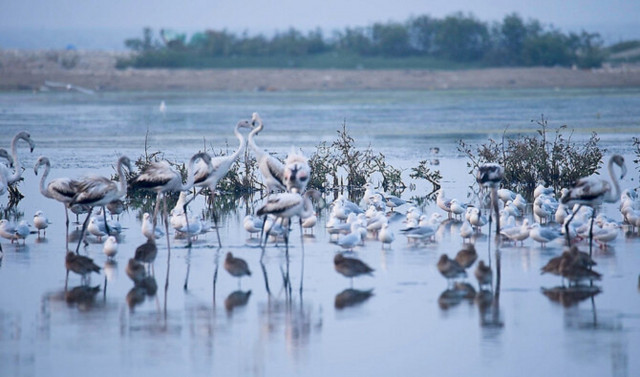
In Pakistan, Ramsar-listed wetlands such as Keenjhar, Haleji, Chashma Barrage and the Jiwani coastal wetlands serve as critical breeding and feeding grounds for migratory birds travelling along the Central Asian Flyway, including flamingos, cranes and endangered waterfowl.
These ecosystems also underpin fisheries, agriculture and eco-tourism, supporting millions of livelihoods across the country.
The 2026 theme, “Wetlands and Traditional Knowledge: Celebrating Cultural Heritage,” highlights the role of indigenous and local communities who have sustainably managed wetlands for generations through seasonal fishing practices, grazing norms and water-sharing systems rooted in observation and stewardship.
“Blending scientific research with traditional knowledge leads to more inclusive and lasting conservation outcomes,” Shaikh said.
Communities in the Indus Basin, coastal Sindh and Balochistan have long relied on wetlands not just for income, but for cultural identity — knowledge now increasingly recognised as vital for effective climate adaptation.
The climate ministry says wetlands are being increasingly integrated into Pakistan’s climate adaptation and disaster risk reduction strategies.
Conservation and restoration efforts are aligned with national initiatives such as the National Climate Change Policy, National Adaptation Plan, Living Indus Initiative and Recharge Pakistan Programme, as well as international commitments under the Ramsar Convention.
Key actions include wetland mapping, legal protection of Ramsar sites, pollution control, improved water governance, removal of encroachments and incorporating wetlands into flood management planning.
Civil society organisations are also contributing. WWF-Pakistan, through projects like Recharge Pakistan and Water Resource Accountability in Pakistan (WRAP), is piloting wetland restoration and floodplain reconnection in vulnerable regions to reduce disaster risks while supporting local livelihoods.
The Ministry of Climate Change has urged citizens, lawmakers and planners to place wetlands at the heart of development decisions.
“Investing in wetlands is one of Pakistan’s smartest climate choices,” Shaikh said. “They lower flood damage, improve groundwater levels, stem biodiversity loss and enhance human wellbeing. Parliament must champion wetlands, and communities must be empowered as their custodians.”
World Wetlands Day commemorates the signing of the Wetlands Convention in 1971 — a reminder that safeguarding these ecosystems is not just about conservation, but about securing a climate-resilient future for Pakistan.