PESHAWAR, Feb 01 (APP):At a time when many educated young Pakistanis continue to pursue the increasingly elusive dream of a government job, 30-year-old Ibrahim Khan from Mohib Banda village in Nowshera district chose a different path which is rooted in hard work, and opportunity. Nestled along the scenic banks of the River Kabul, Ibrahim’s modest two-acre livestock farm today stands as a symbol of self-reliance and rural prosperity. “I remained …
Unlocking rural wealth in Pakistan through livestock farming
PESHAWAR, Feb 01 (APP):At a time when many educated young Pakistanis continue to pursue the increasingly elusive dream of a government job, 30-year-old Ibrahim Khan from Mohib Banda village in Nowshera district chose a different path which is rooted in hard work, and opportunity.
Nestled along the scenic banks of the River Kabul, Ibrahim’s modest two-acre livestock farm today stands as a symbol of self-reliance and rural prosperity.
“I remained jobless for almost five years after completing my post-graduation,” Ibrahim recalled with a smile while talking to APP.
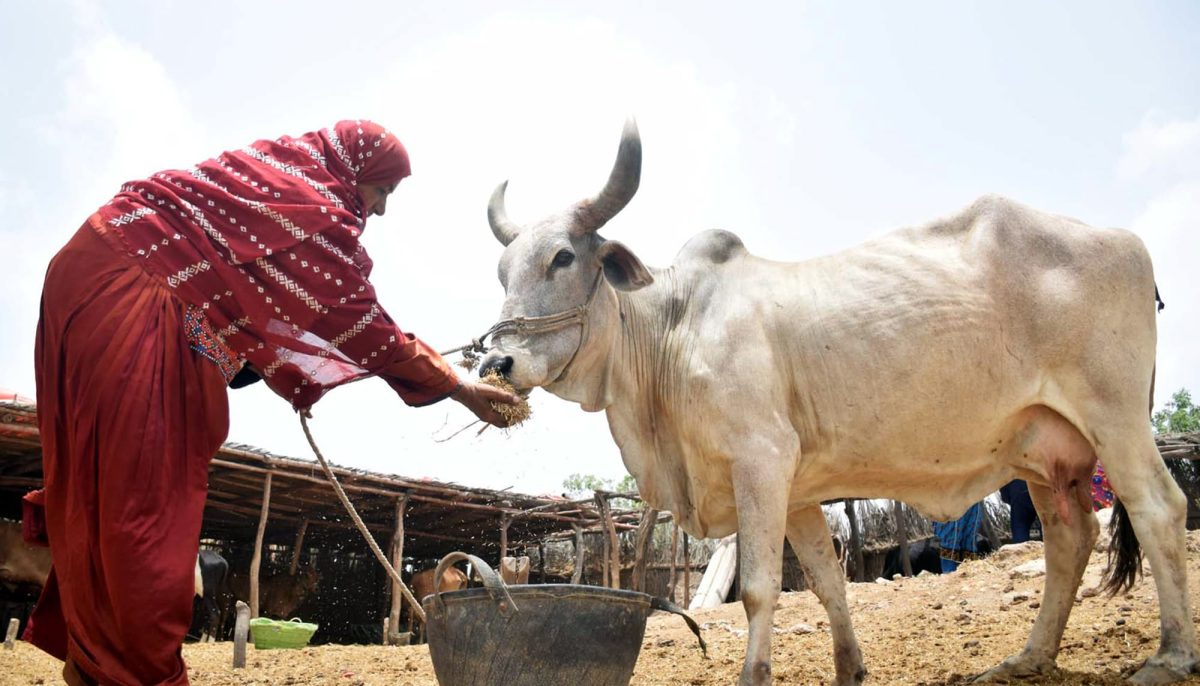
Watering his buffalos and cows with water pumps, he said, “On the advice of my late father, Sardar Khan who even sold a small piece of land to support me—I decided to invest in livestock farming. Since then, I have never looked back.”
What began as a leap of faith has evolved into a thriving cattle business. Ibrahim now supplies fresh milk to various parts of Peshawar, earns a stable income for his family, and provides employment to five local workers which is an achievement he once thought impossible.
His success story reflects the untapped potential of livestock entrepreneurship in Pakistan’s rural and peri-urban areas, particularly when aligned with focused government support.
Government-Led Transformation
Ibrahim’s journey is not an isolated one. Across Khyber Pakhtunkhwa (KP), a quiet transformation is underway, driven by the Federal Government’s strategic investment in the livestock and dairy sectors under the National Agriculture Programme—a massive Rs309.7 billion initiative aimed at boosting food security, reducing poverty, and generating employment.
In KP alone, three flagship projects have played a pivotal role in strengthening meat and milk production while uplifting marginalized communities. These include the Save the Calf Project (Rs1,554 million), Feedlot Fattening Programme (Rs826 million), and Poverty Alleviation through Development of Rural Poultry (Rs834 million).
Together, these initiatives are providing farmers across all 35 districts of the province including the newly merged tribal areas with vital support ranging from cash incentives and free vaccines to technical training and farm equipment.
Among these initiatives, Dr Aftab Ahmad, Director Livestock said that the Save the Calf Project has emerged as a game-changer for KP’s meat sector.
The project has successfully fattened around 120,000 male buffalo calves, helping stabilize meat supply and prices across the province.
Under the program, he said farmers receive Rs6,500 per calf after six months of rearing, along with 10 kilograms of milk replacer and essential vaccinations. Nearly 30,000 calves are fattened annually, with eligibility open to animals aged between 15 days and one month.
The project funded jointly by the KP Government (Rs1,243 million) and the Federal Government (Rs135 million) has witnessed strong participation. Farmers registering at least 15 calves are also provided fodder choppers, free training, and Rs4,000 per animal upon completing a successful three-month fattening cycle.
Beyond cattle farming, the National Poultry Project is transforming lives at the household level, particularly for rural women.
Shageef Bibi, a 52-year-old mother of four from Nowshera, is one such beneficiary. She received poultry birds from the Livestock and Dairy Development Department under the government’s initiative and now runs a small but profitable venture from the rooftop of her 10-marla home.
“Out of 10 hens, I get about eight eggs daily,” she told APP. “We consume three at home and sell the rest at Rs35 per egg.”
With virtually no feeding costs, the income supports her retired husband, helps cover household expenses, and ensures her children’s education. In addition to poultry, Shageef also rears a cow, further strengthening her family’s financial stability.
Stories like those of Ibrahim Khan and Shageef Bibi highlight how targeted investment in livestock and poultry farming can unlock economic opportunities, reduce unemployment, and empower communities especially youth and women in rural Pakistan.
As these initiatives continue to expand, livestock farming is fast emerging not just as a livelihood, but as a sustainable gateway to prosperity for thousands jobless across the country.