
ISLAMABAD, Jan 29 (APP):Ambassadors of Türkiye and Azerbaijan have called for deepening strategic, economic, and institutional cooperation with Pakistan, underscoring that closer trilateral coordination is vital for regional stability and collective prosperity in an increasingly uncertain global environment. They expressed these views while addressing the inaugural seminar of the Institute of Regional Studies’ (IRS) Türkiye-Azerbaijan Program, titled “Shared Perspectives and Stability: Türkiye, Azerbaijan, and Pakistan,” said a press release issued …
Türkiye, Azerbaijan envoys call for expanding cooperation with Pakistan
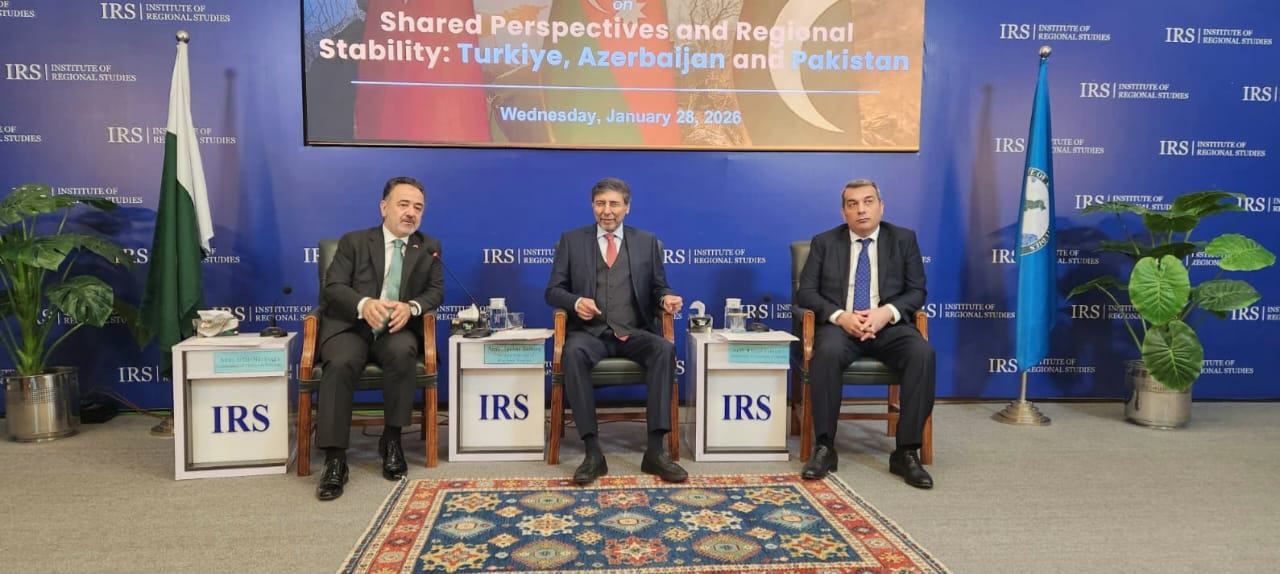
ISLAMABAD, Jan 29 (APP):Ambassadors of Türkiye and Azerbaijan have called for deepening strategic, economic, and institutional cooperation with Pakistan, underscoring that closer trilateral coordination is vital for regional stability and collective prosperity in an increasingly uncertain global environment.
They expressed these views while addressing the inaugural seminar of the Institute of Regional Studies’ (IRS) Türkiye-Azerbaijan Program, titled “Shared Perspectives and Stability: Türkiye, Azerbaijan, and Pakistan,” said a press release issued on Thursday.
President IRS Ambassador Jauhar Saleem, in his opening remarks, highlighted the deep-rooted historical, cultural and civilizational bonds among the three brotherly nations, noting that shared regional security challenges had further strengthened mutual understanding and collaboration. He observed that shared experiences had strengthened mutual understanding and reinforced cooperation in addressing traditional and non-traditional security challenges among the three brotherly countries.
Ambassador of Türkiye Irfan Neziroglu emphasized the importance of geostrategic and geopolitical cooperation, particularly in boosting trade, economic connectivity and sustainable development. He described Türkiye, Azerbaijan and Pakistan as “three states but one nation,” and referred to the trilateral summits held in Astana in 2024 and Lachin in November 2025 as key milestones in institutionalizing structured cooperation among the three countries.
Ambassador of Azerbaijan Khazar Farhadov said trilateral collaboration among Türkiye, Azerbaijan and Pakistan dated back to 2017, though not officially recognized. He emphasized the importance of taking practical steps for bringing concrete results and consolidating cooperation and engagement among the three states.
The participants of the event highlighted the importance of regionalism and regional platforms as mechanisms for advancing shared interests, trust, and solidarity. They also stressed that stronger institutional collaboration could pave the way for long-term regional resilience. The importance of people-to-people contacts, academic exchange, and policy dialogue was also highlighted during the event.
The discussion also reaffirmed the collective commitment of the three countries to regional peace, stability and security, particularly against the backdrop of rising geopolitical rivalries and global uncertainty.
During the event, the Institute of Regional Studies was acknowledged as a credible policy research institution
providing meaningful policy input and intellectual platforms for dialogue.
It was mentioned that the newly inaugurated program of IRS aimed to enhance intellectual cooperation, identify new areas of collaboration, and support future policymakers and researchers through informed analysis and shared learning.