Minister urges opposition to offer solutions, not rhetoric
Minister urges opposition to offer solutions, not rhetoric
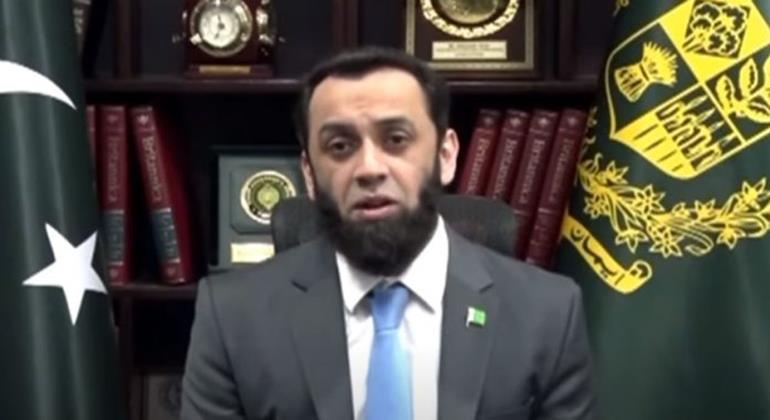
ISLAMABAD, Jan 28 (APP): Minister for Information and Broadcasting Attaullah Tarar on Wednesday called on the opposition to adopt a solution-oriented approach, urging them to move beyond point scoring and criticism by presenting constructive alternatives.
Speaking at the oath-taking ceremony of the Khyber Pakhtunkhwa Youth Assembly, flanked by Prime Minister’s Coordinator for Information on KP Affairs Ikhtiar Wali Khan, he said one province continues to lag behind due to narrative-driven politics.
He stressed the need to replicate modern facilities such as forensic labs and crime control departments developed under Prime Minister Shehbaz Sharif, lamenting that politics has been reduced to “singing and poetry” rather than serious policymaking.
Tarar said politics has transformed into rhetoric on social media, where opponents brand each other as traitors or thieves.
He emphasized that competition among ruling parties should focus on infrastructure development, counterterrorism, and human development indices, noting that skill development is the true measure of progress globally.
Praising the “dynamic youth” of the province, he underscored the importance of student politics in shaping future leaders.
He recalled his own experience, describing the Youth Assembly as a “nursery” for policymaking and decision-making under pressure, and proposed shadow cabinets to ensure alternative policies on economic and health challenges.
Commenting on the state of politics, he said discourse has turned into a “circus,” with little focus on long-term policy. He contrasted today’s rhetoric-driven politics with earlier development-oriented politics led by feudal lords, recalling that former Prime Minister Nawaz Sharif entered politics as finance minister in 1985 before becoming chief minister, where he prioritized health and education.
He also recalled that in 2013 Nawaz Sharif respected PTI’s majority in the KP Assembly and allowed it to form the provincial government despite PML-N having the numbers. Highlighting media evolution, he said print journalism relied on editorial boards, while electronic media brought regulatory frameworks such as PEMRA. In contrast, social media lacks regulation, leading to issues of harassment, intolerance, extremism, and violence, though he acknowledged its positive aspects.
Tarar highlighted achievements in healthcare, citing the Pakistan Kidney and Liver Transplant Institute, which has conducted over 1,000 liver transplants and served as a COVID-19 center, and the Rawalpindi Institute of Cardiology, which caters to patients from KP, GB, and AJK. He lamented the absence of similar facilities in KP.
Defending PML-N’s laptop scheme, he said it was given on merit and proved vital during the COVID-19 lockdown by enabling remote work, while PTI failed to provide comparable support to students. He added that Prime Minister Shehbaz Sharif remains committed to social sector investment, citing Danish Schools that provide poor students with facilities comparable to Aitchison, with priority admissions for orphans.
He shared success stories, including a girl from Layyah now running her own software house and another Danish School graduate became a doctor. He noted that admissions prioritize double orphans, followed by single orphans, ensuring opportunities for the most vulnerable.
The minister said Khyber Pakhtunkhwa holds billions of dollars’ worth of gemstones and minerals, yet no proper system has been developed for extraction or regulation.
On resources, he said KP holds billions of dollars’ worth of gemstones and minerals but lacks proper extraction systems, allowing vested interests to exploit the sector. He contrasted this with Italy, where marble extraction is restricted to experts.
He further noted that safe city cameras and forensic labs established under PML-N helped resolve complex crimes, while overseas Pakistanis sent $3.6 billion in remittances last month, a 17 percent increase from the previous year, turning “brain drain” into “brain gain.”