MIRPUR (AJK) , Jan 28 (APP):The global protests have been held across several countries on the eve of Delhi High Court (DHC) hearing in the case of Yasin Malik, Chairman of his own faction of Jammu and Kashmir Liberation Front (JKLF -Y), (currently languishing in Indian notorious jail),as supporters sought to draw attention to opposition against a government petition seeking the death penalty. The demonstrations took place in multiple …
Worldwide protests held ahead of DHC’s hearing in Yasin Malik’s Case
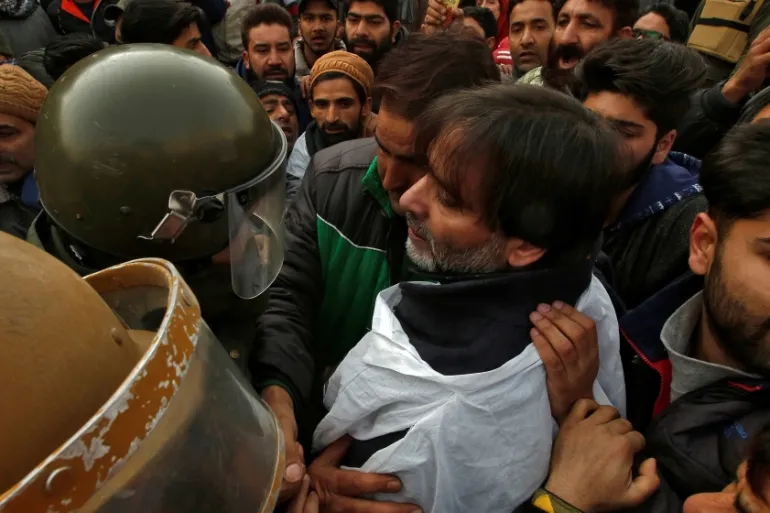
MIRPUR (AJK) , Jan 28 (APP):The global protests have been held across several countries on the eve of Delhi High Court (DHC) hearing in the case of Yasin Malik, Chairman of his own faction of Jammu and Kashmir Liberation Front (JKLF -Y), (currently languishing in Indian notorious jail),as supporters sought to draw attention to opposition against a government petition seeking the death penalty.
The demonstrations took place in multiple cities, including Muzaffarabad, Mirpur, Bagh, Birmingham, London, Brussels, and Islamabad, according to Raja Muzaffar, Coordinator of the Campaign for Justice for Yasin Malik.
Talking to APP , the Kashmiri leader said the protests were peaceful and well-organized and aimed at highlighting international concern over the case.
Muzaffar expressed appreciation to Awami Action Committee, community organizations, human rights groups, student bodies, and civil society activists for organizing and participating in the protests.
He said the timing—one day before the court hearing—was intended to emphasize that the proceedings were being closely watched beyond India.
“The global response reflects growing concern about due process and the use of capital punishment in this case,” he said. He added that the demonstrations were meant to reinforce calls for justice, fairness, and adherence to legal standards.
At the same time, Muzaffar warned against internal divisions within the campaign, stating that attempts to undermine unity could weaken the broader movement.
He said the current phase of the campaign required cohesion, discipline, and responsible engagement.
Yasin Malik, who renounced armed struggle in 1994 and later adopted non-violent political advocacy, is currently serving a life sentence following his conviction in a case prosecuted by India’s National Investigation Agency (NIA).
The Indian government has petitioned the court to convert the sentence into the death penalty, a move that had prompted renewed debate among political leaders, civil society groups, and international observers.
The case has also drawn attention to broader questions surrounding human rights, due process, and political dialogue in Kashmir.
The supporters of Malik argued that pursuing the death penalty would further escalate tensions and undermine prospects for reconciliation.