At UN, Pakistan warns against increasing disregard for int’l law, citing India’s aggressive actions
At UN, Pakistan warns against increasing disregard for int’l law, citing India’s aggressive actions
UNITED NATIONS, Jan 27 (APP): A senior Pakistani diplomat has told the U.N Security Council that erosion of respect for international law is increasingly translating into conflict, as he drew attention to India’s “unprovoked” attack against Pakistan last May, the denial of the Kashmiri people’s right to self-determination and New Delhi’s unilateral suspension of the 1960 Indus Waters Treaty (IWT) between the two neighbours.
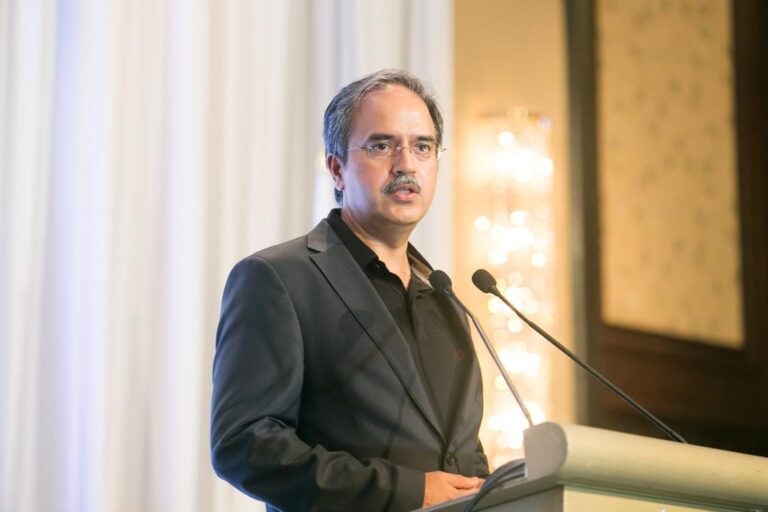
“The core principles of the UN Charter — sovereign equality, non-interference, political independence and territorial integrity, the prohibition of the threat or use of force and self-determination — are being increasingly challenged,” Ambassador Asim Iftikhar Ahmad said in a debate ‘Reaffirming International Rule of Law’ on Monday.
“Attempts to normalize unilateral actions outside the Charter undermine collective security and weaken the credibility of multilateral institutions,” he warned.
Somalia, which holds the Council presidency for January, organized the debate, outlining in its concept note that despite “solemn commitments” repeatedly reaffirmed by the Security Council and the General Assembly, the international community continues to face serious challenges in upholding the rule of law.
For Africa — and for all countries that have experienced the costs of conflict and inequality — the international rule of law is “the guarantor of sovereignty, dignity and justice”, the note states. The United Nations Charter’s eightieth anniversary offers a timely opportunity for the Council to reflect on progress made and challenges that remain.
Calling the debate “timely”, Ambassador Asim Ahmad said that selective application of legal norms, erosion of treaty obligations, and unilateral actions have weakened trust among States and strained the multilateral system anchored in the UN Charter.
“When law yields to power or expediency, instability deepens, disputes entrench further, and peaceful coexistence jeopardized,” the Pakistan envoy told the 15-member council.
Referring to India’s “military aggression” in breach of international law and Pakistani sovereignty, he said that Pakistan exercised its right of self-defence in a “responsible, restrained, and proportionate manner.”
“Our response established that there can be no ‘new normal’ based on coercion or impunity.” the Pakistan envoy said. “Respect for international law remains the only legitimate norm governing inter-State conduct.”
That conflict, he said, also reminded that the root cause of instability in South Asia remains India’s illegal occupation of Jammu and Kashmir, in “gross” violation of Security Council resolutions
“The continued denial of the right to self-determination of the Kashmiri people has grave human rights consequences and imperils durable peace,” the Pakistani envoy said.
“India’s unilateral suspension of the Indus Waters Treaty is another blatant breach of international obligations, threatening the lives and livelihoods of millions and endangering peace and security,” Ambassador Asim Ahmad said.
Pakistan, he added, rejects the weaponization of water and other natural resources. “Treaty compliance is a cornerstone of the international legal order.”
“As a country with unwavering faith in international law and multilateralism, Pakistan is committed to pacific settlement of disputes,” the Pakistan envoy said, noting that within weeks of defeating the military aggression, the Pakistani delegation led the unanimous adoption of Resolution 2788 on peaceful settlement of disputes by the Security Council last July.
Ambassador Asim Ahmad’s pointed remarks about India’s “gross violations of international rule of law and its disputes with Pakistan drew a response from his Indian counterpart Parvathaneni Harish who accused Pakistan — without any evidence — of involvement in the Pahalgam terrorist attack which, he said, led to operation Sindoor.
Ambassador Harish also claimed that Pakistan has no locus standard to comment on matters that are internal to India. “The Union Territory of Jammu and Kashmir has been, is and will always remain, an integral and inalienable part of India.”
As regard IWT, the Indian envoy — again without any evidence– accused Pakistan of violating the spirit of the treaty by inflicting three wars and a number of of terror attack on India.
Pakistan reacted immediately to India’s “spurious” claims, asserting that Jammu and Kashmir has never been a part of India; it never will be.
Under UN Security Council resolutions, Jammu and Kashmir is a disputed territory pending a final resolution, Pakistani delegate Zulfiqar Ali said.
Exercising his right of reply, Zulfiqar Ali, a first secretary at the Pakistan Mission to the UN, pointed out that India brought Kashmir dispute to the United Nations, made solemn pledges, most significantly, with the Kashmiris, for a UN-supervised plebiscite in the disputed territory.
“It (India) now stubbornly refuses to honour its international obligations and remains in violation of international law and relevant Security Council resolutions.
The Pakistani delegate called India a “peddler of lies, planner of global assassination campaigns and a plotter of terrorism in the region and beyond.”
“So much so it doesn’t even shirk from politicizing a field as innocuous as that of sports,” Ali said.
At the same time, he said by suspending Indus Waters Treaty, India now attempts to effect desertification of the ancient fertile plains of Pakistan. “We would counter this latest provocation, this water terrorism, with the same resolve, clarity and success with which we defended our country against India’s aggression in May last year.”
“Sham claims of being world’s largest democracy cannot belie state-sanctioned pogroms led by Hindu extremist organizations against Muslims, Christians, Sikhs and other minorities in India,”Ali remarked.
Opening the debate, UN Secretary-General Antonio Guterres old the Security Council that the rule of law is being replaced by “the law of the jungle” around the world, citing a brazen disregard for international law that has helped humanity avoid a third world war for the past 80 years.
“From Gaza to Ukraine, from the Sahel to Myanmar, in Venezuela and elsewhere, the rule of law is being treated as an à la carte menu,” he said.
The UN chief Guterres described the many ways States are flouting the rule of law with impunity — from the illegal use of force and attacks on civilian infrastructure, to human rights violations, the unlawful development of nuclear weapons, unconstitutional changes of Government and denial of humanitarian aid.
He insisted on maintaining “a relentless push for just and sustainable peace”, “firmly anchored in international law” and enduring because it addresses the root causes of conflict, not just its symptoms.
Guterres stressed the important role played by the Council in this regard, noting no other body or ad-hoc coalition can legally require all Member States to comply with decisions on peace and security or authorize the use of force under international law. “We must act without delay to enhance the representation and effectiveness of this Council,” he emphasized.