LAHORE, Jan 20 (APP):Federal Minister for Information and Broadcasting Attaullah Tarar has called for the promotion of positivity, dialogue, and ethical journalism in society, stressing that hatred, division, and unregulated digital content pose serious challenges to democracy, national cohesion, and professional journalism. Addressing the oath-taking ceremony of the newly elected office-bearers of the Pakistan Federal Union of Columnists and Creators (PFUC), the minister said dissent and difference of opinion are …
Information Minister calls for promoting positivity, ethical journalism, regulation of digital media
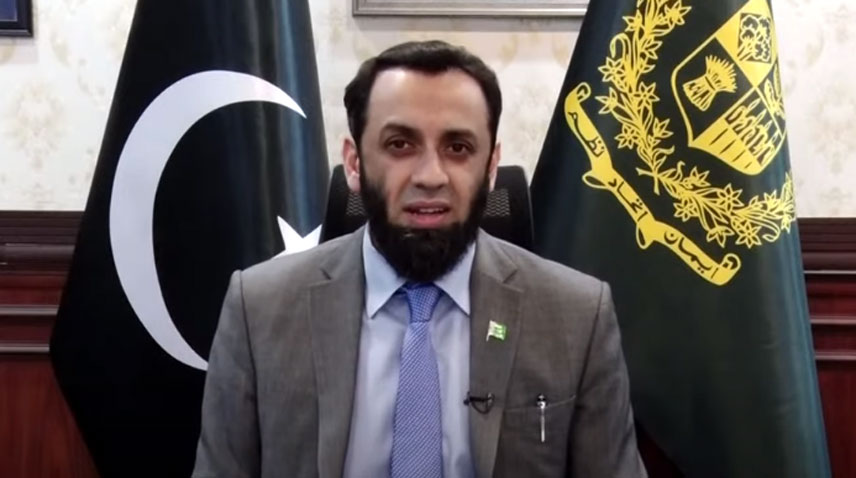
LAHORE, Jan 20 (APP):Federal Minister for Information and Broadcasting Attaullah Tarar has called for the promotion of positivity, dialogue, and ethical journalism in society, stressing that hatred, division, and unregulated digital content pose serious challenges to democracy, national cohesion, and professional journalism.
Addressing the oath-taking ceremony of the newly elected office-bearers of the Pakistan Federal Union of Columnists and Creators (PFUC), the minister said dissent and difference of opinion are the foundation of a healthy democratic system, warning that societies without dissent gradually decline. He said criticism—even when harsh—must be heard and tolerated, adding that as Information Minister, it is his responsibility to listen to criticism, reflect on it, and improve governance and narrative-building.
Tarar expressed serious concern over what he described as “TikTok-style politics and journalism,” stating that while digital platforms have expanded freedom of expression, they largely lack ethical standards, editorial oversight, and professional accountability. He emphasized the need for a regulatory framework that ensures responsibility without suppressing freedom of expression.
Recalling the historic role of print media, he said newspapers once played a central role in shaping journalism, politics, and society through strong editorial boards and ethical codes, despite ideological differences. “Whether it was Nawa-e-Waqt or Jang, there were differences of opinion, but also discipline and responsibility,” he said. He lamented that digital media emerged without undergoing a proper evolutionary process, resulting in the absence of editorial control. “Today, anyone with a device claims to be a journalist or broadcaster. We have yet to clearly define who qualifies as a journalist, writer, or broadcaster,” he added. The minister said the government is working to define these roles and acknowledged delays in establishing institutions envisaged under the Prevention of Electronic Crimes Act (PECA), including the Social Media Protection and Regulatory Authority (SMPRA). However, he maintained that it was not too late to move forward through consultations with all stakeholders. He clarified that the Ministry of Information’s mandate is to promote journalism, not to curb free speech, while noting that debate continues on whether regulatory authority should lie with the Ministry of Interior or the Ministry of Information.
Highlighting his political journey, Tarar said he believes in dialogue over confrontation and accepts constructive criticism of himself, his party, and leadership. However, he warned against sensationalism and the growing trend of targeting state institutions for popularity, calling it harmful to national security and stability.
Strongly condemning terrorism, the minister said he would denounce the Tehreek-e-Taliban Pakistan (TTP) at every forum, declaring terrorism to be against Pakistan’s ideology, integrity, and survival. He criticized selective outrage in political discourse, noting that while politicians are often verbally attacked, armed militant groups are spared condemnation. “This double standard cannot be justified,” he said, adding that any leniency or ambiguity regarding terrorism directly benefits terrorists and is against the national interest.
Tarar emphasized that journalists play a backbone role in strengthening the democratic process and said the government is fully committed to resolving journalists’ issues and ensuring job security by utilizing all available resources. He highlighted the absence of legal protection for digital journalists, sharing that the government facilitated employment opportunities for journalists laid off by digital platforms. He also expressed full support for the formation of a digital journalists’ union.
On economic accountability, the minister stressed that digital content creators earning substantial incomes must also pay taxes. “A salaried person earning Rs35,000 pays tax—so should those earning hundreds of thousands of dollars through digital platforms,” he said.
Paying tribute to legendary journalist Maulana Zafar Ali Khan and other departed writers and journalists, Tarar said nations progress through intellectual struggle, creativity, and unity, adding that writers live on through their ideas and writings. He urged valuing contemporary writers and columnists as an urgent need of the time. Addressing financial issues faced by media organizations, the minister revealed that approximately Rs1.5 billion in outstanding media dues were cleared within his first week in office. He urged media owners to ensure that government payments directly benefit journalists and media workers. He announced the dedication of a newly established office at Radio Pakistan Lahore to the PFUC and proposed scholarships, training workshops, and international research opportunities for writers and creators in collaboration with the United Nations Development Programme (UNDP) and the Institute of Business Administration (IBA) Karachi.
Commenting on politics, Tarar said Quaid Muhammad Nawaz Sharif and Prime Minister Muhammad Shehbaz Sharif promoted tolerance and reconciliation, even embracing political opponents in the national interest. He recalled that during an election campaign, when the PTI founder was injured after falling from a stage, party leaders suspended their campaign and visited him at the hospital, exemplifying political tolerance. In contrast, he said Pakistan Tehreek-e-Insaf (PTI) promoted politics of hatred, abuse, and chaos, describing its mindset as narrow and its conduct as regrettable. He criticized mudslinging against women in the name of political disagreement, calling it unacceptable in any civilized society. The minister also criticized PTI’s performance in Khyber Pakhtunkhwa, calling it “zero,” and said the public there has been neglected. He pointed to poor conditions in health, education, and infrastructure, claiming that even KP ministers do not seek treatment in their own province’s hospitals, while a majority of patients at Punjab’s hospitals—including PKLI and cardiology centers—come from KP. He further noted that dozens of universities in KP lack staff, many districts have no colleges for women, and corruption scandals involving billions of rupees have emerged from Kohistan.
Tarar alleged that PTI avoids criticizing terrorists and accused it of indirectly providing backing to extremist elements. He reiterated that the TTP is an enemy of Pakistan and said the state would pursue terrorists to the last breath, expressing complete confidence in the Pakistan Armed Forces and security institutions, whose personnel, he said, risk their lives daily to defend the country. He warned that any smear campaign against security institutions or mischief against the national narrative would be dealt with strictly under the law.
He said that due to the prudent efforts of Prime Minister Muhammad Shehbaz Sharif and Field Marshal Syed Asim Munir, Pakistan’s economy is moving toward improvement, with important defense and economic agreements being finalized. He added that India continues to suffer the consequences of its defeat in the “Maarka-e-Haq”. Concluding his address, the federal minister said societal progress requires the promotion of creative thinking, knowledge, and awareness, assuring that the government would continue to work shoulder to shoulder with the journalist community to achieve this goal.
Earlier, Federal Minister for Information and Broadcasting Attaullah Tarar administered the oath to the newly elected office-bearers of the Pakistan Federal Union of Columnists and Creators (PFUC).