KIRAN hospital inaugurates its second Halcyon LINAC machine to expand radiotherapy services for cancer patients
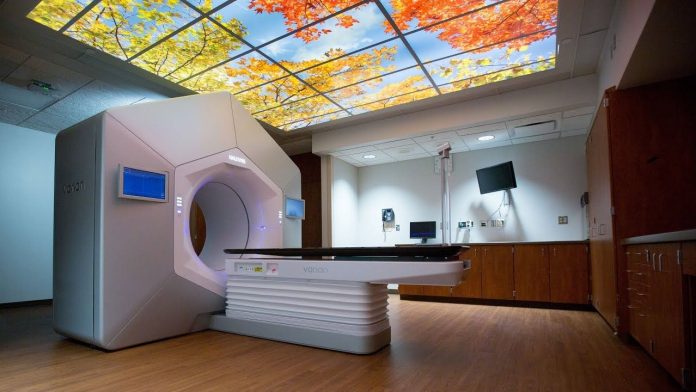
KARACHI, Jan 20 (APP): Karachi Institute of Radiotherapy and Nuclear Medicine (KIRAN), the largest public-sector cancer hospital operated by the Pakistan Atomic Energy Commission (PAEC), has inaugurated state-of-the-art 2nd Halcyon Linear Accelerator, strengthening access to modern radiotherapy services.
With this addition, KIRAN is now operating with a total of four linear accelerators, including two Halcyon.
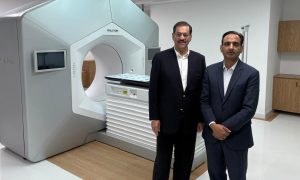
The newly commissioned Halcyon system enables highly precise cancer treatment using modern IMRT and VMAT techniques, ensuring better accuracy and improved patient care.
KIRAN currently provides radiotherapy to approximately 250 cancer patients daily, the highest patient volume for any cancer hospital in the country. With the commissioning of the Halcyon Linear Accelerator, daily treatment capacity is expected to increase to around 400 patients per day, significantly reducing waiting times.
By adding a second Halcyon, KIRAN Hospital aims to strengthen its role as a leading radiotherapy centre in Karachi and expand access to modern treatment for more families. Stakeholders said the project shows how hospitals, community organisations and technology partners can work together so advanced cancer care is within reach for more Pakistanis, regardless of means.
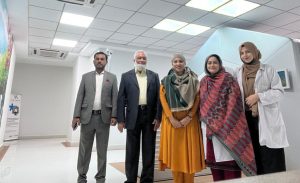
This vital addition has been made possible through the generous support of the KIRAN Patients Welfare Society (KPWS) and the Strategic Plans Division (SPD). All deserving cancer patients will receive free treatment on this machine.
The Halcyon system is built to deliver precision radiotherapy with advanced image guidance used for every treatment session, supporting consistent positioning and precise delivery across all tumour sites. The platform is designed to treat all tumour types in a compact, patient-centred workflow while keeping sessions efficient for clinical teams.
Patient comfort is also a key focus, with a couch that lowers for easier positioning and quieter system motion during setup. A couch-mounted camera and an intercom allow clear communication between the patient and the therapist.
Safety features include collision detection, a six-point safety approach and a daily performance check that takes about five minutes, with newer upgrades supporting precise positioning and smoother workflow.