ISLAMABAD, Jan 20 (APP):Federal Minister for Commerce Jam Kamal Khan held a detailed meeting with the Ambassador of Indonesia to Pakistan, Chandra Warsenanto Sukotjo, on the directions of Prime Minister Shehbaz Sharif, to review and advance bilateral trade, investment, and sector-specific cooperation between Pakistan and Indonesia. During the meeting, the Federal Minister briefed the Ambassador on Pakistan’s evolving trade strategy, with a particular focus on rice exports, a key priority …
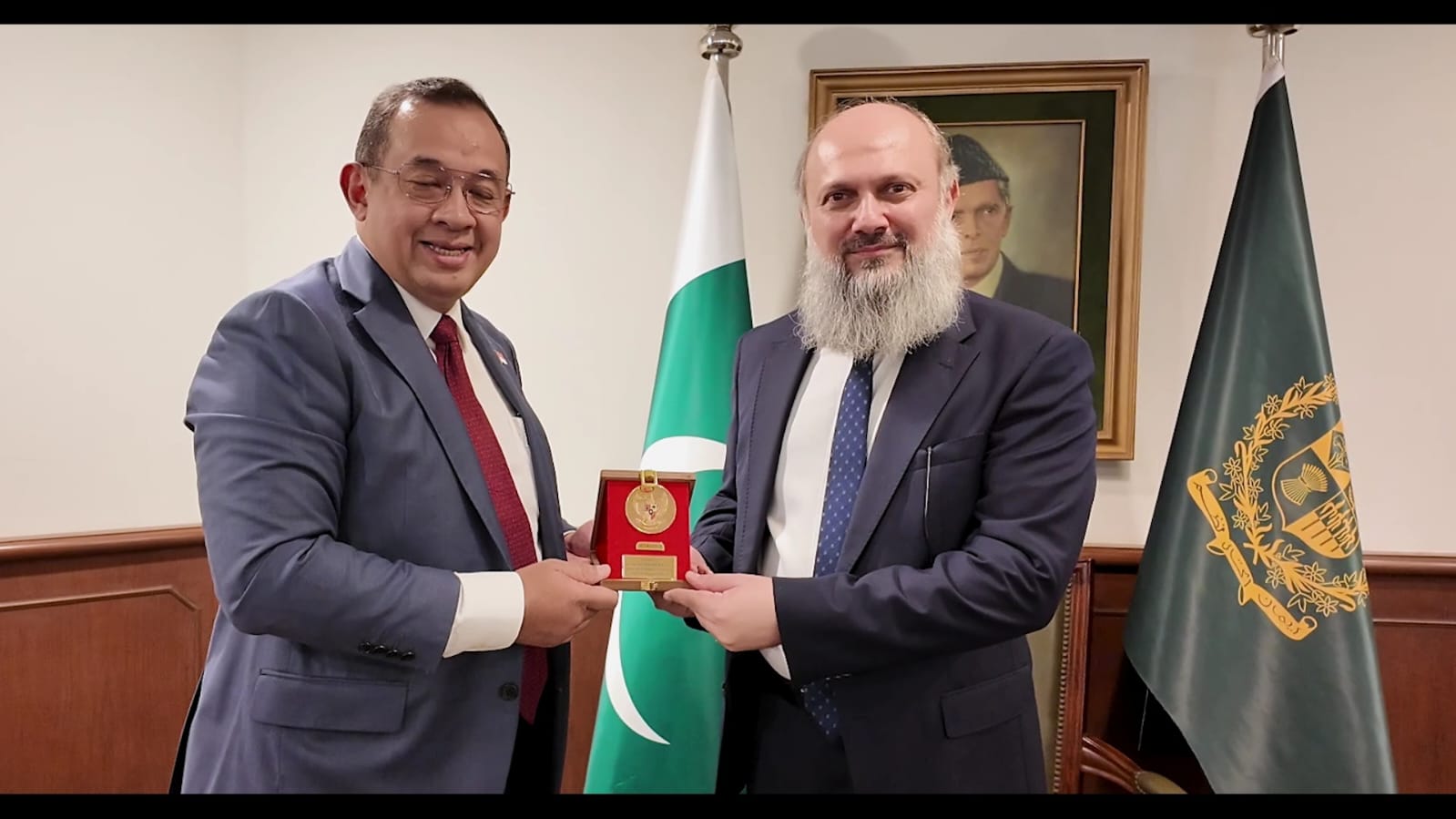
ISLAMABAD, Jan 20 (APP):Federal Minister for Commerce Jam Kamal Khan held a detailed meeting with the Ambassador of Indonesia to Pakistan, Chandra Warsenanto Sukotjo, on the directions of Prime Minister Shehbaz Sharif, to review and advance bilateral trade, investment, and sector-specific cooperation between Pakistan and Indonesia.

During the meeting, the Federal Minister briefed the Ambassador on Pakistan’s evolving trade strategy, with a particular focus on rice exports, a key priority assigned by the Prime Minister.
He noted that Pakistan remains among the world’s leading rice exporters, offering internationally recognized quality, while acknowledging that global price competition—especially following recent market interventions by major producers—has created challenges for exporters. He informed that the government is actively working on financial and commercial mechanisms to enhance price competitiveness without compromising quality, enabling Pakistan to sustain and expand its market share.
Jam Kamal Khan highlighted Pakistan’s proposal to re-engage selected partner countries, including Indonesia, through both open-market and government-to-government (G2G) frameworks, stressing that price, reliability, and quality are central considerations for importing countries. In this context, he underscored the importance of reviving the Pakistan–Indonesia rice cooperation framework and initiating fresh dialogue to unlock mutually beneficial opportunities.

Officials recalled that a rice MoU signed in 2015—providing for up to one million metric tons of rice procurement annually on a G2G basis—had expired in 2019. Pakistan has already shared a revised draft with the Indonesian side and expressed hope for its early finalization to institutionalize long-term cooperation in the staple commodity.
The Commerce Minister also raised issues affecting agricultural exports, particularly kinnow (mandarin). He noted that Pakistan is awaiting the issuance of import quotas by Indonesia to ensure uninterrupted seasonal exports, warning that delays could result in losses for growers and exporters. Additionally, concern was expressed over the recent increase in food and agricultural testing requirements for Pakistani kinnow, from eight to twenty-four tests, which adds cost and processing time. It was shared that Pakistan’s Department of Plant Protection is already engaged with Indonesian counterparts to address the matter.
Beyond agriculture, the meeting explored broader avenues for economic collaboration. Jam Kamal Khan invited Indonesian investors to consider Pakistan as a regional hub for palm oil storage, processing, and onward supply to Africa, the Middle East, Central Asia, and other markets.
He highlighted Pakistan’s expanding port and logistics infrastructure, operated by leading international firms, and its strategic location as a gateway to emerging regional markets,said a release issued here on Tuesday.
Both sides also discussed prospects in energy, biodiesel, minerals, and infrastructure, including opportunities under Special Economic Zones and the possibility of involving friendly countries in CPEC-linked projects.
The Federal Minister emphasized Pakistan’s readiness to facilitate Indonesian investment through policy support, connectivity, and market access.
The Ambassador of Indonesia welcomed Pakistan’s proposals and appreciated the positive momentum generated by recent high-level exchanges between the two countries.
He assured that the issues raised—particularly on rice cooperation, agricultural market access, and trade facilitation—would be conveyed to Jakarta for consideration, noting Indonesia’s strong interest in food security, diversified sourcing, and competitive pricing.
The two sides agreed to intensify institutional engagement, including the early convening of the Joint Trade and Development Committee and trade forums, as well as virtual consultations to maintain momentum.
Both reaffirmed their commitment to translating longstanding friendly relations into concrete economic outcomes through structured dialogue, timely decisions, and private-sector engagement.