ISLAMABAD, Jan 19 (APP):The federal government on Monday told the National Assembly that wide-ranging power sector reforms over the past five years had started delivering results, including a reduction in circular debt, lower electricity tariffs and a shift towards cheaper and renewable energy sources. Responding to a question by MNA Aliya Kamran, Parliamentary Secretary for Power Division Aamir Talal Khan said the reforms covered generation, transmission, distribution, governance, tariffs and …
Govt says power sector turnaround, targets end to circular debt in six years
ISLAMABAD, Jan 19 (APP):The federal government on Monday told the National Assembly that wide-ranging power sector reforms over the past five years had started delivering results, including a reduction in circular debt, lower electricity tariffs and a shift towards cheaper and renewable energy sources.
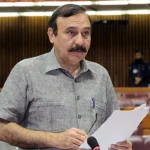
Responding to a question by MNA Aliya Kamran, Parliamentary Secretary for Power Division Aamir Talal Khan said the reforms covered generation, transmission, distribution, governance, tariffs and regulatory oversight, and were aimed at ensuring long-term financial sustainability of the sector.
He said major initiatives included the National Electricity Policy 2021, National Electricity Plan 2023–27, annual circular debt management plans, timely tariff notifications, restructuring of circular debt stock, approval of the Integrated Generation Capacity Expansion Plan (IGCEP) and the transition towards a competitive power market under the Competitive Trading Bilateral Contractual Market (CTBCM) framework.
Khan said the latest IGCEP 2025–35 marked a shift to least-cost planning, with about 7,967 megawatts of high-cost projects removed and expected savings of over $17 billion through project cancellations and rescheduling.
He added that the government aimed to meet 69 per cent of electricity demand from renewable sources by FY2034-35.
As part of efforts to cut fixed capacity payments, the government terminated power purchase agreements with five independent power producers in 2024, including Hub Power, AES Lalpir, Atlas Power, Saba Power and Rousch Power, while several other contracts were renegotiated to reduce tariffs and limit dollar-linked returns.
He said upgrades to the transmission network, including the HVDC Matiari line, had helped ease north-south constraints, while new hydel, coal and wind projects had been connected to the grid.
The parliamentary secretary told the House that the average electricity tariff, including taxes, had fallen from Rs53.04 per unit in March 2024 to Rs42.28 per unit in November 2025.
He said circular debt, which stood at Rs2.794 trillion in March 2024, had been reduced to Rs1.614tr by June 2025 through a mix of measures, including waiver of late payment interest, lower distribution losses and improved macroeconomic conditions.
Khan said the government had launched a circular debt settlement plan based on refinancing payables at lower interest rates, with the aim of eliminating the stock within six years and eventually removing the debt servicing surcharge.
He added that around 1.56 million smart meters had been installed across distribution companies to improve billing, monitoring and loss control, while sector performance was being reviewed by Nepra, the IMF and other international lenders.