ISLAMABAD, Jan 19 (APP):Federal government on Monday dismissed concerns that road infrastructure projects in the country deteriorate soon after completion due to poor construction standards, stating that all projects executed by the National Highway Authority (NHA) are designed and built in accordance with internationally recognised specifications. Replying to a question during the Question Hour session of the National Assembly, Parliamentary Secretary for Communications Engineer Gul Asghar Khan told the House …
Govt rules out substandard work on national highways
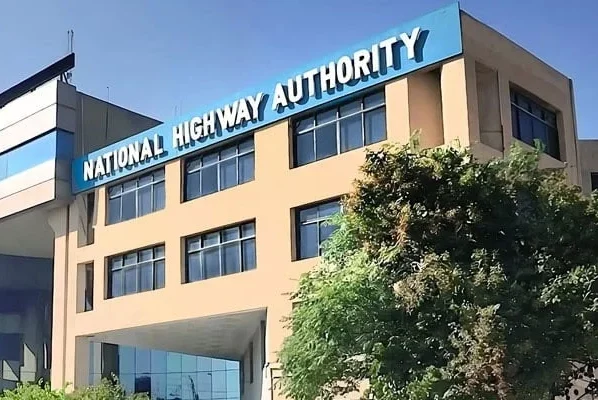
ISLAMABAD, Jan 19 (APP):Federal government on Monday dismissed concerns that road infrastructure projects in the country deteriorate soon after completion due to poor construction standards, stating that all projects executed by the National Highway Authority (NHA) are designed and built in accordance with internationally recognised specifications.
Replying to a question during the Question Hour session of the National Assembly, Parliamentary Secretary for Communications Engineer Gul Asghar Khan told the House that NHA projects follow standards adopted from the American Association of State Transportation Officials (AASHTO), the American Society for Testing and Materials (ASTM), the American Concrete Institute (ACI) and other international best practices.
He said the standard design life for highway pavements is 10 years, while bridges and tunnels are designed for 50 years.
He added that access-controlled motorways, where axle load limits are strictly enforced, often remain serviceable well beyond their assumed design life.
However, he conceded that some rehabilitation projects on major highways, including the GT Road (N-5) and the Indus Highway (N-55), have shown signs of early deterioration.
He attributed this to uncontrolled access, overloading by heavy vehicles and severe climatic conditions that occasionally overwhelm the drainage systems.
Engineer Gul Asghar Khan informed the House that a multi-tier quality control mechanism is in place for all major projects.
Under the system, initial material tests are carried out by contractors, followed by conformity tests by consultants, while NHA’s Monitoring and Inspection wing conducts random checks.
At the completion stage, joint inspections are conducted and defects, if any, are required to be rectified during the defect liability period, which ranges from 12 to 36 months.
Contractors are not cleared until all defects are addressed and verified by the authority.
He said quality control framework is fully implemented across all NHA highway projects and has proven to be effective.
The parliamentary secretary added that the NHA also holds regular seminars and workshops with provincial highway departments, consultants, contractors and academia to promote uniform standards and specifications for road infrastructure across the country.
To further improve road standards, he said, the government has established the Highway Research and Training Centre (HRTC), which is working in collaboration with leading academic institutions, including NUST, UET Taxila and UET Lahore.
Under this initiative, the Strategic Pavement Research Study (SPRS) has been launched to update pavement design standards, construction methodologies and maintenance practices in line with local conditions.
He said the first phase of the programme has been completed and a report titled “Asphalt Mix Design Technology for Pakistan” has been published.
The parliamentary secretary told the House that further research is underway on pavement, bridge and tunnel management systems, as well as intelligent transport systems.
Many of these projects are being carried out in collaboration with Chinese institutions under the China-Pakistan five-year action plan for technical cooperation in highway engineering (2023–2027).
He said the initiative aims to strengthen road research infrastructure, promote joint research, enhance human resource development and introduce modern technologies, including advanced road condition diagnostic tools and reclaimed asphalt pavement techniques, to ensure the long-term sustainability of the country’s highway network.