
ISLAMABAD, Jan 19 (APP):Minister for National Food Security and Research Rana Tanveer Hussain on Monday said that Pakistan remained fully committed to strengthening its strategic economic partnership with China by providing a conducive and investor-friendly environment, particularly in the agriculture and food security sectors. Addressing the Pakistan–China Investment Conference, he said the Ministry of National Food Security and Research stood fully committed to supporting Chinese investors, from facilitating regulatory processes …
Pakistan committed to support Chinese investors: Rana Tanveer
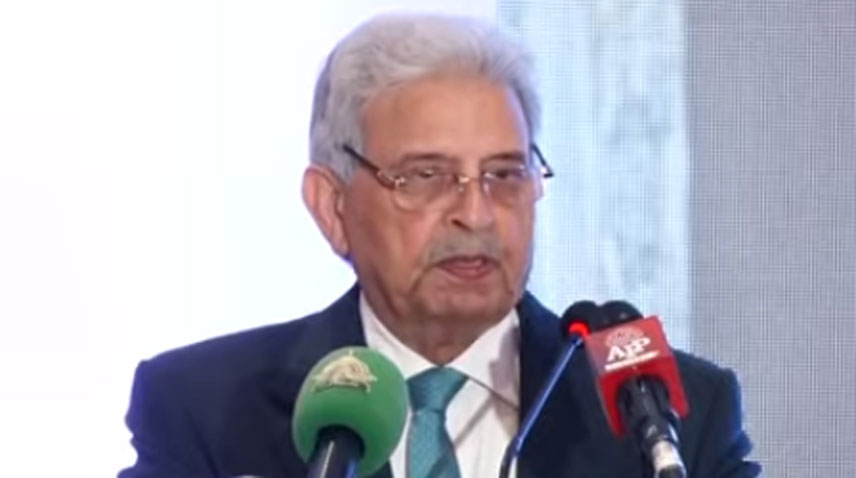
ISLAMABAD, Jan 19 (APP):Minister for National Food Security and Research Rana Tanveer Hussain on Monday said that Pakistan remained fully committed to strengthening its strategic economic partnership with China by providing a conducive and investor-friendly environment, particularly in the agriculture and food security sectors.
Addressing the Pakistan–China Investment Conference, he said the Ministry of National Food Security and Research stood fully committed to supporting Chinese investors, from facilitating regulatory processes to ensuring seamless coordination with all relevant government bodies.
He added that the government’s goal was to make Pakistan not merely a destination for investment but a place where Chinese enterprises could grow, innovate and succeed alongside Pakistani partners.
Together Pakistan and China could push the boundaries of innovation, transform agri-technology, strengthen food security and reshape the economic landscape of the region, he said adding that there was a need to move forward with courage, ambition and unwavering mutual respect.
The economic partnership between the two countries was strong, as reflected in trade figures, he said adding that in fiscal year 2024–25, Pakistan’s exports to China reached approximately $2.38 billion, while imports stood at $16.3 billion, reflecting growing demand on both sides despite global economic headwinds.
This performance, he added, demonstrated resilience and expanding opportunities under the China–Pakistan Free Trade Agreement framework. He said the completion of CPEC Phase I and the launch of CPEC Phase II marked a decisive shift towards industrialization, technology transfer, renewable energy and people-centric development.
He noted that 41 memorandum of understanding were signed in September 2025, covering modern farming, livestock, fisheries, farm mechanization and advanced technology transfer. “These initiatives are not just projects; they are lifelines of growth, confidence and mutual trust,” he said, adding that they aimed to enhance productivity, expand exports, strengthen food security and ensure sustainable and inclusive economic growth.
The conference was attended by 115 Chinese and 165 Pakistani companies.
Meanwhile, Secretary Ministry of National Food Security and Research Saif Anjum said Pakistan’s agriculture sector offers vast investment opportunities, particularly under the Pakistan–China partnership in CPEC Phase II. He identified low productivity, weak infrastructure and high post-harvest losses as major challenges, noting that these gaps also create strong potential for technology transfer, value addition and joint ventures.
He underscored priority sub-sectors including agri-inputs, farm machinery, food processing, dairy and meat, saying government reforms, new policies and export protocols are repositioning agriculture as a key driver of sustainable economic growth.
He said the government’s role is focused on facilitating growth in the food and agriculture sector, with a clear vision to double exports within five years under the Agriculture Innovation and Growth Plan (AIGP).
Addressing the conference, Additional Secretary Board of Investment (BOI) Arfa Iqbal said Pakistan is positioning itself as a competitive and facilitative destination for foreign investors through coordinated reforms and investor-centric policies.
She highlighted Pakistan’s liberal investment regime, with all sectors open to foreign direct investment, full repatriation of profits and access to local and foreign financing.
She said the China-Pakistan Economic Corridor, declared a flagship project by China, along with Pakistan’s geostrategic location, large workforce and resource base, provides strong foundations for sustainable investment, particularly in agriculture, industry and technology.
She said BOI is also implementing regulatory reforms under the Asaan Karobar framework to reduce procedural hurdles, with agriculture among the key focus sectors for ease of doing business.
She said BOI, working closely with the Special Investment Facilitation Council (SIFC), provides end-to-end facilitation to foreign investors, including work visa recommendations, branch office approvals, security clearances and airport entry passes.
The senior officials from the Federal Board of Revenue (FBR) also highlighted that the board is fully focused on productive measures to facilitate agricultural trade and investment. He highlighted that FBR has introduced fully digital customs import and export procedures, reducing clearance time and improving transparency.
The official added that zero percent customs duty incentives on seeds, fertilizers, pesticides and agricultural machinery are boosting productivity. He emphasized that export facilitation schemes and streamlined regulatory processes are helping agri-exporters improve competitiveness and ensure sustainable economic growth.