Wars and self-determination denials undermine international system, Pakistan warns at UN
Wars and self-determination denials undermine international system, Pakistan warns at UN
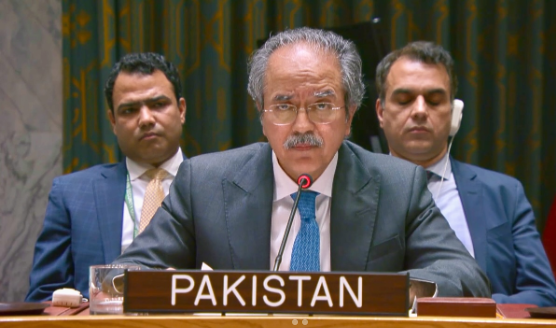
UNITED NATIONS, Jan 16 (APP): With peace and security under unprecedented strain, Pakistan has told the UN General Assembly that wars in the Middle East, Europe and Africa, along with the denial of self-determination, notably in Palestine and Kashmir, undermine the credibility of the international system.
“We must ensure implementation of UN Security Council resolutions, and use all UN Charter-based mechanisms to promote just and peaceful settlement of disputes,” Ambassador Asim Iftikhar Ahmad said, while commenting on the UN Secretary-General Antonio Guterres’ priorities for 2026 that he presented to the 193-member Assembly.
Pakistan, he said, strongly supports diplomacy, mediation and peace-building. “The UN’s good offices, preventive diplomacy, and peace operations must be employed more decisively to prevent escalation and resolve conflicts through political means.”
Earlier, the UN chief, in his final annual address outlining his priorities, warned that the world is “brimming with conflict, impunity, inequality and unpredictability” – even as international cooperation is fraying at the moment it is most needed.
Guterres said the global system was under unprecedented strain from wars, division, climate breakdown and the erosion of respect for international law.
The secretary-general framed the speech as both a diagnosis of the current global disorder and a personal commitment to press for change during his final year in office.
“The context is chaos,” Guterres told delegates. “We are a world brimming with conflict, impunity, inequality and unpredictability.”
Rather than presenting a checklist of initiatives, he said he wanted to look beyond the coming year and focus on the “larger forces and megatrends shaping our world,” identifying three principles that must guide the work of the United Nations and its member states.
The three principles are: Uphold the UN Charter; Peace between nations and peace with nature, and Unity in an age of division.
At a time when geopolitical divisions are widening amid cuts to development and humanitarian funding, the secretary-general said multilateralism itself was being tested.
“That is the paradox of our era: at a time when we need international cooperation the most, we seem to be the least inclined to use it and invest in it,” he said, adding: “Some seek to put international cooperation on deathwatch. I can assure you: we will not give up.”
The UN chief highlighted ongoing UN engagement on conflicts from Gaza and Ukraine to Sudan and Yemen, while stressing that silencing the guns alone would not be enough.
“Peace is more than the absence of war,” he said, arguing that poverty, lack of development, inequality and weak institutions continue to fuel violence. “Sustainable peace requires sustainable development.”
Guterres was blunt about what he described as the visible erosion of international law. “The erosion of international law is not happening in the shadows. It is unfolding before the eyes of the world, on our screens, live in 4K,” he said.
In his remarks, Ambassador Asim Ahmad, the Pakistani envoy said that the 2024 UN ‘Pact for the Future’ offers an important blueprint to restore trust in multilateralism and the secretary-general’s UN80 Initiative was aimed at enhancing the Organization’s effectiveness.
“Reform, however, must not be reduced to cost-cutting or weakening the UN’s essential mandates in conflict prevention, peacekeeping, development, and human rights,” the Pakistani envoy said, adding. “All three pillars of the UN must be equally prioritized by the membership as a whole.”
Calling for fair debt restructuring, efforts to bridge the digital divide and swift climate action, he noted: “Vulnerable countries, including Pakistan, continue to suffer devastating floods, heat waves, and water stress.”
Scaled-up climate finance, particularly for adaptation, and more funding to the Loss and Damage Fund are critical, Ambassador Asim Ahmad said.
” Moreover, water must never be weaponized; access to water is a fundamental right and the basis of human survival,” he said in an obvious reference to the Indian actions on the 1960 Indus Waters Treaty.
“Compliance with Treaties and international obligations is essential for the credibility of rules-based international order,” the Pakistan envoy added.
Ambassador Asim Ahmad pointed out that rising military expenditures divert resources from development and increase the risk of catastrophic wars.
He reiterated the need for a new global consensus on disarmament based on equal and undiminished security for all States, including renewed momentum toward nuclear disarmament and restraints on emerging weapons technologies.