ISLAMABAD, Jan 12 (APP): The proposal of Zalmay Khalilzad that Pakistan should pursue a Doha-style agreement with Kabul reflects an outdated reading of regional dynamics. It overlooks Pakistan’s evolved counterterrorism posture, ignores the declining credibility of the Afghan Taliban, and underestimates the internal consensus that has emerged in Pakistan against terrorism. 1. Pakistan has entered a phase of strategic clarity in which political leadership, state institutions, and public opinion are …
Why Doha Accord is not an example
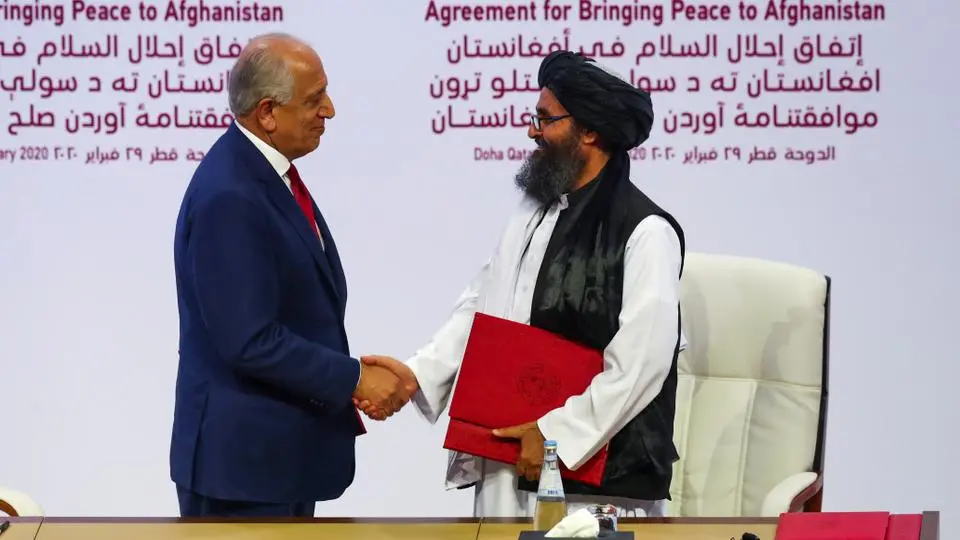
ISLAMABAD, Jan 12 (APP): The proposal of Zalmay Khalilzad that Pakistan should pursue a Doha-style agreement with Kabul reflects an outdated reading of regional dynamics. It overlooks Pakistan’s evolved counterterrorism posture, ignores the declining credibility of the Afghan Taliban, and underestimates the internal consensus that has emerged in Pakistan against terrorism.
1. Pakistan has entered a phase of strategic clarity in which political leadership, state institutions, and public opinion are aligned against terrorism. This convergence marks a decisive shift from earlier periods, characterized by internal debate and policy hesitation. Today, counterterrorism is no longer a contested political question but a settled national imperative, backed by consensus.
2. The Islamic Emirate of Afghanistan has lost whatever limited international standing it once sought to claim. Recent UN sanctions regimes and monitoring reports have explicitly identified Afghanistan as a permissive environment for multiple terrorist organizations. These assessments are not rhetorical; rather, they are evidence-based and cumulative. Today, the IEA regime finds itself isolated, not due to geopolitical bias, but because of its own failure to meet expectations on counterterrorism commitments.
3. Against this backdrop, the Doha Accord must be viewed as a failed experiment rather than a viable template. While it may have served short-term diplomatic objectives, it demonstrably failed to restrain terrorism spillover or dismantle transnational terror infrastructures. Any attempt to revive or replicate Doha-like arrangements under current conditions would therefore be strategically unsound.
4. Pakistan’s counterterrorism posture, as illustrated by the Director General Inter Service Public Relations, is not single-dimensional; it is layered, deliberate, and integrated, combining precision intelligence operations, hardened border management, financial surveillance of terror networks, and a clear narrative framework to counter misinformation. This multidimensional approach has systematically reduced operational space for terrorists.
5. Recent arrests of high-value operatives in Balochistan, alongside the successful prevention of a major terrorist incident in Karachi, underscore the importance of the latest shift in Pakistan’s counterterrorism posture. These successes highlight that sustained intelligence-led action delivers results, whereas overreliance on diplomatic gambles with unreliable actors does not.
6. Proposals advocating a new bilateral framework to counter ISKP appear detached from operational realities. Pakistan has already degraded ISKP through persistent kinetic pressure and intelligence penetration. Treating ISKP as a shared operational challenge requiring fresh frameworks ignores the fact that Pakistan has addressed the threat decisively on its own soil without external dependency.
7. Diplomacy and state behavior are not static; they evolve in response to changing threat environments. What may have appeared workable in 2021 cannot be transplanted into today’s security landscape. The present environment is shaped by new threat vectors, exposed assumptions, and hard-earned lessons from failed engagements.
8. Expecting Pakistan to anchor its national security calculus to a regime whose political economy has long been intertwined with conflict is unrealistic. The economic and political survival of such systems has historically depended on instability, not normalization. Aligning Pakistan’s security interests with such a framework would be strategically irrational.