
Economic indicators show improvement amid government economic reforms: Ahsan Iqbal
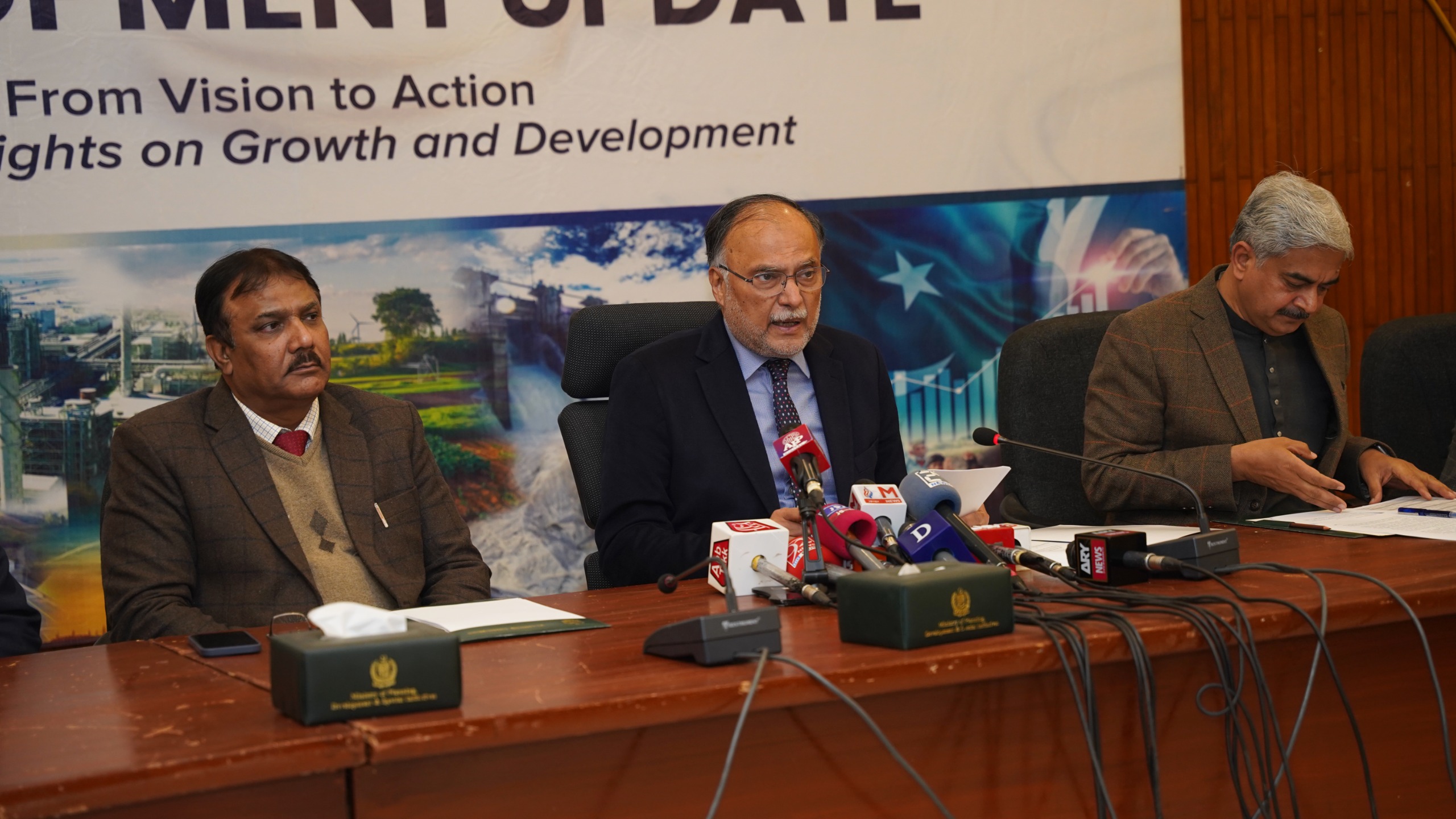
ISLAMABAD, Jan 12 (APP): Federal Minister for Planning Ahsan Iqbal announced on Monday that economic indicators in the country have shown significant improvement, attributing this positive trend to ongoing economic reforms and stabilization policies implemented in December 2025.
During the launch of the “Monthly Development Report, January 2026,” Iqbal revealed that despite the challenges posed by devastating floods, the country achieved a GDP growth rate of 3.7% in the first quarter of fiscal year 2026, with industry growth reaching an impressive 9.4%.
Ahsan Iqbal noted that these figures represent a substantial improvement compared to the 1.6% growth recorded in the first quarter of fiscal year 2025.
He highlighted the stability observed in key sectors such as agriculture and services, which have contributed to the country’s economic resilience.
The Minister emphasized the government’s cautious approach to ensure sustainable development, stating that inflation decreased to 5.2% during the July-December 2025 period.
He further reported that inflation fell to 5.6% in December 2025, aided by improved availability of essential food items.
In a positive turn for the manufacturing sector, large-scale manufacturing recorded a recovery with a growth rate of 5% from July to October 2025, signaling an end to a two-year decline.
He also shared that tax collections by the Federal Board of Revenue (FBR) reached Rs 6.2 trillion during the July-December 2025 period, marking a 10% increase.
Exports showed resilience, rising by 1% to reach $16.6 billion during the July-November fiscal year 2026, despite the adverse effects of floods and supply chain disruptions. Iqbal described the rapid growth of the export sector as essential for the country’s economic improvement, indicating opportunities for further growth. He mentioned government recommendations under the “Uraan Pakistan” initiative to impose an export emergency and implement effective measures to boost exports.
Additionally, remittances during the same period increased by 10.5%, reflecting the confidence of overseas Pakistanis in the government and the overall economic stability.
The Minister said that the Public Sector Development Program (PSDP) allocated Rs 356 billion, with Rs 314.5 billion sanctioned, highlighting steady progress in the implementation of development projects across the Rs 1 trillion PSDP program.
Ahsan Iqbal announced that four projects were approved in December, with three sent to the Executive Committee of the National Economic Council (ECNEC). These projects are expected to create approximately 3,000 direct jobs and 64,500 indirect jobs.
Furthermore, the Minister noted that Rs 3.5 billion was saved through the streamlined expenditure of development projects from July to November 2025, enhancing project efficiency.
In efforts to achieve self-sufficiency in edible oil, the government aims for complete self-sufficiency within the next five years by promoting local canola oil production.
He pointed out that a significant portion of foreign exchange expenditure in Pakistan is allocated to imports of petrol, edible oil, and tea leaves, prompting the government to pursue self-sufficiency measures.
The government, with technical assistance from the Food and Agriculture Organization (FAO), has launched a tea trade strategy aimed at reducing imports by $650 million annually while boosting exports. This strategy will promote modern farming, processing, branding, and value addition across more than 600,000 hectares of land.
Ahsan Iqbal also highlighted Pakistan’s commitment to eradicating polio, having participated in a high-level pledging ceremony in Abu Dhabi on December 9, 2025. He noted ongoing discussions with the US State Department to foster cooperation in education, science, and technology.
In collaboration with China, the government is working to secure 10,000 scholarships in artificial intelligence to enhance education quality and increase the number of PhDs, addressing a critical shortage of human resources in the country.
The Minister underscored the importance of continuing progress on the China-Pakistan Economic Corridor (CPEC), noting that the Chinese government has signed the minutes of the 14th Joint Cooperation Committee meeting. He also reported steady growth in IT exports and advancements in the educational and technical sectors.
Looking ahead, Ahsan Iqbal stressed the need for comprehensive reforms in the energy sector over the next two years, as the government seeks to establish a strong foundation for development by 2027.
He declared 2026 as the year of institutional reforms, aiming to tackle the core issues hampering energy sector progress, including the critical need to reduce electricity tariffs.