
PESHAWAR, Jan 11 (APP):Once lovingly called the City of Flowers, Peshawar was famous for its fragrant Gul-e-Dawoodi, Mughal-era gardens, and open green spaces where families gathered under shaded trees and children chased butterflies amid smiles and laughter. However, these days this romantic image of Peshawar is steadily fading, replaced by overflowing garbage, stagnant water, air pollution, encroachment and crumbling sanitation infrastructure that is taking a toll on both the city’s …
Fading fragrance of Gul e Dawoodi: Peshawar’s fight against mounting sanitation problems
PESHAWAR, Jan 11 (APP):Once lovingly called the City of Flowers, Peshawar was famous for its fragrant Gul-e-Dawoodi, Mughal-era gardens, and open green spaces where families gathered under shaded trees and children chased butterflies amid smiles and laughter.
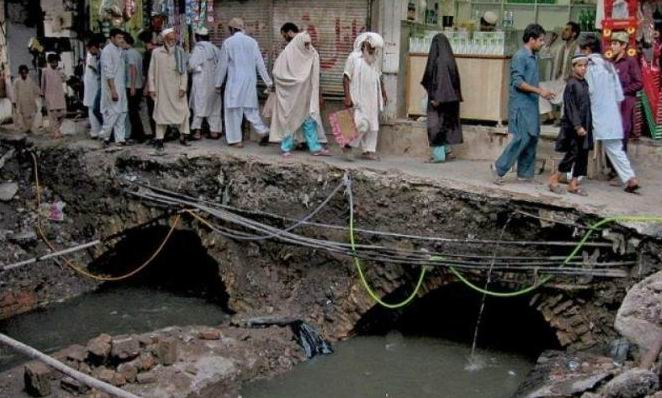
However, these days this romantic image of Peshawar is steadily fading, replaced by overflowing garbage, stagnant water, air pollution, encroachment and crumbling sanitation infrastructure that is taking a toll on both the city’s beauty and the health of its people.
In Mughal era, parks like Wazir Bagh, Shalimar Gardens, and Jinnah Park, which were once vibrant symbols of the city’s cultural and natural heritage, with fragrance of Gul e Dawoodi, where now the signs of neglect are hard to ignore.
Encroached and muddy pathways, dust-filled grounds, and pools of stagnant water have overtaken areas that were once famous with laughter and colour.
Residents claimed that rapid and unplanned construction, coupled with weak municipal services and rusted, leaked water pipes, besides urban waste, has pushed these recreational spaces into slow decay, with bad smell emanating from uncovered, strange channels at congested interior city.
In densely populated neighborhoods such as Kohati, Gunj, Khalasa, Hazarkhwani, Lateefabad, Faqirabad, Ejazabad, Mathra, Peshtakhara, etc, sanitation issues have become part of daily life. Uncovered drains emit foul smells, while rusted and leaking pipes spill contaminated water into streets and homes, exposing residents to ailments.
Safdar Baghi, former Nazim of Nothia Jadeed, describes the poor situation as unbearable, claiming that the KP Govt’s lackluster policy exaggerated the issue.
“The stench from open drains and standing water caused by leaking pipes makes life miserable,” he said. “This is not a new problem. Years of neglect during PTI rule have exposed residents to serious health risks.”
He criticized successive governments, particularly the previous PTI administration, for failing to prioritize sanitation of Peshawar. According to him, access to safe drinking water and replacement of outdated pipelines should have been addressed long ago. “People are exposed to fatal diseases like hepatitis, diarrhea and even polio due to poor sanitation in Peshawar,” he warned. Instead of focusing on political rallies in Karachi, CM KP Sohail Afridi may focus on resolution of these critical issues involving human lives.
Experts argued that Peshawar’s sanitation crisis is closely tied to unchecked urbanization. Professor Dr Salimur Rehman, former Chairman of the Environmental Sciences Department at the University of Peshawar, pointed out that KP’s cities, especially Peshawar, were never designed to absorb the massive influx of migrants.
“Between 1951 and 2017, the urban population in Pakistan increased by around 33 million,” he explained. About 14.5 million people migrated from rural areas to cities, adding nearly 750,000 people every year. Sanitation systems simply could not cope with this pressure.”
He stressed the need for proper urban planning, better allocation of funds, and capacity-building of municipal staff.
Investment in sewerage systems and wastewater treatment plants, he said, is no longer optional but essential.
Doctors are already seeing the consequences of poor sanitation practices. Dr Malik Riaz, Medical Officer at Government Hospital Pabbi, Nowshera, linked poor sanitation directly to life-threatening diseases.
“Cholera, diarrhea, typhoid, and polio thrive in unhygienic conditions,” he explained. “In the next 20 years, nearly 55 percent of Pakistan’s population is expected to live in urban areas. Without proper sanitation, government hospitals, already overstretched, will face an even greater burden.”
Professor Dr Shafiqur Rehman said that household sanitation has never been treated as a serious issue in Khyber Pakhtunkhwa.
“Open dumping of garbage and household waste creates environmental hazards for humans, animals, and even aquatic life,” he said. The lack of proper dumping sites, especially for hospital waste, poses severe health threats. He pointed to China’s example, where solid waste is recycled for energy, and lamented that Pakistan has yet to make meaningful progress in this direction.
Despite the grim picture, some initiatives offer hope in KP. Mian Javaid, Director of Sanitation and Board Member of the Sarhad Rural Support Program, said poor sanitation is a nationwide challenge that requires joint efforts from government, communities, and development partners.
As a pilot project, sanitation improvement schemes were launched in Swabi district with support from the Netherlands Embassy under the IR&G program.
In villages like Aliabad and Muslimabad, 1,000 sanitation kits were distributed for latrine construction. Through community mobilization, 448 low-cost latrines and five drains were built, benefiting around 2,000 people. Additionally, 80 hygiene awareness sessions reached nearly 95,000 residents.
In Peshawar, the KP government has provided sanitation machinery worth about Rs 413.5 million to the Water and Sanitation Services Peshawar (WSSP), including mini dumpers, containers, tractors, excavators, and loaders.
Eleven semi-urban union councils, such as Achini Bala, Chamkani, Regi, and Sufaid Dheri, have now been added to WSSP’s domain.
According to WSSP, a 12-year Municipal Services Program worth USD 44.6 million, supported by USAID, has been completed.
Under this project, nearly two million residents gained access to clean drinking water, improved sewerage, and better waste management. Old water mains were replaced, drainage lines rehabilitated, and a new dumping site was selected at Pandu for hospital waste disposal.
Under KP Clean and Green Initiative, KP Govt launched plans that include modern waste treatment plants, expanded sewerage systems, and public toilets in high-density areas.
However, the experts emphasized that government action alone is not enough. “Media, civil society, and religious scholars must play a proactive role in creating awareness against poor sanitation practices,” he said.
Experts said cleanliness is not just a civic duty; it is a collective responsibility. For many residents of Peshawar, the hope is to see their city reclaim even a fraction of its former glory.
To once again walk through clean streets, drink safe water, and watch flowers bloom without the shadow of disease. The City of Flowers may be wilting, but with sustained effort and collective will, its fragrance has not yet been lost.