KARACHI, Dec 30 (APP): Sindh Chief Minister (CM) Syed Murad Ali Shah presided over a cabinet meeting took a series of major decisions, including approval of the Sindh Land Revenue Bill for e-transfer and digitalisation of land records Motor Third-Party Insurance across the province, allocation of land for Danish schools, agreements with The Citizens Foundation (TCF) for management of municipal schools, restructuring of the Inter-Provincial Coordination (IPC) Department’s role, and …
Sindh cabinet clears motor third-party insurance, land digitisation & ADP 2026-27 guidelines
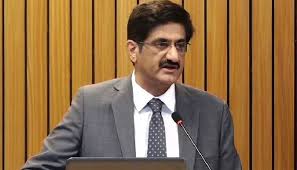
KARACHI, Dec 30 (APP): Sindh Chief Minister (CM) Syed Murad Ali Shah presided over a cabinet meeting took a series of major decisions, including approval of the Sindh Land Revenue Bill for e-transfer and digitalisation of land records Motor Third-Party Insurance across the province, allocation of land for Danish schools, agreements with The Citizens Foundation (TCF) for management of municipal schools, restructuring of the Inter-Provincial Coordination (IPC) Department’s role, and guidelines for the Provincial and District Annual Development Programme (ADP) 2026-27.
The meeting, held at the CM House, was attended by provincial ministers, advisers, special assistants, Chief Secretary Asif Hyder Shah and concerned secretaries.
The cabinet approved amendments in the Sindh Land Revenue (Amendment) Bill, to enable digitalisation of land records and introduce an e-Transfer of Land Title System across the province, and referred the bill to the Sindh Assembly.
The Cabinet was informed that the project, approved earlier on July 8, 2025, aims at rewriting and authenticating Records of Rights, digitising land data through a blockchain-based database, and developing an e-transfer system for land titles.
The pilot phase is being implemented in Dehs Palijani and Matiari of District Matiari, and Deh Bagerji of District Sukkur.
To provide legal cover, amendments have been proposed in the Sindh Land Revenue Act, 1967, including the addition of ICT-related definitions, expansion of the definition of Record of Rights to include digital records, and insertion of a new Section 42-A to empower the government to frame rules for digitalisation and e-transfer of titles.
The cabinet appreciated the efforts of the Board of Revenue and Sukkur IBA. The implementation of the law, after passage of the bill from the assembly, will be a milestone. The chief minister termed the law in the supreme interest of the public, transparency and accuracy.
The cabinet reviewed the implementation of mandatory Motor Third-Party Insurance in the province. On the instructions of the chief minister, the Excise department held discussions with the Insurance Association of Pakistan (IAP) to simplify the claim payment process.
The CM directed the Excise department to ensure that compensation is payable in cases involving duly insured vehicles. He also directed the department to facilitate the public; insurance facilitation desks must be established, with standardized premium rates across the industry. A 24/7 helpline and assistance by insurance surveyors will also be provided to guide victims and legal heirs.
The CM, in consultation with the cabinet, decided that Motor Third-Party Insurance will be enforced from the next financial year. The CM also approved proposals to reduce stamp duty from Rs 500 to Rs 50 and sales tax on third-party motor insurance from 15 per cent to 5 per cent.
Murad Shah approved exemptions for motorcycles from mandatory insurance proposed through amendments to the Motor Vehicles law. The initiative aims to ensure compensation for third parties affected by road accidents and provide insurance coverage to drivers of private and commercial vehicles across Sindh.
Under the proposal reviewed by the Sindh Cabinet, the Motor Vehicles law will be amended to implement Motor Third-Party Insurance effectively.
Amendments are proposed to the Motor Vehicles Ordinance, 1965, to be placed before the Sindh Assembly for approval. Additionally, amendments to Sections 19 and 20 of the Motor Vehicles Act, 1939, have been proposed, mainly to exempt two-wheelers (motorcycles) from mandatory third-party insurance.
Once approved by the Sindh Assembly, these amendments will provide the legal framework for enforcing Motor Third-Party Insurance in the province from the next financial year.
TCF Partnership for Management of Municipal Schools: The cabinet approved Concession and License Agreements between the Town Municipal Corporations (TMCs) of Malir, Chanesar and Lyari and The Citizens Foundation (TCF) for the management of selected municipal schools across Karachi.
The initiative, aligned with the Sindh Right of Children to Free and Compulsory Education Act, 2013, will ensure free quality education, including tuition, uniforms and learning materials, for students in 21 schools.
Under the agreements, TCF will handle construction, renovation and management of the schools for a 25-year term, extendable by mutual consent. TMCs will provide land and buildings free of cost.
Cabinet’s approval allows immediate renovation and operationalisation of the selected schools, benefiting thousands of students in Karachi.
The cabinet, after thorough discussion, approved a proposal to update the Sindh Government Rules of Business, 1986, redefining the mandate of the Inter-Provincial Coordination (IPC) Department to remove duplication and strengthen inter-provincial coordination.
Under the revised framework, the IPC Department will serve as the administrative department for the Council of Common Interests (CCI), Inter-Provincial Coordination Committee (IPCC) and other inter-provincial forums, while also functioning as a policy think tank to provide research-based advice and strategic support to the chief minister and chief secretary.
The Cabinet was informed that other departments, including Agriculture, Industries, Investment, Mines & Minerals, Culture, IT and STEVTA, were previously performing several IPC functions. The updated rules aim to streamline responsibilities and improve coordination with the federal government and other provinces.
The Law Department has endorsed the proposal, while the Services, General Administration & Coordination Department recommended assigning CCI matters exclusively to IPC and deleting the existing overlapping entry.
The Cabinet approved the changes, paving the way for more effective policy coordination and representation of Sindh at inter-provincial and federal forums.
The cabinet also approved the guidelines for the formulation of the Provincial and District Annual Development Programme (ADP) 2026-27.
The Cabinet directed all administrative departments to align their proposed portfolios with the government’s economic agenda, ensuring that new schemes are consistent with approved development strategies and have clearly defined, measurable outcomes. Emphasis was laid on climate-resilient development, consolidation and completion of flood-damaged infrastructure, and allocation of counterpart funds for foreign-assisted projects in line with international commitments.
Murad Shah instructed the departments to utilise the latest data sources, such as the Multidimensional Poverty Index, Population Census and MICS, to set quantifiable targets, avoid duplication of schemes through a P&DD committee, and ensure GPS-tagging with online verification for all ADP schemes. Priority was given to ongoing schemes, with at least 80 per cent of the budget allocated to them, while schemes nearing completion or having token allocations were to be rationalised, phased out, or deleted.
New schemes, to be developed in consultation with stakeholders, must focus on climate-resilient infrastructure, healthcare, education, irrigation, agriculture, water supply, sanitation, urban connectivity, carbon credit generation, and inclusive, gender-sensitive social protection. Departments were advised to explore Public-Private Partnerships (PPP) for financially constrained projects.
For the District ADP 2026-27, all Commissioners and Deputy Commissioners were instructed to ensure the timely preparation and approval of district schemes, with the Deputy Commissioner acting as Project Director and the Commissioner as Principal Accounting Officer (PAO).
The CM emphasised strict adherence to all guidelines, including avoidance of private land usage, compliance with sectoral priorities, incorporation of SDGs and climate actions, and alignment with SAP and Federal/Provincial ADP schemes to maximise development impact.
The cabinet approved Rs 2.9 billion for the development of industrial areas across the province.
Speaking on the occasion, CM Murad Shah said that roads and drainage systems in all industrial areas of the city will be repaired and upgraded. He reaffirmed the Sindh government’s commitment to industrial development and announced that separate packages will be announced for industrial areas and estates in other cities of the province. The Industries Department is actively working on the development of these estates, and once the plans are finalised, the packages will be formally announced.
On another note, the Chief Minister reviewed the functioning of open public grievance centres (kachehries) held across 23 districts. He noted complaints related to law and order, police, health, municipal services, water supply (PHE), roads, irrigation, and education.
CM directed all officials to resolve public complaints promptly and report back. He announced that the open kachehries will resume from the second week of January, adding that strict action will be taken against officials if complaints are not properly addressed.