Groundwork for ML-1 Karachi–Rohri section likely to begin in 2026
Groundwork for ML-1 Karachi–Rohri section likely to begin in 2026
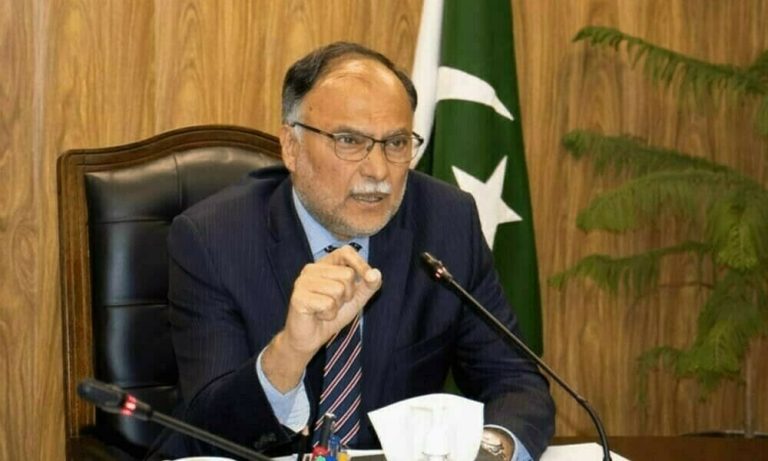
ISLAMABAD, Dec 27 (APP): Federal Minister for Planning, Development and Special Initiatives Professor Ahsan Iqbal chaired a review-meeting on key Public Sector Development Programme (PSDP) projects in the railways, highways, and water sectors, directing the relevant ministries to prioritise timely execution, quality assurance, and realistic financial planning for the next three years to ensure delivery of nationally critical infrastructure.
The meeting, held here, reviewed major transport and water-sector interventions under PSDP 2025–26, a news release said on Saturday.
Member Infrastructure Dr Waqas Anwer gave a detailed presentation on the progress, scope, and funding requirements of priority projects, while senior officials from the Ministry of Railways, National Highway Authority (NHA), and Ministry of Water Resources were present.
While reviewing railway sector initiatives, the Planning Minister was briefed on the status of the Main Line-1 (ML-1) project, particularly the Karachi–Rohri section, for which groundwork is expected to begin in July, 2026.
The meeting also reviewed the upgradation of 884 kilometres of Main Line-3 (ML-3) and the Thar Coal Railway Connectivity Project, a strategic initiative aimed at improving logistics for energy supply and industrial development.
The Thar Coal Railway Connectivity Project, with an estimated cost of Rs53.7 billion, consists of three packages, including construction of a new single-track railway line from the Thar coal mines to the new Chorr station over a distance of 105 kilometres, a new double-track line of approximately nine kilometres from Bin Qasim to Port Qasim, while Package Three covers the development of a coal unloading pit at Port Qasim and Lakhra Power Plant station. The project is expected to be completed by June 2026.
Ahsan Iqbal directed the Ministry of Railways to submit a clear assessment of funding requirements for the next three years, stressing that “there should be no compromise on speed and quality in any of these strategic projects, as they represent long-term national assets and must be built to the highest standards.”
The meeting also reviewed the National Highway Authority’s portfolio under PSDP 2025–26, which comprises 71 projects with a total cost of approximately Rs3,407 billion.
The Minister directed that the Sukkur–Hyderabad Motorway be completed within three years and be treated as a top priority project. He further instructed that the work on Karakoram Highway (KKH) phase 2 project should be expedited and completed by 2028 to save KKH from being cut off due to Diamer Bhasha Dam lake.
Under the Public-Private Partnership (PPP) framework, the Minister emphasized Sambrial-Kharian-Rawalpindi motorway, M-8 in Balochistan, and Mashkel–Panjgur–Chadgi road projects as high-priority initiatives requiring accelerated implementation.
He directed NHA to prepare a comprehensive portfolio of critical projects and present their funding requirements for the next three years to ensure uninterrupted progress and timely completion.
Emphasizing governance and accountability, Ahsan Iqbal instructed NHA to establish a robust monitoring and reporting mechanism, directing that progress reports be submitted every fortnight for review. “We must ensure that bottlenecks are identified early and resolved promptly,” he said.
The meeting also reviewed major water-sector projects under PSDP 2025–26, which comprise 34 projects with a total approved cost of Rs1,848 billion.
Key projects discussed included the Dasu Hydropower Project, Diamer-Bhasha Dam, Mohmand Dam Hydropower Project, Chashma Right Bank Canal, Tarbela 5th Extension Hydropower Project, and the K-IV water supply project for Karachi.
The Planning Minister directed the Secretary, Ministry of Water Resources, to submit a detailed report outlining the minimum annual funding threshold required for each critical project, along with projected financial demands for the next three years.
He stressed that resource planning must be realistic and aligned with execution capacity to avoid delays and cost overruns.
Ahsan Iqbal specifically instructed that the Mohmand Dam be treated as a priority project, given its importance for water storage, flood mitigation, irrigation, and energy generation. “Water security is central to Pakistan’s economic stability and climate resilience, and these projects must be delivered on time to secure the country’s future,” he said.
The Planning Minister reiterated the government’s commitment to infrastructure-led development under the broader national vision, stating that integrated planning, fiscal discipline, and institutional coordination were essential to ensuring that these investments translate into economic growth, regional connectivity, and improved quality of life for citizens.