ISLAMABAD, Dec 24 (APP): Islamabad hosted a post-COP30 panel discussion on December 23, bringing together policymakers, researchers, students, and civil society members to review the outcomes of the global climate conference and discuss how they apply to Pakistan. The event drew more than 100 participants and focused on turning international climate commitments into policies and actions at the national and community levels. The discussion was jointly organized by the Climate …
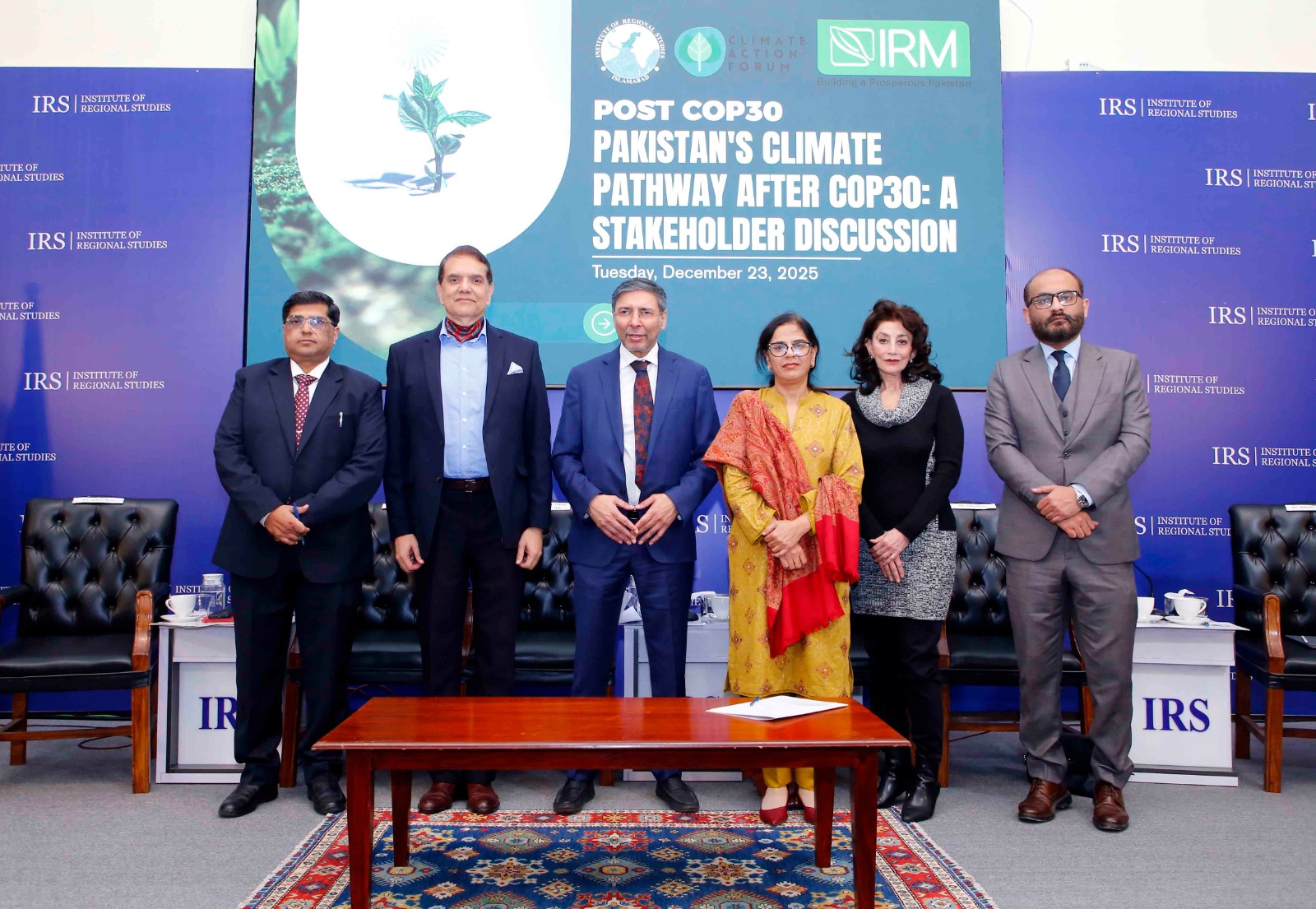
ISLAMABAD, Dec 24 (APP): Islamabad hosted a post-COP30 panel discussion on December 23, bringing together policymakers, researchers, students, and civil society members to review the outcomes of the global climate conference and discuss how they apply to Pakistan.
The event drew more than 100 participants and focused on turning international climate commitments into policies and actions at the national and community levels.
The discussion was jointly organized by the Climate Action Forum (CAF), IRM, and the Institute of Regional Studies (IRS). Khalida Bashir, Joint Secretary at the Climate Finance Wing of the Ministry of Climate Change and Environmental Coordination, attended as the chief guest. She was joined on the panel by Dr Roomi S Hayat, Chair of CAF and Chief Executive Officer of IRM; Ms. Aisha Khan, Chief Executive Officer of the Civil Society Coalition for Climate Change (CSCCC); Mr Arif Goheer, Executive Director of the Global Change Impact Studies Centre (GCISC); and Dr Khalid Waleed, Research Fellow at the Sustainable Development Policy Institute (SDPI). Ambassador Jauhar Saleem, President of IRS, moderated the session.
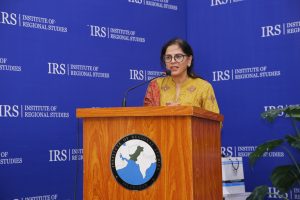
Panelists shared views on the decisions taken at COP30 and their meaning for Pakistan. The discussion centered on climate finance, national commitments, coordination gaps, and the role of communities in climate action.
Responding to a question on the loss and damage fund, Ms. Khalida Bashir said the ministry is working on ways to use this funding stream. She noted that the National Disaster Risk Management Fund and the National Disaster Management Authority are engaged in this process. She added that the ministry is also seeking support from provinces to strengthen institutions so funds can be directed where they are needed.
Dr Roomi S Hayat addressed coordination challenges in Pakistan’s climate response. He said progress is often slowed by weak links between scientific research, technical data, and local knowledge. He also pointed out that civil society groups are usually involved at a late stage, which reduces the impact of climate actions.
Arif Goheer spoke about Pakistan’s Nationally Determined Contributions (NDCs). He said previous submissions were delayed by about a year, but the latest NDC’s were finalized and submitted on time before COP30 in 2025.
Aisha Khan focused on the gap between global promises and local impact. She said resources and commitments exist, but they must be converted into protection and support for communities most affected by climate change. She warned that failure to do so would increase costs for the country in the future.
Dr Khalid Waleed discussed the concept of a just transition and the Belem Political Package adopted at COP30. He explained that the package is based on the idea of collective action. He said this approach is important at a time when trust in global processes is under strain and stressed the need for strong institutional cooperation within Pakistan.
The session underlined the value of post-COP discussions in Pakistan. Many policymakers, practitioners, and communities do not take part directly in global climate talks. Forums like this help explain outcomes, encourage debate, and support follow-up at home so that international agreements lead to practical action.