ISLAMABAD, Dec 24 (APP):Adviser to the Prime Minister on Privatisation and Chairman Privatisation Commission Muhammad Ali on Wednesday expressed strong confidence that the historic privatisation of Pakistan International Airlines Corporation Limited (PIACL) would help revive the past glory of the national flag-carrier while significantly boosting foreign and domestic investment across multiple sectors of the economy. Addressing a news conference here, accompanied by Federal Minister for Information and Broadcasting Attaullah Tarar …
PIACL privatization to revive flag-carrier’s glory, boost investment attraction agenda: Ali
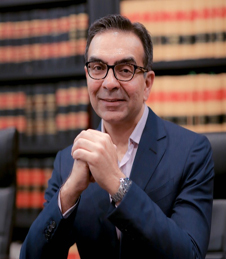
ISLAMABAD, Dec 24 (APP):Adviser to the Prime Minister on Privatisation and Chairman Privatisation Commission Muhammad Ali on Wednesday expressed strong confidence that the historic privatisation of Pakistan International Airlines Corporation Limited (PIACL) would help revive the past glory of the national flag-carrier while significantly boosting foreign and domestic investment across multiple sectors of the economy.
Addressing a news conference here, accompanied by Federal Minister for Information and Broadcasting Attaullah Tarar and senior officials of the Privatisation Commission, Muhammad Ali said the privatisation process was the result of six months of intensive work, due diligence and coordination among all stakeholders under the guidance of the Prime Minister, the Cabinet and the Cabinet Committee on Privatisation.
Ali recalled that the first attempt to privatise PIA began in 2003, followed by a strategic sale effort in 2005, while subsequent attempts could not reach a successful conclusion. “This time, the process was carried forward with lessons from the past and completed with extensive preparation and accountability,” he added.
Highlighting PIA’s legacy, he said the airline once truly embodied its famous slogans ‘Great People to Fly With’ and ‘Great People, Great Service’. “These were not just slogans. PIA was among the finest airlines globally,” he remarked.
Providing historical context, Ali said PIA once operated around 50 aircraft and served nearly 40 international destinations, whereas today only 18 aircraft were operational out of a fleet of 33. “Instead of expanding to 100 or more aircraft, the airline steadily declined due to years of mismanagement and structural weaknesses,” he said.
He stressed that privatisation was aimed at transferring commercial operations to the private sector, which was better positioned to invest capital, modernise fleets, improve service quality and ensure professional management. “The private sector will bring new aircraft, better service standards and operational efficiency,” he added.
Ali congratulated the successful consortium led by Arif Habib Corporation, acknowledging the role of its members and advisors, while also appreciating competing bidders who remained part of the process till the end. He termed the bidding process competitive and transparent.
Responding to criticism on social media, Ali clarified that the government was receiving a total economic value of Rs55 billion, comprising Rs10 billion in immediate cash and Rs45 billion in retained equity value. “Claims that PIA has been sold at the price of one or two aircraft are misleading,” he said, noting that most aircraft were old, with an average fleet age of about 25 years, and many were leased rather than owned.
He explained that out of the 18 operational aircraft, only six were owned by PIA, while the rest were on lease. “The actual value of aircraft is already reflected in PIA’s balance sheet,” he said.
Sharing operational details, Ali said PIA currently served around 30 destinations, operated approximately 240 weekly round trips, and held a 30 percent domestic market share, which had declined from over 60 percent in earlier decades. Internationally, the airline mainly operated regional routes, particularly to the Middle East.
He said PIA had suffered chronic losses for years, with annual deficits ranging between Rs33 billion and Rs105 billion from 2015 onwards. “Between 2015 and 2024 alone, losses exceeded Rs500 billion, all borne by the national exchequer,” he said.
Ali said that PIA’s negative equity had reached Rs213 billion in 2015, while total losses rose to nearly Rs700 billion over time. “If these liabilities were not addressed, no investor would even consider acquiring the airline,” he said.
He clarified that as part of restructuring, long-term debt was removed to make privatisation viable, though Rs182 billion in normal operational liabilities, including leases, employee obligations and taxes, were transferred to the buyer. “This is a standard practice in any running business,” he added.
Under the transaction structure, Ali said Rs125 billion would be injected directly into PIA by the new owners for revival and expansion, while safeguards such as share pledges, standby letters of credit and promissory notes had been put in place to protect government interests.
Outlining future prospects, he said PIA was currently EBITDA-positive but required substantial capital expenditure. Over the next five years, estimated CAPEX of Rs106 billion would be needed, with initial cash flows expected to remain negative for about three years before turning profitable.
Ali said the airline industry’s contribution to Pakistan’s GDP stood at just 1.6 percent, compared to 18 percent in the UAE and 8.5 percent in Saudi Arabia, underscoring the need for sectoral growth. Employment and tourism contributions were also significantly lower, he added.
“With increased fleet size, improved connectivity and professional management, PIA can once again become a competitive full-service network carrier,” he said, adding that restrictions on European and UK routes had been lifted, opening further growth opportunities.
“The government’s pride is not in owning an airline but in ensuring that it flies, competes and contributes to the economy,” Ali remarked. “If managed properly by the private sector, Insha’Allah, PIA will return to its glory days.”
Replying to questions, Muhammad Ali said the federal government had committed that it would not engage in airline business for the next 15 years, as state ownership made airlines non-competitive. However, he clarified that no such restriction could be imposed on provinces, which constitutionally had the authority to establish airlines if they chose to do so. “As a privatisation minister, I believe business should be done by the private sector, but provinces are free to decide in their own wisdom,” he added.
Responding to a query regarding the possible inclusion of Fauji Group in the consortium, Ali said he was unaware of any ongoing negotiations but noted that Fauji was a financially strong and well-managed group with expertise across multiple sectors. “If Fauji joins, it will further strengthen the consortium in terms of financial capacity, management strength and global relationships,” he remarked.
Addressing concerns over PIA’s long-term deterioration, Ali said the decline had occurred gradually over many years and could not be attributed to any single government. “The real issue is how we move forward. Privatisation is the first critical step in fixing the future,” he said.
On liabilities transferred to PIA Holding Company, Ali clarified that around Rs650 billion in debt was shifted during restructuring in early 2024 along with assets such as Roosevelt and Scribe hotels. He said the holding company would service the debt through asset management over time, adding that past losses were costs the nation had to bear to stop future losses.
Explaining tax incentives, Ali said GST exemptions had already been factored into valuation, noting that globally aviation was largely tax-free and excessive taxation had constrained Pakistan’s airline industry growth.