ISLAMABAD, Dec 23 (APP): Pakistan stands at the defining moment of its demographic change where it can seize this opportunity or miss it, said Dr Luay Shabaneh, the Country Representative of United Nations Population Fund (UNFPA), in his opening remarks here at the inaugural session of a two-day symposium on Tuesday. The National Data for Development (D4D) Symposium 2025 was organized by the UNFPA in partnership with Sustainable Development Policy …
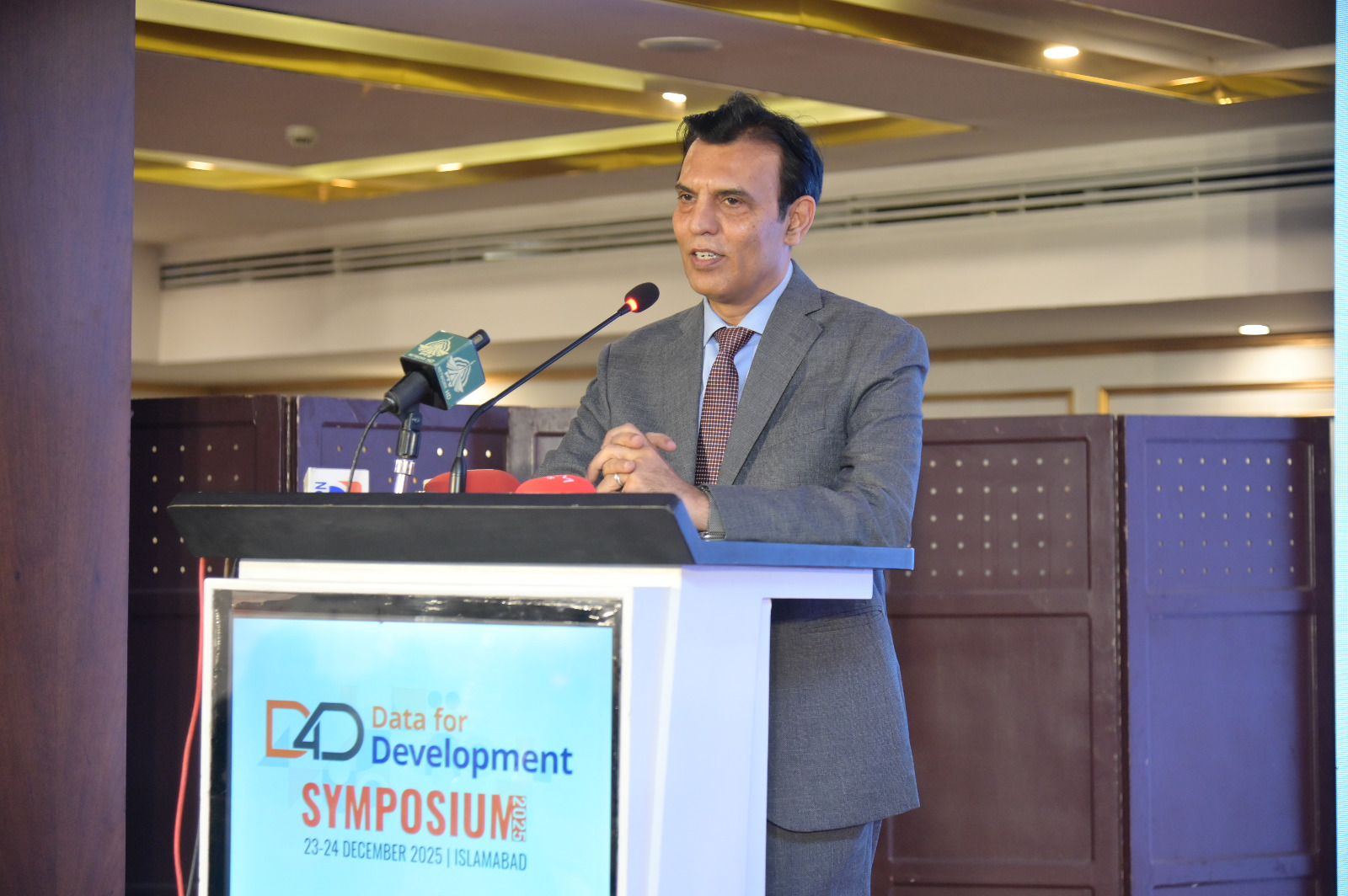
ISLAMABAD, Dec 23 (APP): Pakistan stands at the defining moment of its demographic change where it can seize this opportunity or miss it, said Dr Luay Shabaneh, the Country Representative of United Nations Population Fund (UNFPA), in his opening remarks here at the inaugural session of a two-day symposium on Tuesday.
The National Data for Development (D4D) Symposium 2025 was organized by the UNFPA in partnership with Sustainable Development Policy Institute (SDPI), and with the support from the Government of the Netherlands, said a press release.
Dr Luay Shabaneh described the symposium as a moment to reflect on two years of the D4D initiative and renew commitments to using data for development. “Data is not just numbers but it reflects dignity, accountability and lived realities of people,” he said, adding: “data tells the story of how people survive and what they need to survive.” He termed the Youth Development Index (YDI) tools a ‘mirror’ that highlights both national averages and hidden disparities. The index, he said, covers critical areas, including health & wellbeing, civil & political participation, peace & security, and other key aspects central to youth development.
Speaking on the occasion as chief guest, Rana Mashhood Ahmad Khan, the Chairman of Prime Minister’s Youth Programme, said the YDI would provide a robust evidence base for designing and evaluating youth-focused policies at federal, provincial and district levels. He noted that the index, aligned with global standards, measures youth development across key domains, including education, employment, health, equality, peace and security, and civic and political participation.
Rana Mashhood suggested that with a majority of population comprising the youth, the index should be treated not merely as a statistical exercise but as a strategic instrument for policy reform, institutional strengthening and long-term youth empowerment. He acknowledged the support of UNFPA and SDPI in developing the index and underscored the need to link youth outcomes with national priorities and Sustainable Development Goals.
Dr Shamshad Akhtar, the former governor of the State Bank of Pakistan, said data-enabled development planning is no longer an option but a critical imperative for effective governance. Drawing on her experience at the United Nations, where she oversaw statistical systems and contributed to the design of the SDGs, she stressed that reliable, repeatable and timely data is essential to distinguish between immediate priorities, medium-term interventions and long-term strategic planning.
Dr Akhtar warned that weak data systems, particularly at provincial and local government levels, undermine policy impact, especially in areas such as climate resilience, urban planning, health, transport and social protection. She highlighted the potential of modern tools, including satellite imagery, mobile data, geospatial analysis and real-time dashboards to improve service delivery, anticipate disasters and ensure inclusive urban development. Without such systems, she cautioned, Pakistan risked deepening inequalities and creating cities of exclusion as urbanization accelerates.
Dr Abid Qaiyum Suleri, the SDPI Executive Director, said data dashboards were essential for transparency and better decision-making but inconsistencies in definitions and methodologies across institutions often delayed policy responses. He said the YDI includes space for community-led and citizen-generated data, strengthening accountability and complementing official statistics.
Dr Naeem uz Zafar, the Chief Statistician of Pakistan Bureau of Statistics, highlighted the importance of integrating datasets across sectors to improve usability. He said the youth population, comprising nearly one-third of Pakistan’s total population, made disaggregated and comparable data critical for improving human and social capital.
The symposium, marked by the launch of the Youth Development Index (YDI) tools , a new tool aimed at strengthening evidence-based decision-making for the country’s largest demographic segment, convened senior federal and provincial authorities, heads of statistical institutions, development partners, UN agencies, and leading academics to advance a shared vision for a modern and future-ready data ecosystem.
The event also featured a video documentary on the D4D journey. The Youth Development Index was formally launched by Dr Shamshad Akhtar, Luay Shabaneh, Naeem Zafar, Dr Abid Qaiyum Suleri and PM Youth Program Focal Person, MNA Syeda Fatima Batool, who in her closing remarks called youth development a national imperative requiring coordinated action beyond a single institution.
The inaugural session of the symposium was followed by three more sessions. The first session technical discussions set the stage for a forward-looking national dialogue. The first session on data-enabled development planning featured chief guest Dr Shamshad Akhtar, and contributions from provincial planning leaders Rafaqat Ali, Sajjad Hussain Abbasi, Adeel Shah, Zahid Saleem, Amir Latif Awan, and Mushtaq Ahmed. The session highlighted how integrated data can enhance provincial-federal coordination, improve targeting of public investments, and strengthen planning equity.
The second session on reimagining Pakistan’s statistical architecture included remarks by chief guest Dr. Gulnara Kadyrkulova, Deputy Representative, UNFPA and contributions from national experts including Rabia Awan, Muhammad Ali Ammer, Rafique Ahmed Chandio, Khaliq ur Rehman, and Aminullah Khan, with special remarks from Sufian Abuharb, international consultant on NSDS. Their discussions underscored the importance of institutional modernization, digital transition, and professional excellence in statistical reform.
The third session highlighted emerging D4D knowledge products, with chief guest Muhammad Ali Talpur, Joint Chief Economist, Ministry of Planning, Development & Special Initiatives, special remarks by Dr Melania Hidayat, Family Planning Adviser, and academic perspectives from Dr Masood A. Siddique, Dr Vaqas Ali, Faisal Abbas, Dr Said Farooq Shah, Dr S M Nabeel ul Haq, and Arooj Waheed Dar, along with reflections on youth-focused knowledge products by Zahra Jabeen, Programme Analyst, Adolescents and Youth, UNFPA.