ISLAMABAD, Dec 22 (APP): Raising alarm over delays in regulatory enforcement and the influx of hazardous products, the Senate Standing Committee on Science and Technology on Monday reviewed pre-shipment testing, quality control mechanisms and ongoing institutional reforms, stressing that lax oversight was endangering public health, consumer rights and the national economy. The Committee met at Parliament House under the chairmanship of Senator Kamil Ali Agha and was attended by Senators …
Senate panel presses for swift pre-shipment testing, tougher quality controls
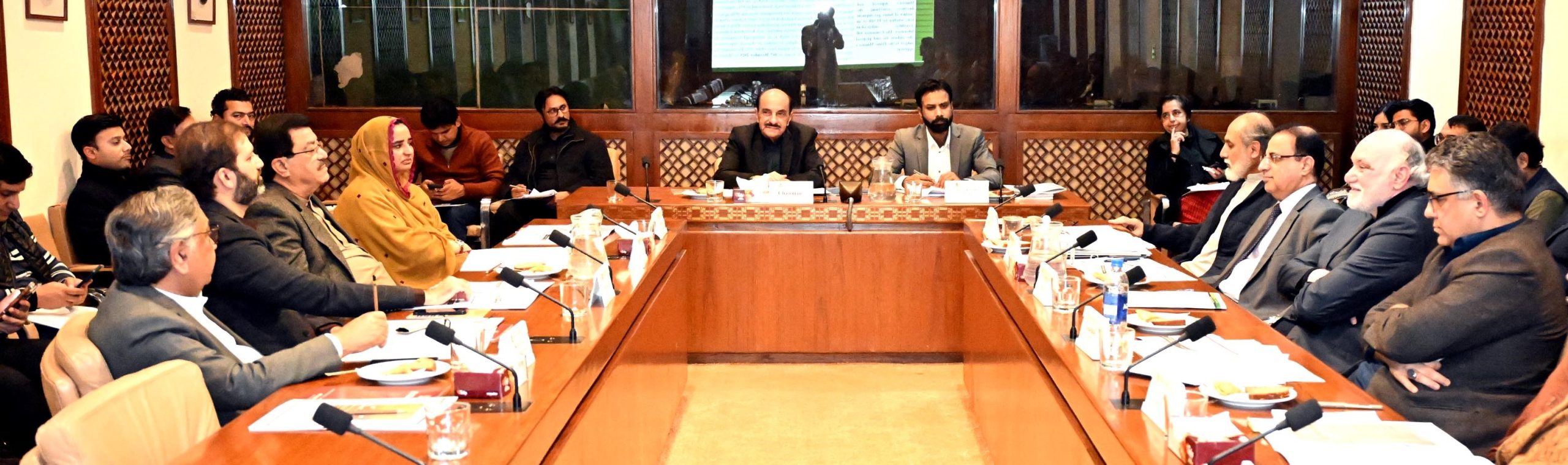
ISLAMABAD, Dec 22 (APP): Raising alarm over delays in regulatory enforcement and the influx of hazardous products, the Senate Standing Committee on Science and Technology on Monday reviewed pre-shipment testing, quality control mechanisms and ongoing institutional reforms, stressing that lax oversight was endangering public health, consumer rights and the national economy.
The Committee met at Parliament House under the chairmanship of Senator Kamil Ali Agha and was attended by Senators Husna Bano, Dr Muhammad Aslam Abro, Dr Afnan Ullah Khan and Saeed Ahmed Hashmi, along with Federal Minister for Science and Technology Khalid Hussain Magsi, senior officials of the ministry and heads of key regulatory bodies.
During the meeting, members held an extensive discussion on the pre-shipment testing policy, smuggling of hazardous food items, the Rs 135 billion petroleum products scandal in Quetta, enforcement failures in quality control, mandatory testing of solar equipment and wide-ranging institutional reforms.
Briefing the Committee, the Chairman of the Pakistan Council of Scientific and Industrial Research (PCSIR) said the federal cabinet had approved the implementation of pre-shipment testing at borders, though the operational mechanism was yet to be finalized.
The Federal Minister emphasized that once testing begins, consignments should be cleared within 15 to 25 days, warning that delays—especially for sensitive materials—could cause financial losses and health risks. Committee members expressed serious concern over the prolonged detention of consignments and urged strict timelines.
The Committee was informed that substandard betel nut (supari) and gutka were being smuggled into the country through both sea and land routes.
The members and the Federal Minister warned that spoiled supari and gutka posed grave public health risks, including cancer.
Senator Dr Afnan Ullah Khan called for a complete ban on gutka consumption, while the Chairman of PCSIR stressed the need for rigorous checks at the supply stage, noting that illegal consignments often move from coastal areas to factories before reaching consumers.
On the Quetta petroleum scandal, the Secretary Ministry of Science and Technology told the Committee that investigations into the Rs135 billion case had been completed. Disciplinary proceedings were initiated against two serving officers, while cases against two retired officers were referred to the FIA on October 15.
Expressing dissatisfaction over delays, the Committee directed the FIA to submit its response within ten days.
The Federal Minister clarified that factory inspections fall under the mandate of the Pakistan Standards and Quality Control Authority (PSQCA).
However, members voiced concern that inspections were often ineffective, sometimes resulting in clearance of illegal material.
The Committee was also briefed on adulteration in spices such as turmeric and the use of harmful substances in products like kohl (surma).
Chairman Pakistan Engineering Council (PEC) Engineer Waseem Nazir apprised the Committee of institutional reforms, stating that transfers were made strictly on merit and that “Smart PEC” initiatives had been launched.
He said digital services were introduced in collaboration with NADRA, enabling online registration and issuance of engineering cards through Pak-Identity. Entire university batches are now being registered online, alongside organizational restructuring and professional training programs.
He further informed that PEC has launched a Generative Artificial Intelligence course for 45,000 engineers, with 15,000 already trained, while a Chartered Project Directors course will begin in March–April 2026.
The mutual recognition agreements have been signed with China, with similar accords planned with Kuwait and Saudi Arabia. A Graduate Engineer Trainee Program offering six-month paid training with a monthly stipend of Rs50,000 has also been launched.
On solar equipment, the Committee discussed mandatory testing of solar panels, inverters and batteries.
The Secretary said a Korea-assisted laboratory would soon become operational, capable of conducting at least 46 different tests on solar panels. Members warned that the unchecked influx of substandard equipment posed serious environmental and consumer safety risks and agreed that comprehensive testing was essential.
PSQCA officials briefed the Committee on standards for food, non-food and electrical products, informing that nicotine testing standards had recently been introduced and licenses were suspended or cancelled in case of violations.
Regarding tea whitener, officials clarified that it meets PSQCA standards, contains no nutritional value and does not pose health risks within approved limits, despite concerns over chemical usage.
Concluding the meeting, the Committee called for strict enforcement of quality standards, timely implementation of approved policies, transparency in investigations and stronger coordination among regulatory bodies to protect public health, consumers and national interests.