MANSEHRA, Dec 21 (APP): The long, winding journey to Kaghan Valley often marked by fatigue and monotony melts away the moment travelers catch their first glimpse of snow-draped mountains and frozen lakes on Sunday. As clouds part to reveal fleeting sunshine, only to be followed again by gentle rain or fresh snowfall, nature appears to be playing a delicate game of hide-and-seek, captivating visitors at every turn amid snowfall. Over …
Snow blanketed Naran-Kaghan valleys captivates tourists amid playful hide and seek of sun and rain at Saiful Malook lake
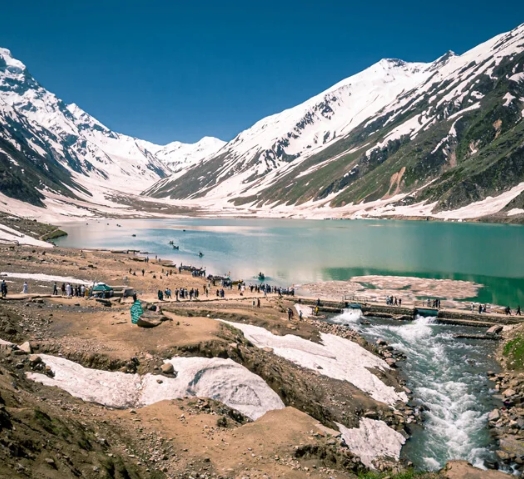
MANSEHRA, Dec 21 (APP): The long, winding journey to Kaghan Valley often marked by fatigue and monotony melts away the moment travelers catch their first glimpse of snow-draped mountains and frozen lakes on Sunday.
As clouds part to reveal fleeting sunshine, only to be followed again by gentle rain or fresh snowfall, nature appears to be playing a delicate game of hide-and-seek, captivating visitors at every turn amid snowfall.
Over the weekend, heavy snowfall transformed Saiful Malook Lake, Ansoo Lake, Babusar Top and the broader Naran-Kaghan region into a winter wonderland.
Adventure seekers, families and snowfall lovers thronged the valley, eager to experience the serene charm of icy landscapes, snowball fights and the simple joy of sipping hot tea after a day in the cold.
Saiful Malook lake, which is famed for its oval shape, crystal greenish-blue waters and centuries-old folklore, stood almost frozen under a thick white blanket. The lake, long associated with fairytales and romance, appeared even more magical as snow settled gently on its shores and surrounding peaks.
“Saiful Malook is my ideal tourist destination because of its peace, serenity and intense snowfall,” said Ejaz Khan, a property dealer from Wapda Town Nowshera, who visited the lake with his family. Watching his children play with snowballs nearby, he described the scene as “beyond imagination,” saying how the lake’s beauty instantly erases the stress of daily life.
Standing by the snow-covered shoreline in a Chitrali woolen cap and heavy overcoat, Umar Khan—another visitor shared similar sentimentsand said “It feels like stepping into a fairytale world,”.
“The silence, the snow and the frozen water together create a sense of calm that is rare to find elsewhere.”
Located at an altitude of about 3,224 meters above sea level and spread over more than one square mile, Saiful Malook lake is named after the Persian Prince Saiful Malook.
Renowned poet Mian Muhammad Bakhsh immortalized the lake in his classic tale Saiful Malook, narrating the legendary love story between Prince Saiful Malook and the fairy princess Badri-ul-Jamala, a story that continues to draw visitors seeking both natural beauty and cultural depth.
For Asmat Khan, a visitor from Tank district, the attraction lies in both the folklore and accessibility. “This is my second winter visit,” he said. “The heavy snowfall leaves a lasting impression, and families can easily reach here compared to many other high-altitude lakes.”
Beyond Saiful Malook, Kaghan Valley boasts a chain of stunning alpine lakes including tear-shaped Ansoo lake, Dudipatsar, Payala, Siri and Dudibach Star lake as each offering its own blend of adventure and tranquility.
These destinations, often reached by jeep tracks or horseback, are especially appealing to trekkers and snow sports enthusiasts.
However, amid the beauty, concerns about environmental degradation persist. “Saiful Malook is the identity of Pakistan,” Asmat Khan remarked with concern. “It is heartbreaking to see garbage and plastic bags scattered around.”
He stressed the need for stricter cleanliness measures, proper parking areas away from lake premises and collective responsibility from authorities and tourists alike to protect these fragile ecosystems.
Officials say steps are underway to address these issues. Saiful Malook has been declared a national park, with projects approved for parking complexes, controlled entry points and improved waste management.
Under the province’s protected areas initiative, wildlife and forest departments are tasked with preserving the alpine ecosystem and natural habitats.
Meanwhile, the Khyber Pakhtunkhwa government is also investing in broader tourism development integrated tourism zones, new access roads, jeep tracks and winter sports events aimed at promoting ecotourism while easing access to remote natural attractions.
As winter deepens, Kaghan Valley continues to enchant visitors with its snow-covered silence, legendary tales and ever-changing skies.
For many, a single visit in winter is not enough to understand why, amid the sun, rain and snow, this valley remains one of Pakistan’s most cherished natural treasures.