UNITED NATIONS, Dec 19 (APP):With recent political upheavals in Benin and Guinea-Bissau exposing ongoing vulnerability in a region already plagued by violent extremism, Pakistan has urged increased collaboration with and between regional organizations to address these challenges facing West Africa and Sahel regions. "Strengthening mutual trust among Member States of the region remains critical for coordinated counter-terrorism action," Pakistani delegate Asif Khan told the Security Council on Thursday. Participating in …
At UN, Pakistan calls for counter-terrorism action to address West Africa’s deteriorating situation
UNITED NATIONS, Dec 19 (APP):With recent political upheavals in Benin and Guinea-Bissau exposing ongoing vulnerability in a region already plagued by violent extremism, Pakistan has urged increased collaboration with and between regional organizations to address these challenges facing West Africa and Sahel regions.
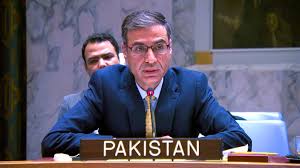
“Strengthening mutual trust among Member States of the region remains critical for coordinated counter-terrorism action,” Pakistani delegate Asif Khan told the Security Council on Thursday.
Participating in a discussion on the United Nations Office for West Africa and the Sahel (UNOWAS), Khan, who is a minister at the Pakistan Mission to the UN,
voiced extreme concern over the intensified terrorist activity by groups such as Jama’a Nusrat ul-Islam wa al-Muslimin (JNIM), Islamic State Sahel Province (ISSP), Islamic State West Africa Province (ISWAP) and Boko Haram.
“Terrorist entities continue to exploit porous borders, illicit trafficking routes, online radicalization tools and criminal networks,” the Pakistani delegate said, adding that the deteriorating security situation demands a collective response.
Frameworks such as ECOWAS, the Accra Initiative, and the Multinational Joint Task Force must be strengthened and adequately resourced and reinforced, Asif Khan said.
In this regard, he said Pakistan supports UNOWAS efforts to facilitate constructive engagement and help maintain channels of dialogue.
“We stand in full solidarity with the governments and peoples of West Africa and the Sahel as they continue to confront the scourge of terrorism and violent extremism,” the Pakistani delegate said, as he spoke of Pakistan’s deep-rooted partnership with Africa.
Pakistani peacekeepers, he added, have served with distinction across the continent. “We stand ready to share our counter-terrorism experience, including expertise in intelligence coordination, border management, and de-radicalization efforts.”
Also, the Pakistani delegate advocated a multidimensional approach to addresses not only kinetic threats but also the political, economic, climatic, and social drivers of instability.
He urged the international community to step in to address the urgent humanitarian needs of more than 6.9 million people across the central Sahel.
Opening the debate, Barrie Freeman, Deputy Special Representative of the Secretary-General for West Africa and the Sahel. highlighted key developments that “illustrate both the region’s fragility and its resilience”:
On 7 December, Benin’s national security forces, with support from ECOWAS and partners, thwarted an attempted coup d’état by military officers citing grievances over deteriorating security, management of the Armed Forces and restrictions on political activity. On 26 November, in Guinea-Bissau, the military took control of the country, disrupting presidential election results.
“Since then, arrests, divisive rhetoric and online hate speech are a growing cause of concern,” she stated.
Meanwhile, in the Lake Chad Basin, Boko Haram and Islamic State West Africa Province have intensified their attacks, while the Lakurawa group in north-western Nigeria further tests the Nigerian Armed Forces’ capacity to secure the territory.
With the link between terrorism and organized crime accelerating, Ms. Freeman called for prioritizing measures to address shared threats.