Govt focusing on private sector, export-led growth to maintain economic stability: Bilal
Govt focusing on private sector, export-led growth to maintain economic stability: Bilal
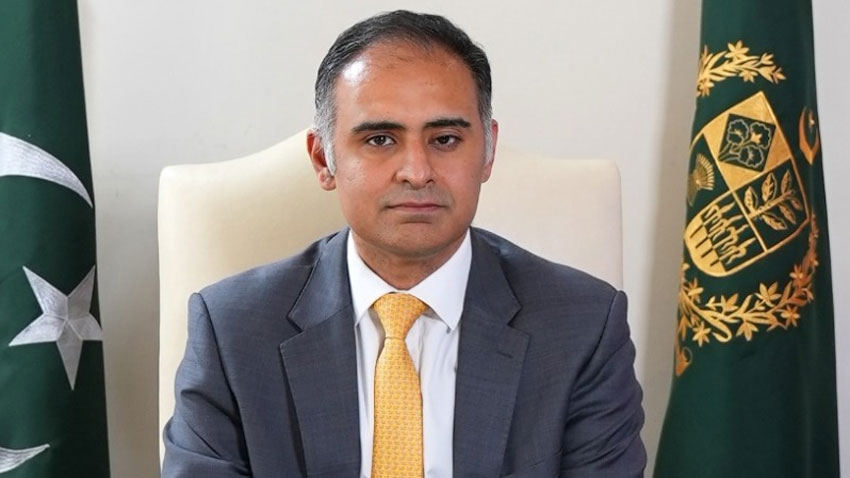
ISLAMABAD, Dec 15 (APP): Minister of State for Finance Bilal Azhar Kayani on Monday said the government was pivoting decisively towards private sector-led, export-driven growth to sustain the economic stability achieved since assuming office after the 2024 general elections.
Addressing a news conference here, the minister said the current policy direction was firmly anchored in macroeconomic stabilisation secured under the International Monetary Fund (IMF) programme, which also provided the framework for last year’s federal budget.
“Stabilisation was the first imperative. Now, the Prime Minister is focused on translating that stability into durable, private sector-led economic growth,” he said, outlining the government’s post-stabilisation reform priorities.
Bilal Azhar said the economic indicators reflected tangible improvement. Inflation during fiscal year 2025 had declined to low single digits, foreign exchange reserves had increased significantly, Federal Board of Revenue (FBR) collections had recorded a 26 percent growth, and the tax-to-GDP ratio had risen by 1.5 percentage points, from 8.8 percent to 10.3 percent.
He said Pakistan’s previous growth cycles had largely been consumption-led, resulting in imports outpacing exports and placing pressure on the external account.
“For sustained and resilient economic growth, export-led growth is essential. This is our clear target,” he said, stressing that enhancing competitiveness, diversifying exports and improving productivity were central pillars of the government’s medium-term economic strategy.
Following macroeconomic stabilisation, the minister said the government had intensified engagement with the private sector to remove policy bottlenecks and align incentives with export expansion.
“That is why the Prime Minister is focusing on private sector-led economic growth, because without exports, growth cannot be sustained,” he added.
Referring to progress under the IMF programme, Bilal Azhar said the IMF Executive Board approved the programme review on December 8, which, he said, reflected international confidence in Pakistan’s reform trajectory and policy continuity.
He said several government-led working groups had already submitted recommendations aimed at translating reform commitments into actionable measures.
“These include the Export Development Fund, the Industrialisation Fund, the Income Tax Group, and the Customs Trade and Tariff Group,” he said, adding that the government was moving rapidly from consultation to implementation.
Highlighting a concrete reform outcome, the minister said a 0.25 percent levy on export turnover, identified by the working groups as a burden on exporters, had been promptly abolished.
“After the working group meeting, the Prime Minister directed that this levy be removed. It was implemented within a week to ten days, and from now on no export proceeds will be charged under this head,” he said, describing the move as evidence of the government’s responsiveness to exporter concerns.
Bilal Azhar said additional working groups covering energy, railways, information technology, ports and agriculture were expected to submit their recommendations to the Prime Minister next week, further expanding the reform agenda aimed at reducing the cost of doing business and improving productivity.
He said the reforms were designed to crowd in private investment, strengthen industrial capacity and provide exporters with a predictable policy environment.
“These are only a few examples. You will see more measures in the coming weeks as recommendations are converted into action,” he said.
However, the minister expressed concern over what he termed disruptive actions by a segment of the opposition, alleging that certain elements were attempting to create uncertainty at a time when economic stability required collective national support.
“Unfortunately, there is a group in the opposition that is trying to push the country towards default. They have even written letters to the IMF,” he said.
Criticising the Pakistan Tehreek-e-Insaf (PTI), Bilal Azhar alleged that the party had repeatedly attempted to undermine Pakistan’s economic stability by approaching the IMF at critical junctures.
He recalled that during PTI’s exit from government, its leadership had, according to him, sabotaged the IMF programme, pushing the country towards default, and later continued writing to the Fund even after the coalition government assumed office in 2022 and sought to revive the programme in the national interest.
The minister was of the view that PTI’s conduct formed part of a broader pattern that had damaged Pakistan’s economy, diplomatic standing and national institutions.
He said the party had consistently avoided parliamentary forums, boycotted standing committees and declined to participate in key national security briefings and cross-party consultations, including those convened after major security incidents.
Bilal Azhar further said that PTI’s social media campaigns had echoed hostile narratives against Pakistan and its institutions, calling such conduct irresponsible at a time when national unity was essential to consolidate economic recovery.
Reiterating the government’s position, he said political opposition was legitimate within Parliament, but efforts to destabilise the economy and undermine state institutions were unacceptable and against the national interest.
Responding to a question, the minister rejected claims of political instability, saying the country had remained stable despite repeated attempts over the past two to three years to create disruption.
“Despite all such attempts, we have achieved economic stability, strengthened national defence and reinforced Pakistan’s diplomatic standing,” he said.
He urged the opposition, particularly PTI, to adopt constructive rather than disruptive politics and to play its constitutional role responsibly within the democratic framework.
Reiterating the government’s commitment to reforms, Bilal Azhar said economic stability and sustainable growth required continuity of policy and cooperation across institutions.
“Our focus remains clear: to strengthen the private sector, expand exports, and safeguard the stability we have worked hard to achieve,” he added.