BEIJING , Dec 12 (APP):“So tasty” exclaimed Syed Fahad Ali Sherazi, a participant in the Thousand Agricultural Talents Training Program from Pakistan, after enjoying a Mianwo, a popular Wuhan-style, donut-shaped snack. His reaction came during the China-Pakistan Modern Seed Industry Cooperation and Exchange Conference held in Wuhan on December 10. This young man was so delighted to discover that the canola oil used to fry it came from his homeland, …
China-Pak cooperation in canola oil makes Wuhan snack more appetizing
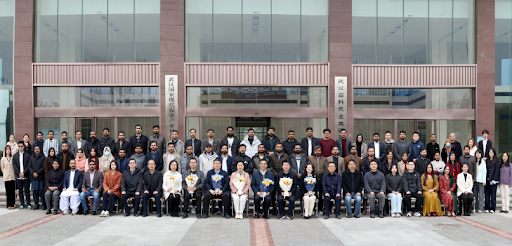
BEIJING , Dec 12 (APP):“So tasty” exclaimed Syed Fahad Ali Sherazi, a participant in the Thousand Agricultural Talents Training Program from Pakistan, after enjoying a Mianwo, a popular Wuhan-style, donut-shaped snack.
His reaction came during the China-Pakistan Modern Seed Industry Cooperation and Exchange Conference held in Wuhan on December 10.
This young man was so delighted to discover that the canola oil used to fry it came from his homeland, and the canola seeds were the result of joint research and development between China and Pakistan.
In October, Huazhong Agricultural University and Wuhan Qingfa Hesheng Agricultural Development Co., Ltd. jointly held a three-month training course on Seed Production and Processing Technology.
During the tea break, the organizer specially prepared semi-finished Mianwo, which were deep-fried on-site in “special” canola oil until golden brown. The crispy exterior and tender interior, along with the aroma of oil, attracted many Pakistani trainees. All of them sampled the exotic food, as well as many took photos and videos to share with their friends and family.
Very soon, the trainees discovered the “special feature” of the rapeseed oil: the plastic bottle was printed with HC-021C, the name of a new canola variety that has been vigorously promoted for cultivation in Punjab, Pakistan, in recent years.
This canola variety was jointly developed by China and Pakistan, and the oil extracted from it is sweeter and more fragrant than that of local varieties.
Zhu Xiaobo, general manager of Qingfa Hesheng, the Chinese lead research institution for HC-021C, explained that Pakistan is a major consumer of edible oil but relies on imports for 94% of palm oil, and long-term consumption can easily lead to cardiovascular diseases. The safety of edible oils urgently needs to be addressed.
From 2009 to 2019, the company, in collaboration with Pakistani partners, successfully bred a new generation of high-quality hybrid canola variety HC-021C, which has many characteristics such as short growth period, high yield, high oil content, and good oil quality. It has become the preferred variety for local farmers. To date, its cumulative planting area has exceeded 2.5 million mu (0.17 million hectares).
Pakistani trainees, including Jatoi Ghulam Hussain and Muhammad Anser, expressed their sincere gratitude for the excellent courses arranged by the organizer and shared their plans for applying the technologies after returning home, conveying the solid public support for China-Pakistan agricultural cooperation.
It is understood that since 2005, nearly 10 Wuhan-based breeding companies have been deeply involved in the Pakistani agricultural market, with the planting area of Chinese-tech hybrid rice, canola, and other seeds has been increasing year by year in the region, CEN reported .
Chinese seeds have already borne fruit of friendship far away from home. Just like fragrant Mianwo, China-Pakistan agricultural cooperation will surely “fry” a more golden and splendid future through mutual trust and win-win results.