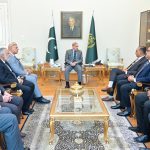
ISLAMABAD, Dec 8 (APP):Federal Minister for Finance and Revenue Senator Muhammad Aurangzeb on Monday reaffirmed the government’s commitment to strengthening Pakistan’s formal economy and encouraging responsible, long-term investment during a meeting with a delegation from Nestlé Pakistan. Emphasizing the government’s resolve to clamp down on the informal sector, an effort that has already begun yielding visible results in multiple industries, the Finance Minister noted that improved compliance, transparency, and a …
Aurangzeb reaffirms policy reforms as Nestlé signals strengthened long-term commitment to Pakistan
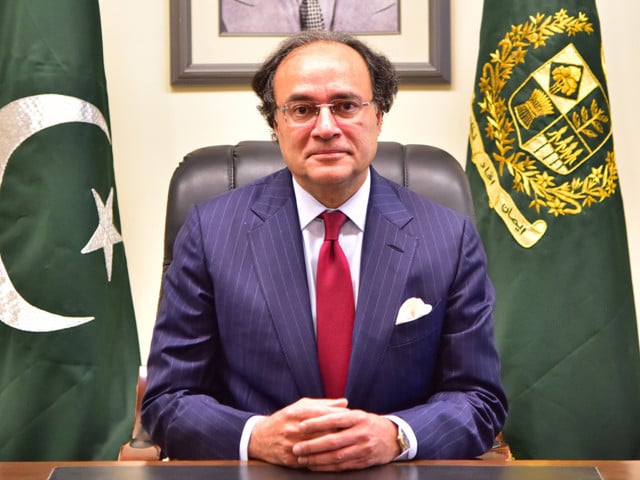
ISLAMABAD, Dec 8 (APP):Federal Minister for Finance and Revenue Senator Muhammad Aurangzeb on Monday reaffirmed the government’s commitment to strengthening Pakistan’s formal economy and encouraging responsible, long-term investment during a meeting with a delegation from Nestlé Pakistan.
Emphasizing the government’s resolve to clamp down on the informal sector, an effort that has already begun yielding visible results in multiple industries, the Finance Minister noted that improved compliance, transparency, and a strengthened tax ecosystem are central to Pakistan’s economic recovery, a news release said.
He highlighted the establishment of the Tax Policy Office within the Finance Division as a major structural reform that would allow continuous, year-round engagement with the private sector, enabling policy refinement and effective implementation ahead of the next budget cycle.
The delegation from Nestlé Pakistan, led by Chief Executive Officer Jason Avancena, accompanied by Chief Financial Officer Maqsood Ahmad Anjum and Head of Corporate Affairs & Sustainability Sheikh Waqar Ahmad, briefed the Finance Minister on the company’s longstanding commitment to Pakistan and its plans for future expansion.
The CEO provided an overview of Nestlé’s business resilience and outlined how the company has strengthened its operations through localization, portfolio adjustments, advanced automation, efficiency enhancements, and continued innovation across product categories.
He highlighted Nestlé Pakistan’s significant progress in technology-driven manufacturing, noting that facilities in Sheikhupura and Khanewal were now fully automated and connected to global diagnostic systems, placing Pakistan’s operations on par with leading Nestlé facilities worldwide.
The CEO further elaborated on ongoing and upcoming investments in sustainability, agricultural services transformation, enhanced manufacturing capacity, and the deployment of advanced technologies across the value chain.
He explained that Nestlé was implementing solar and biomass energy systems, digital dashboards, environmentally improved packaging, and supply-chain automation, enabling reductions in operational costs and greenhouse-gas emissions while strengthening the company’s long-term competitiveness.
As part of their broader shift toward domestic value creation, the delegation highlighted that Nestlé’s localization efforts have materially strengthened its resilience.
They noted that through sustained efforts to localize raw materials and reconfigure product portfolios, Nestlé Pakistan has reduced its import volumes by nearly half over the past three years from around USD 150 million to approximately USD 76–80 million, thereby minimizing exposure to foreign-exchange pressures and deepening integration with Pakistan’s agricultural and manufacturing base.
The finance minister commended these localization efforts and underscored the government’s intention to facilitate greater formalization and enhanced tax equity across the food and beverages sector.
He noted that the gains recently observed in tobacco, where formal sector volumes have increased as enforcement tightened, represented a model that could be replicated across other industries such as packaged juices, where informal players have rapidly expanded market share by operating outside the tax net.
He welcomed Nestlé Pakistan’s readiness to work with the Tax Policy Office set up in the Finance Division on potential reforms to improve tax recovery, rationalize sector-specific anomalies, and support domestic manufacturing while maintaining public-interest objectives.
The delegation also discussed export performance, including the company’s presence in markets such as the United States, Canada, the Gulf, and the United Kingdom, and shared insights into challenges related to regional trade, particularly the Afghanistan corridor.
The finance minister advised exploring logistics partnerships to expand access to Central Asian markets and reiterated that the Government remains committed to enabling export-oriented industry growth.
In the context of Nestlé’s expanded investments over the next several years targeted toward sustainability, agricultural transformation, automation, and strengthening production capabilities in infant and dairy nutrition, the delegation conveyed Nestlé’s desire to announce these plans on the global stage.
Referring to the upcoming World Economic Forum (WEF) Annual Meeting in Davos, they shared that Nestlé’s global leadership, including the Executive Vice President for Zone Asia, Oceania and Africa, Remy Ejel, intended to attend the event and looked forward to a meeting with the Prime Minister of Pakistan.
Such an engagement would provide an opportunity to present Nestlé’s investment priorities in detail, underlining Pakistan’s potential in sustainability-driven food science, advanced manufacturing, and value-added nutrition.
The finance minister welcomed the proposal, confirming that the Prime Minister’s participation at Davos has been communicated to WEF management and assuring the delegation that the Government would support the facilitation of this meeting.
The finance minister acknowledged Nestlé Pakistan’s role as one of the country’s most established multinational investors and reiterated the government’s commitment to fostering an investment climate that rewards innovation, formalization and responsible growth.
He stated that discussions between Nestlé Pakistan and the Tax Policy Office would remain ongoing, ensuring timely alignment on policy options that could strengthen the domestic industry, support sustainability objectives, and enhance Pakistan’s position in regional and global markets.