ISLAMABAD, Dec 5 (APP): A high-level consultative meeting was convened at the Finance Division, co-chaired by Federal Minister for Finance and Revenue Senator Muhammad Aurangzeb and Chairman of PVARA Bilal Bin Saqib here Friday, to discuss and advance work on Pakistan’s National Digital Asset Framework. Governor State Bank of Pakistan along with presidents and executives of Pakistan’s leading commercial banks and senior leadership from Binance, including Global CEO Richard Teng, …
High-level meeting reviews progress on National Digital Asset Framework
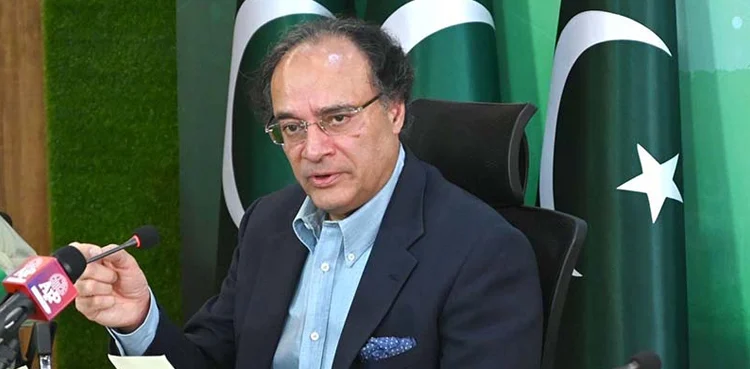
ISLAMABAD, Dec 5 (APP): A high-level consultative meeting was convened at the Finance Division, co-chaired by Federal Minister for Finance and Revenue Senator Muhammad Aurangzeb and Chairman of PVARA Bilal Bin Saqib here Friday, to discuss and advance work on Pakistan’s National Digital Asset Framework.
Governor State Bank of Pakistan along with presidents and executives of Pakistan’s leading commercial banks and senior leadership from Binance, including Global CEO Richard Teng, participated in the discussion, according to press release issued by finance ministry.
The session reviewed Pakistan’s next steps toward building a secure, well-regulated, and innovation-driven digital asset ecosystem, with a particular emphasis on responsible, enhanced compliance standards, improved market transparency, and stronger integration of regulated financial institutions.
Aurangzeb reiterated Pakistan’s commitment to establishing a robust and forward-looking regulatory environment that supports technological innovation while safeguarding national economic interests.
He noted that close coordination between government agencies, licensed global exchanges, and domestic banks remains essential for modernizing the payments landscape, improving financial inclusion, and aligning national systems with international standards.
The Binance delegation, comprising senior leaders including the CEO, Richard Teng, provided insights on global market trends and Pakistan’s rapidly expanding role in the digital asset space.
Senator Aurangzeb acknowledged that Pakistan’s rapid digital asset adoption reflects an irreversible global trend and underscored the economic opportunity to bring citizen-held virtual assets within formal monitoring structures. Such integration would strengthen financial visibility, support creditworthiness assessments, and enhance national asset reporting without conferring legal tender status on digital assets.
Participants reviewed opportunities to modernize Pakistan’s digital payments landscape, noting that block chain-based systems could significantly reduce costs from the country’s USD 38 billion annual remittance flows. Discussions also emphasized building local talent pipelines to meet rising global demand for block chain and Web3 skills, creating high-value employment prospects for Pakistani youth.
The meeting examined sovereign debt tokenization to enhance liquidity, widen investor access, and position Pakistan as a regional frontrunner in compliant block chain-based financial instruments.
Participants further outlined principles for a practical taxation and compliance framework, including shifting primary oversight to licensed exchanges, designing a gradual capital gains structure to promote stability, and considering a time-bound amnesty to encourage users to move assets onto regulated platforms.
They stressed the need for strong verification and risk-mitigation systems to ensure sustainability and compliance with international standards.
The meeting also reviewed the development of a structured licensing regime for Virtual Asset Service Providers to enhance transparency, meet global AML/CFT standards, attract institutional participation, and protect Pakistani users from the risks associated with unregulated offshore platforms.
Bank presidents conveyed perspectives on risk management, custody requirements, compliance frameworks, and areas for collaboration once national regulations are finalized.
The Finance Minister emphasized that a regulated environment would promote market stability and encourage users to transition to licensed domestic platforms, further advancing the objective of building a responsible and globally competitive digital asset environment that supports economic growth, attracts investment, and accelerates technological progress.
In his concluding remarks, Chairman PVARA Bilal Bin Saqib highlighted Pakistan’s unique opportunity to shape global norms rather than merely adopt them, stressing the value of coordinated engagement between regulators, banks, and global exchanges.
He underscored the importance of viewing digital assets as critical financial infrastructure with significant potential to support financial inclusion, expand access to services for the unbanked, and create new opportunities for banks through innovative products, expanded deposits, and new customer segments.
Chairman Bilal Bin Saqib reaffirmed PVARA’s commitment to a Pakistan-first approach grounded in multi-stakeholder collaboration, regulatory alignment, and the development of sandboxes and committees to support responsible digital adoption.
He thanked all participants and encouraged continued cooperation, capacity-building, and knowledge-sharing based on international best practices and insights from jurisdictions where digital asset frameworks are already operational.