Ahsan launches Peace & Development Unit, calls peace ‘fundamental prerequisite’ for national progress
Ahsan launches Peace & Development Unit, calls peace ‘fundamental prerequisite’ for national progress

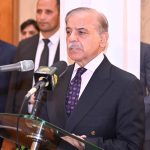
ISLAMABAD, Dec 5 (APP): Minister for Planning, Development and Special Initiatives Professor Ahsan Iqbal on Friday said Pakistan must place peace, political stability and social cohesion at the heart of its national priorities, warning that no development plan, no matter how ambitious, could succeed without a strong and sustained “ecosystem of peace.”
Addressing the launch ceremony of “Pathways to Peace: Unveiling the Peace & Development Unit” at the Planning Ministry, he said the initiative marked a “decisive turning point” in national life, aligning development policy with the country’s long-term need for stability and social harmony.
Welcoming participants, the minister stressed that the new unit was “not just an event or an administrative initiative,” but a national commitment. “There are many turns in a nation’s life, but some are decisive. If we want to achieve the dreams of progress, development and happiness, then we will have to strengthen the banner of peace.”
Drawing on religious teachings, he said the link between peace and development was deeply rooted in faith and history. “The whole world’s experience shows that progress cannot come without peace. Even in our religion, when Prophet Ibrahim (AS) prayed, he asked first for peace and then for sustenance.”
He added that a well-known Hadith also emphasised the virtue of establishing peace among people. “Islam itself is a symbol of mercy and peace,” he said, regretting that extremists had distorted the religion’s message and image.
In an emotional reflection, the minister said he carried a personal connection to the cause. “I am a living example,” he said, recalling the extremist attack in which he survived a gunshot wound. “Every day, that bullet inside my body reminds me that we must purify our society from the poisonous viruses of extremism, hatred and prejudice.”
He said Pakistan needed to “prepare anti-virus software” to protect young minds from radicalisation. “We must de-worm our national existence from the germs of extremism that have polluted us and pushed us toward chaos,” he added.
Ahsan Iqbal said all forms of extremism, whether religious, regional, linguistic or generational, must be understood in their unique contexts. “Every conflict has a different DNA,” he remarked, stressing “We must develop the ability to decode each conflict on its own terms. Only then can we find effective solutions.”
The minister stressed the need for dialogue and engagement as the primary tools for building peace.
Highlighting the Young Peace & Development Corps initiative, he said universities were being encouraged to create safe spaces where youth could learn dialogue, consensus-building and the true value of unity in diversity.
He expressed hope that the new Peace & Development Unit would function as a research-driven think tank. “It will guide us with evidence and data on how to address the political, social and economic causes of conflict. Better analysis will help us make better policies.”
Ahsan Iqbal stressed that Pakistan must extract a “peace dividend” from every rupee invested in development. “Alongside economic dividends, our development spending must strengthen stability and harmony in local communities,” he added.
Citing global examples, he said nations like South Korea rose from devastation by choosing the path of peace. “Many countries emerged from ashes because they avoided the roads of conflict and embraced stability,” he said.
He also praised China’s national consensus on political stability and social solidarity as the foundation of its success.
He said Pakistan’s own development blueprint, Uraan Pakistan, recognised peace, stability and unity as key enablers. “If we cast the best seed but do not provide an enabling environment, that seed will fail. Even, the best economic plans will collapse without peace, just like a world-class car cannot accelerate on a broken road.”
The minister called peace “the fundamental role in our ecosystem,” enabling national development goals to take root. “Our development plans will succeed only when we build a powerful motorway of peace on which our ambitions can move forward at full speed,” he said.
He congratulated the team behind the initiative and expressed confidence that the unit would produce practical outcomes for national leadership. “I hope this work becomes a real instrument for shaping policies, not just a theoretical exercise,” he said.