ISLAMABAD, Dec 4 (APP): Federal Secretary for Religious Affairs, Dr. Syed Atta-ur-Rehman on Thursday highlighted that child protection was only possible through religious guidance and positive change in social attitudes, said that the most important work in the world today was related to the protection, education, training, and health of children. Addressing as the chief guest an interfaith dialogue event organized by the Ministry of Religious Affairs and Islamic Relief …
Religious guidance, social attitudes’ change way forward to child protection: Dr Atta
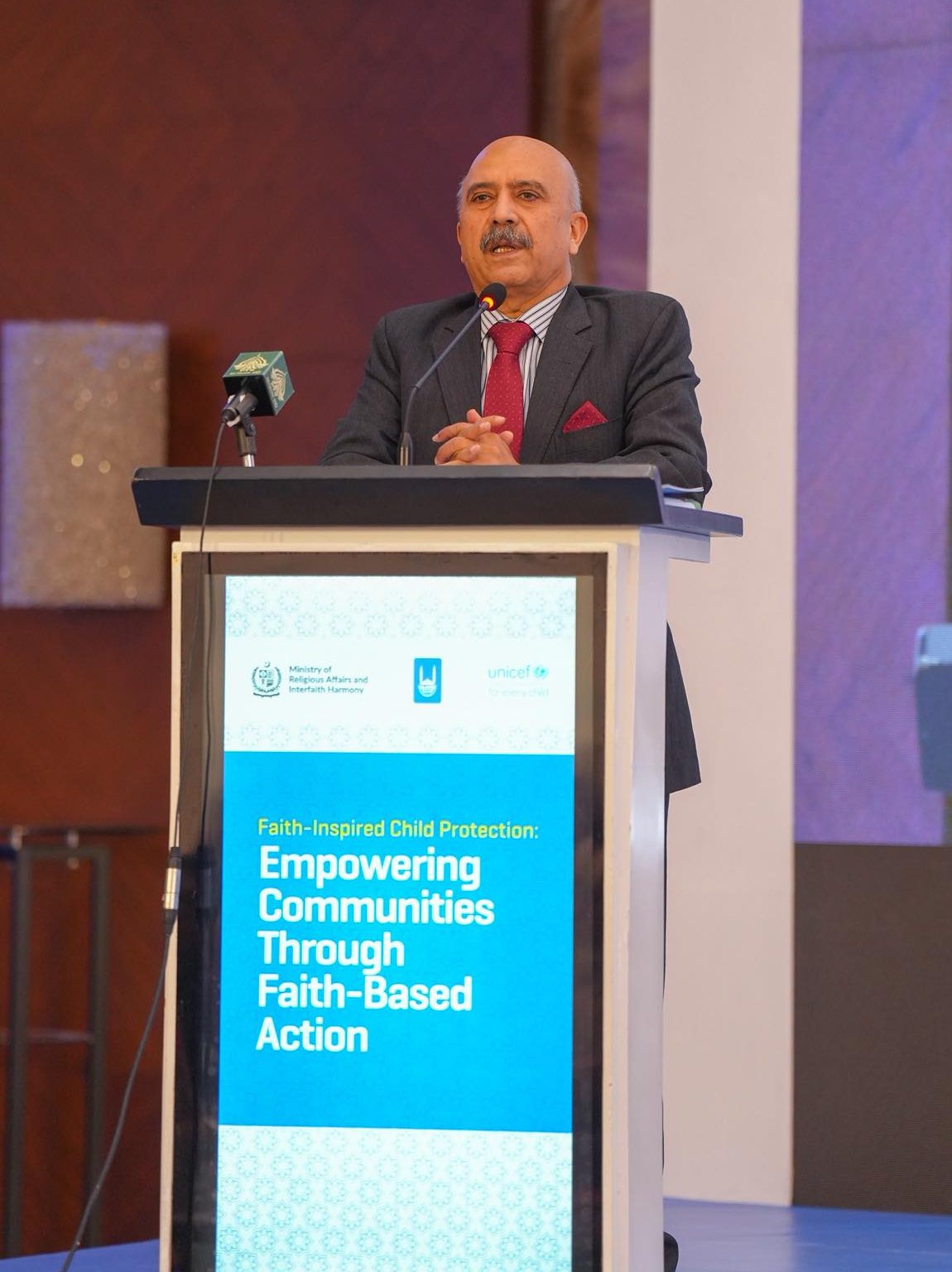
ISLAMABAD, Dec 4 (APP): Federal Secretary for Religious Affairs, Dr. Syed Atta-ur-Rehman on Thursday highlighted that child protection was only possible through religious guidance and positive change in social attitudes, said that the most important work in the world today was related to the protection, education, training, and health of children.
Addressing as the chief guest an interfaith dialogue event organized by the Ministry of Religious Affairs and Islamic Relief Pakistan in collaboration with UNICEF, he said that the objective of the event was to strengthen a unified, effective, and faith-based strategy for child protection across Pakistan and to review the opportunities for children in society to provide a safe environment, good education, skill-based training, health, and their development.
The federal secretary said that the Ministry of Religious Affairs was always ready to provide training, protection, and communication between scholars and other cooperation, emphasizing that those who work in homes and workshops deserve our sympathy the most besides adequate provision for the education and training of these children was very important.
“If cameras can be installed at the workplace, then this work also be done in classrooms and seminaries,” he said and adding that in this way, we could eliminate sexual exploitation in educational institutions. He noted that the unanimous fatwa on child protection in the light of Islamic teachings was highly commendable.
Atta-ur-Rehman extended thanks to Islamic Relief, UNICEF, scholars of different religions, and civil society for this effort.
In his opening speech, Country Director of Islamic Relief Pakistan, Asif Shirazi highlighted the organization’s long-standing commitment to child protection, community empowerment, and interfaith cooperation. He termed the combination of UNICEF and the fatwa as a significant development, which strengthens the role of religious guidance in promoting child protection.
UNICEF Pakistan Representative Sharmila Rasool said that religious scholars play a vital role in shaping social attitudes and their involvement was indispensable in creating a safe environment for children. Referring to Pakistan’s Human Capital Index, she said that the country’s children could reached only 50 percent of their potential by the age of 18.
She stressed four key priorities, including ending forced violence against children, birth registration, reducing early marriages, and educating children without violence.
Chairperson of the National Commission on the Rights of the Child, Senator Ayesha Raza Farooq, said that the involvement of religious leaders, from the policy level to the community, was essential. She highlighted the important role of scholars in effective implementation of laws, raising awareness, and preventing misinterpretations of religious teachings.
She stressed that child protection was a shared social responsibility.
Federal Minister for Religious Affairs, Sardar Muhammad Yousaf, who is on a visit to Saudi Arabia, reiterated the government’s commitment to further strengthen the child protection system based on religious beliefs in his video message.
UNICEF Child Protection Specialist, Farzana Yasmin mentioned the major challenges related to child protection in the country. She stressed the importance of joint efforts, strong social responsibility, and positive messages from religious leaders to combat violence, neglect, and harmful practices.
Child Protection and Youth Development Specialist, Islamic Relief Pakistan, Afshan Jamal highlighted the progress and impact of the project to discourage child marriage. She described the issuance of fatwas, awareness materials developed in collaboration with the Council of Islamic Ideology and UNICEF, and awareness sessions in mosques, churches, temples, gurdwaras, and other religious places as significant achievements.
She also mentioned the business grants given to families under the project, educational scholarships for girls and other measures taken to prevent child marriage.
The interfaith panel was chaired by Child Protection Coordinator, Islamic Relief Shahnaz Kausar, The religious leaders on the panel presented their perspectives on child protection. Dr. Raghib Hussain Naeemi emphasized mercy, compassion, and good behavior towards children.
Dr. Seema Farzad said that the proper upbringing of children was linked to a safe environment at home, school and in society.
Allama Arif Wahidi expressed concern over the increasing violent attitudes towards children. Christopher Sharaf said that the lack of harmony in the environment where children grow was a major problem. Sardar Homi Singh called the education of girls and their consent a fundamental right, in which the strong role of religious scholars could bring about change.
An important part of the event was the formal issuance of child protection fatwas, prepared by prominent muftis from across the country. These fatwas consider it a moral, social, and religious responsibility to protect children from all forms of exploitation and violence.
In his closing address, Asif Shirazi thanked all the participants, and said that the problems faced by children—such as exploitation, barriers to access to health and education, and early marriage—require continuous attention.
He expressed his determination that Islamic Relief would continue its efforts to address these issues in a more effective and comprehensive manner. He stressed the need to play a joint social role for a bright and secure future for children.