ISLAMABAD, Dec 03 (APP):Pakistan must modernize its security preparedness and craft a coherent, future-oriented policy framework to navigate rapidly evolving regional and global threats, experts said on Wednesday at the Islamabad Conclave-2025. The Institute of Strategic Studies Islamabad (ISSI) hosted Working Session-III of the Conclave under the theme “Emerging Strategic Security Challenges: Crafting a Peaceful Path for Pakistan”, organized by its Arms Control & Disarmament Centre (ACDC), said a press …
Pakistan must craft a future-oriented policy framework to navigate rapidly evolving threats: Experts
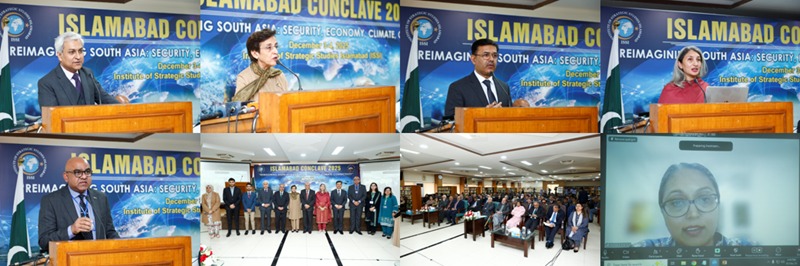
ISLAMABAD, Dec 03 (APP):Pakistan must modernize its security preparedness and craft a coherent, future-oriented policy framework to navigate rapidly evolving regional and global threats, experts said on Wednesday at the Islamabad Conclave-2025.
The Institute of Strategic Studies Islamabad (ISSI) hosted Working Session-III of the Conclave under the theme “Emerging Strategic Security Challenges: Crafting a Peaceful Path for Pakistan”, organized by its Arms Control & Disarmament Centre (ACDC), said a press release.
Ambassador (Retd.) Tehmina Janjua, former Foreign Secretary of Pakistan, was the keynote speaker, and other speakers included Dr. Zahir Kazmi, Advisor SPD; Dr. Nishara Mendis, Executive Director, Lakshman Kadirgamar Institute, Sri Lanka; Dr. Salma Malik, Associate Professor, Quaid-i-Azam University, Islamabad, and Ambassador Tahir Hussain Andrabi, Spokesperson, Additional Secretary ACDIS, MOFA.
Ambassador (R) Tehmina Janjua stated that “strategic security challenges” encompass a broad spectrum of military and non-military threats that directly affect Pakistan’s physical security. She identified India as the foremost regional challenge, driven by hegemonic ambitions reinforced by Hindutva ideology.
On Afghanistan, she noted that the challenge stems from deep-rooted irredentism intensified by the Taliban’s ideological worldview. To deal with it, a systematic review of Pakistan’s policy approach is required. She also highlighted climate change and water insecurity as critical non-military threats demanding urgent national attention.
Earlier in his introductory remarks, Malik Qasim Mustafa, Director ACDC, stated that South Asia is an important yet increasingly complex region shaped by both traditional and emerging threats. He noted that Emerging and Disruptive Technologies (EDTs), such as AI, hypersonic, drone swarms, and cyber warfare, are redefining deterrence and strategic stability in the region. Simultaneously, the militarization and nuclearization of the Indian Ocean by India are directly impacting the security of the littoral states. He said that despite these challenges, Pakistan’s strategic location positions it to play a constructive role in fostering cooperation and promoting regional stability.
Dr. Zahir Kazmi, in his remarks on the spread of EDTs and their impact, stated that technologies such as autonomous weapons, AI, cyber tools, hypersonic systems, and unmanned underwater vehicles are reshaping the strategic landscape.
He observed that global efforts to regulate Lethal Autonomous Weapons Systems (LAWS), including negotiations in Geneva, remain stalled, even as traditional, gradual escalation patterns give way to digitalized and autonomous systems capable of sudden, hard-to-detect disruptions. With international law struggling to keep pace and strategic patience wearing thin, he emphasized that Pakistan must build strong institutional foresight and prepare for an increasingly complex and fast-evolving security environment.
While speaking on the Indian Ocean, Dr. Nishara Mendis emphasized that South Asia is not defined solely by its landmass; its strategic and economic future is closely tied to the Indian Ocean, which has become a critical geopolitical arena. She noted that naval modernization and maritime domain awareness are now essential for all coastal states.
Dr. Mendis identified three key deficits in the region: the absence of a security architecture, limited economic cooperation, and the lack of cohesive regional frameworks—factors that hinder South Asia’s ability to manage both longstanding and emerging threats. She stressed that addressing these gaps will require collaborative regional efforts.
Dr. Salma Malik, in her remarks, stated that Pakistan’s geostrategic location, marked by its Arabian Sea coastline with Gwadar Port, its proximity to the Strait of Hormuz, and its land routes to Central Asia, gives it significant strategic value.
However, this potential is limited by ongoing challenges such as the Kashmir dispute with India, border tensions with Afghanistan, competition with India in Afghan affairs, and the decline of SAARC. With a coherent strategy, Pakistan can begin to address these issues. Its success will depend on domestic stability, economic resilience, balanced partnerships without over-alignment, and strong diplomatic agility.
Ambassador Tahir Hussain Andrabi noted that intensifying great-power rivalry, rapid technological advances, and increasingly blurred nuclear thresholds are creating dangerous spillover risks for South Asia.
He stated that India, benefiting from global dynamics, has disregarded non-proliferation norms while modernizing its nuclear triad with ICBMs, submarines, hypersonics, and AI-enabled systems.
He further added that with missile flight times reduced, decision windows compressed, and multidomain operations and disinformation shaping perceptions, even conventional actions risk being viewed through a nuclear lens. Although Pakistan’s multidomain response has been swift, he emphasized that future crises in South Asia will likely be fast-paced, multidomain, and highly unstable, leaving the regional security architecture fragile.